
If you are planning a gardening or landscaping project, you may be wondering: how many cubic feet is 40 pounds of soil?
This is a common question because soil is often sold by:
- Weight (pounds)
or - Volume (cubic feet)
Understanding the difference helps you:
- Buy the correct amount of soil
- Avoid overspending
- Fill garden beds properly
- Plan landscaping projects accurately
The answer depends slightly on the type and moisture level of the soil, but there is a standard estimate used for most gardening projects.
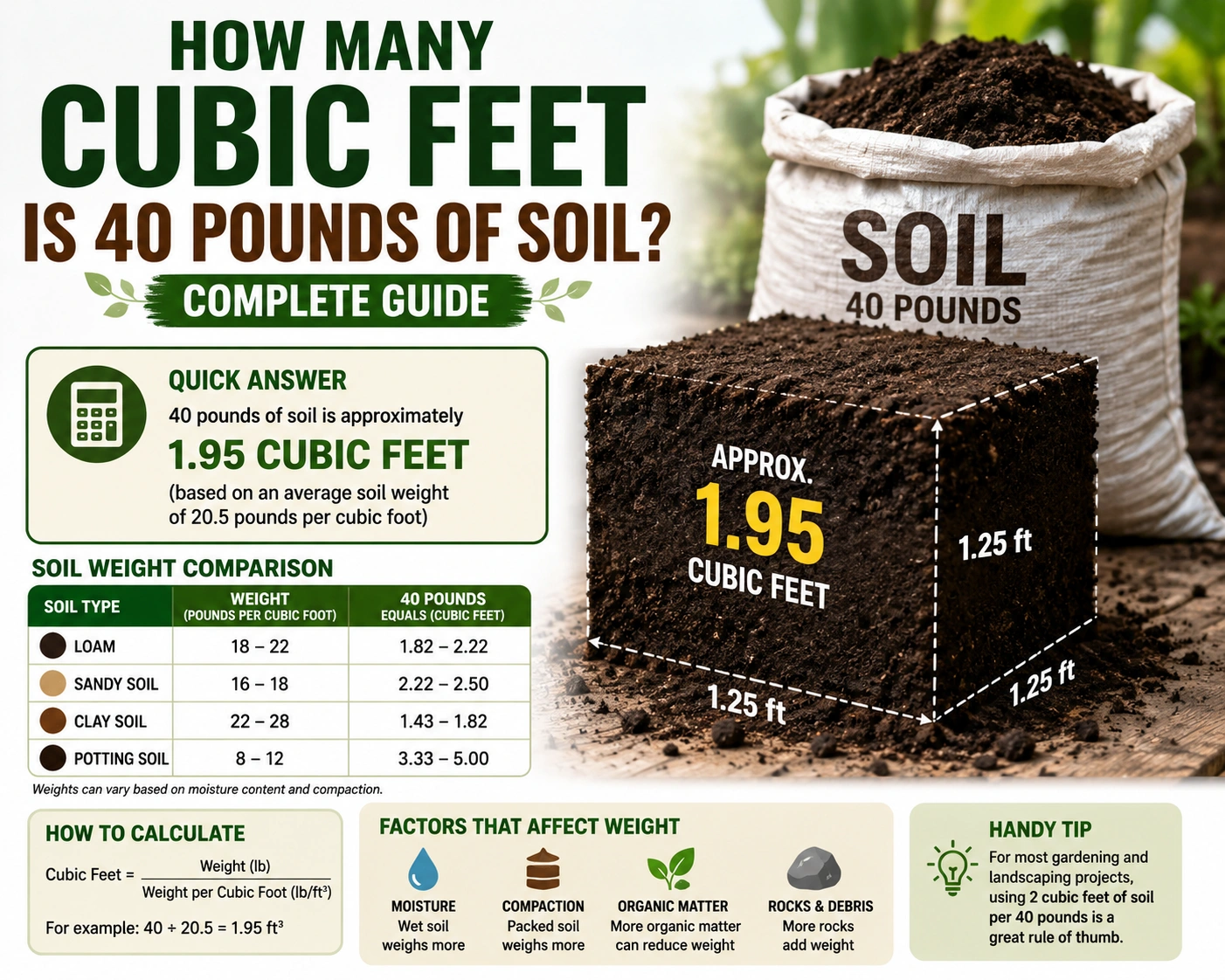
👉 A 40-pound bag of soil usually contains about 0.75 cubic feet of soil.
In this guide, you’ll learn how soil volume works, why soil density matters, and how to estimate soil coverage for real projects.
Quick Answer: 40 Pounds of Soil in Cubic Feet
👉 A standard 40-pound bag of soil contains approximately:
👉 0.75 cubic feet
This estimate is commonly used for:
- Topsoil
- Garden soil
- Potting mix
- Compost blends
Why Soil Volume Varies
Not all soil weighs the same.
Soil volume changes depending on:
- Moisture content
- Soil density
- Organic material
- Soil type
For example:
- Wet soil weighs more
- Dry soil weighs less
Because of this, the cubic footage may vary slightly between products.
Soil Weight vs Soil Volume
Many people confuse:
- Pounds
with - Cubic feet
Here’s the difference:
| Measurement | Meaning |
|---|---|
| Pounds | Weight |
| Cubic Feet | Volume |
So:
- 40 pounds measures how heavy the soil is
- Cubic feet measure how much space the soil fills
Typical Soil Density
Most bagged garden soil weighs:
- Around 50–80 pounds per cubic foot
This is why:
👉 40 pounds usually equals about 0.75 cubic feet
Soil Conversion Formula
You can estimate soil volume using this basic formula:
Volume=DensityWeight
For example:
5340≈0.75
👉 Result:
- About 0.75 cubic feet
Common Soil Bag Sizes Explained
Garden soil is commonly sold in several sizes.
| Bag Weight | Approximate Volume |
|---|---|
| 20 lb | 0.30–0.40 cu ft |
| 40 lb | 0.75 cu ft |
| 50 lb | 0.75–1 cu ft |
| 80 lb | 1–1.5 cu ft |
Soil Coverage Chart
Coverage depends on how deep you spread the soil.
40 lb Bag Coverage Estimates
| Soil Depth | Approximate Coverage |
|---|---|
| 1 inch | 9 sq ft |
| 2 inches | 4.5 sq ft |
| 3 inches | 3 sq ft |
| 4 inches | 2.25 sq ft |
Real-Life Gardening Examples
Raised Garden Bed Example
Suppose you have a raised bed measuring:
- 3 ft × 3 ft
Area:
If filling to:
- 1-inch depth
One 40 lb bag may cover most of the bed.
Flower Bed Example
A flower bed measuring:
- 6 ft × 4 ft
Area:
At 2-inch depth:
- You would need several bags.
Potting Soil Example
A few containers or pots may only require:
- One 40 lb bag
This makes bagged soil ideal for small gardening projects.
Why Soil Calculations Matter
Accurate soil estimates help you:
- Avoid buying too much soil
- Save money
- Prevent project delays
- Fill beds evenly
Common Mistakes to Avoid
Confusing Cubic Feet with Square Feet
Soil requires volume measurements because depth matters.
Ignoring Soil Depth
Deeper garden beds need much more soil.
Forgetting Soil Settling
Soil compresses over time after watering.
Assuming All Soil Bags Are Equal
Different brands may vary slightly in density and volume.
Tips for Buying the Right Amount of Soil
Measure Carefully
Measure:
- Length
- Width
- Desired depth
Buy Slightly Extra
Extra soil helps account for:
- Settling
- Compaction
- Uneven filling
Check Product Labels
Manufacturers usually list:
- Cubic feet
- Weight
- Coverage estimates
Choose the Correct Soil Type
Different projects need different soil:
- Topsoil
- Potting soil
- Garden mix
- Compost
Square Feet vs Cubic Feet in Gardening
| Measurement | Use |
|---|---|
| Square Feet | Surface area |
| Cubic Feet | Soil volume |
Soil projects require cubic measurements.
How to Estimate Soil for a Garden Bed
Step 1: Measure Length and Width
Example:
- 8 ft × 4 ft
Step 2: Multiply for Area
👉 Area:
- 32 square feet
Step 3: Multiply by Depth
If depth is:
- 0.25 feet (3 inches)
Calculation:
32×0.25=8
👉 You need:
- 8 cubic feet of soil
Step 4: Divide by Bag Size
If each bag contains:
- 0.75 cubic feet
Calculation:
0.758≈10.7
👉 About 11 bags are needed.
Practical Uses for Soil Calculations
Soil volume estimates help with:
- Raised garden beds
- Lawn repair
- Flower gardens
- Tree planting
- Landscaping projects
Easy Rule to Remember
👉 A 40-pound bag of soil usually equals about 0.75 cubic feet.
This estimate works well for most garden soil products.
Why Soil Density Matters
Heavy clay soil:
- Weighs more
Light potting soil:
- Weighs less
That’s why exact cubic footage may vary slightly.
Gardening Tips for Better Soil Planning
Before buying soil:
- Measure carefully
- Plan desired depth
- Choose proper soil type
- Add extra for settling
Good planning helps your garden grow better and reduces waste.
9. FAQs
1. How many cubic feet is 40 pounds of soil?
A 40-pound bag of soil usually contains about 0.75 cubic feet.
2. Why does soil volume vary?
Different soil types and moisture levels change density and weight.
3. How much area does a 40 lb bag cover?
Coverage depends on soil depth.
4. Is soil measured by weight or volume?
Both methods are commonly used.
5. Should I buy extra soil?
Yes, extra soil helps account for settling and uneven filling.
10. Conclusion
So, how many cubic feet is 40 pounds of soil?
👉 The standard estimate is:
👉 About 0.75 cubic feet
However, exact volume can vary depending on:
- Soil type
- Moisture content
- Soil density
Understanding soil volume helps you:
- Plan gardening projects accurately
- Buy the correct number of bags
- Avoid wasting money
- Fill garden beds properly
Whether you are working on:
- Raised beds
- Flower gardens
- Lawn repairs
- Landscaping projects
Knowing how soil weight converts into cubic feet makes planning much easier and more efficient.
Discover More Articles
How Many Cubic Feet Are in a Yard? Complete Guide