
If you’re wondering “how many feet from a property line can you build?”, the answer depends on:
- Local zoning laws
- Property size
- Neighborhood regulations
- Building type
- Municipal setback requirements
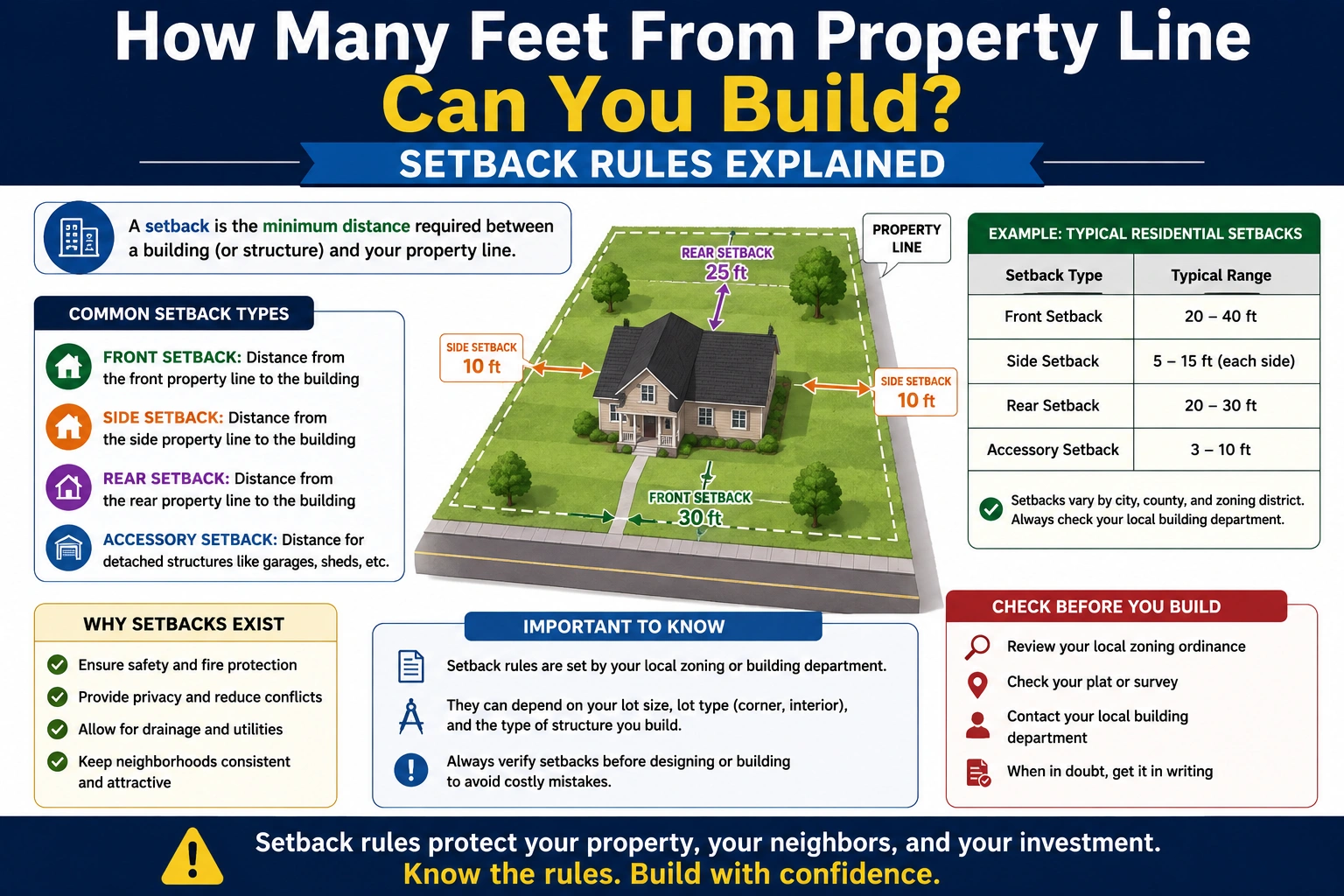
In many residential areas, common setbacks are:
| Property Area | Typical Setback |
|---|---|
| Front Yard | 20–30 feet |
| Side Yard | 5–15 feet |
| Rear Yard | 15–25 feet |
However, every city and county has its own regulations, so local rules always take precedence.
Quick Answer
Most residential properties require buildings to be set back approximately:
- 20–30 feet from the front property line
- 5–15 feet from side property lines
- 15–25 feet from rear property lines
These distances vary significantly depending on local zoning ordinances.
What Is a Property Line Setback?
Before building, it’s important to understand what a setback is.
Definition
A setback is the minimum distance a structure must be located from a property boundary.
The setback creates open space between:
- Buildings
- Streets
- Neighbors
- Utility easements
Purpose of Setbacks
Setbacks help provide:
- Fire safety
- Privacy
- Access to utilities
- Adequate sunlight
- Neighborhood consistency
Legal Importance
Failure to follow setback rules can result in:
- Permit denial
- Construction delays
- Fines
- Removal of structures
- Property disputes
Typical Setback Requirements
Most municipalities establish separate setback requirements for different parts of a property.
Front Yard Setbacks
Typical requirement:
- 20–30 feet
The front setback is usually the largest because it affects streetscape appearance and safety.
Side Yard Setbacks
Typical requirement:
- 5–15 feet
Side setbacks maintain space between neighboring homes.
Rear Yard Setbacks
Typical requirement:
- 15–25 feet
Rear setbacks provide open space behind structures.
Common Residential Setback Chart
While local rules vary, this chart shows common standards.
| Structure Type | Typical Setback |
|---|---|
| Main House (Front) | 20–30 ft |
| Main House (Side) | 5–15 ft |
| Main House (Rear) | 15–25 ft |
| Detached Garage | 3–10 ft |
| Shed | 3–10 ft |
| Fence | Often on property line* |
*Fence regulations vary by jurisdiction.
Factors That Affect Setback Requirements
Several factors influence how close you can build.
Zoning District
Residential, commercial, and industrial zones often have different setback rules.
Lot Size
Larger lots may have greater setback requirements.
Corner Lots
Corner properties frequently require larger setbacks.
Building Height
Taller buildings may require additional distance from property lines.
Homeowners Associations (HOAs)
Some communities impose stricter requirements than local governments.
How to Find Your Property’s Setback Rules
Before starting construction:
Review Local Zoning Codes
Most municipalities publish setback regulations online.
Contact the Building Department
Local planning offices can verify setback requirements.
Obtain a Property Survey
A survey accurately identifies:
- Property boundaries
- Easements
- Encroachments
Check Permit Requirements
Building permits often require setback verification before approval.
What Happens If You Build Too Close?
Building inside a setback area can create serious issues.
Permit Problems
Projects may fail inspection.
Legal Disputes
Neighbors may challenge encroachments.
Fines and Penalties
Local governments can impose penalties.
Removal Requirements
In some cases, structures must be moved or demolished.
Common Property Line Mistakes
Avoid these common errors.
Guessing Property Boundaries
Never assume a fence marks the exact property line.
Ignoring Easements
Utility easements often have additional restrictions.
Building Without Permits
Always verify local requirements before construction.
Relying on Neighbor Information
Official surveys and municipal records are more reliable.
Expert Tips Before Building
Order a Survey
A professional survey is one of the best investments before construction.
Verify Local Codes
Setback requirements can change over time.
Plan for Future Additions
Leave room for possible expansions.
Keep Documentation
Maintain copies of permits, surveys, and approved site plans.
Practical Examples
Example 1: Typical Residential Lot
Requirements:
- Front setback: 25 ft
- Side setback: 10 ft
- Rear setback: 20 ft
The home must remain outside all setback areas.
Example 2: Detached Shed
Local code may allow:
- 5-foot side setback
depending on size and location.
Example 3: Corner Lot
A corner property may require:
- 25-foot front setback
- Additional setback facing the side street
FAQs
How many feet from a property line can I build?
In many residential areas:
- Front: 20–30 feet
- Side: 5–15 feet
- Rear: 15–25 feet
Local regulations determine the exact distance.
Can I build right on the property line?
Usually not for homes and major structures.
Some fences or accessory structures may be allowed closer.
Do setback rules apply to sheds?
Yes.
Many municipalities regulate shed placement separately.
How do I find my setback requirements?
Contact your local:
- Planning department
- Zoning office
- Building department
and review your property survey.
What if my structure violates setback rules?
You may need:
- A variance
- Permit modification
- Structure relocation
depending on local regulations.
Conclusion
So, how many feet from a property line can you build?
For many residential properties, common setbacks are:
- 20–30 feet from the front property line
- 5–15 feet from side property lines
- 15–25 feet from rear property lines
The exact distance depends on:
- Local zoning laws
- Lot dimensions
- Building type
- HOA restrictions
- Municipal regulations
Before starting any project, verify requirements with your local building authority and obtain a professional property survey. Doing so helps avoid costly mistakes, permit issues, and legal disputes while ensuring your construction project complies with all applicable setback regulations.
Discover More Articles
How Many Feet Are on a Football Field? Complete Field Size Guide
How Many Feet Is a Cubic Foot? Understanding Cubic Feet Explained