

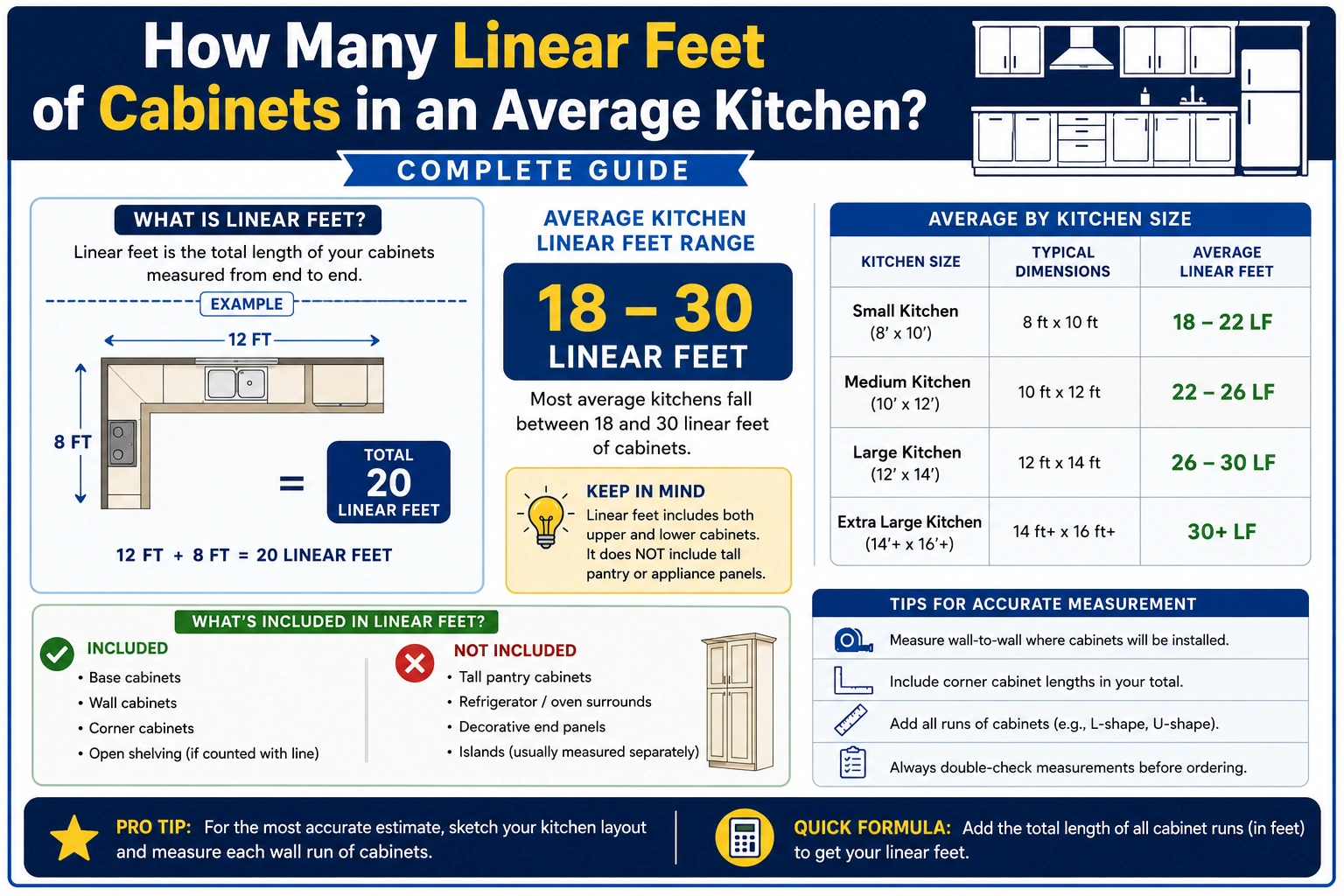
If you’re wondering “how many linear feet of cabinets are in an average kitchen?”, most kitchens contain:
- 20 to 30 linear feet of cabinetry
A typical medium-sized kitchen often has:
- 25 linear feet of cabinets
This includes a combination of:
- Base cabinets
- Wall cabinets
- Pantry cabinets
- Island cabinetry (if applicable)
Quick Answer
The average kitchen generally contains:
| Kitchen Size | Average Cabinet Linear Feet |
|---|---|
| Small Kitchen | 10–20 ft |
| Medium Kitchen | 20–30 ft |
| Large Kitchen | 30–40+ ft |
Most homeowners planning a remodel can expect approximately:
- 25 linear feet of cabinets
What Is a Linear Foot of Cabinets?
Before estimating cabinetry, it’s important to understand what a linear foot means.
Definition
A linear foot measures length only.
One linear foot equals:
1 linear foot=12 inches
Height and depth are not included.
How Cabinet Footage Is Measured
Cabinet linear footage is measured by adding the widths of all cabinets.
For example:
- 10-foot wall of cabinets = 10 linear feet
Why Linear Feet Matter
Cabinet companies often estimate:
- Material costs
- Installation costs
- Design budgets
using linear feet.
Average Linear Feet of Cabinets by Kitchen Size
Kitchen size has the biggest impact on cabinet footage.
Small Kitchens
Small kitchens typically contain:
- 10–20 linear feet
Common examples include:
- Apartments
- Condos
- Galley kitchens
Medium Kitchens
Medium-sized kitchens generally contain:
- 20–30 linear feet
A typical suburban home often falls into this category.
Large Kitchens
Large kitchens frequently include:
- 30–40+ linear feet
Especially when they feature:
- Islands
- Pantries
- Extended wall cabinetry
How to Measure Linear Feet of Cabinets
Measuring cabinet footage is straightforward.
Step 1: Measure Each Cabinet Section
Measure the width of every cabinet run.
Example:
- Wall A = 8 ft
- Wall B = 10 ft
- Island = 5 ft
Step 2: Add the Lengths
Calculation:
8+10+5=23
Result:
- 23 linear feet
Step 3: Include Pantry Cabinets
Tall pantry units should also be included in the total.
Corner Cabinet Considerations
Corner cabinets count toward the total linear footage just like standard cabinets.
Average Kitchen Cabinet Footage Chart
| Kitchen Type | Typical Cabinet Footage |
|---|---|
| Small Apartment Kitchen | 10–15 ft |
| Galley Kitchen | 12–20 ft |
| Standard Kitchen | 20–25 ft |
| Large Family Kitchen | 25–35 ft |
| Luxury Kitchen | 35–50+ ft |
This chart provides a useful planning benchmark.
Factors That Affect Cabinet Length
Several design choices influence total cabinet footage.
Kitchen Layout
Layouts such as:
- L-shaped kitchens
- U-shaped kitchens
- Island kitchens
often require more cabinetry.
Pantry Storage
Dedicated pantry cabinets significantly increase total footage.
Island Cabinets
Kitchen islands may add:
- 4–10 additional linear feet
depending on size.
Ceiling Height
Taller kitchens sometimes include additional upper cabinets.
Why Linear Foot Measurements Matter
Knowing cabinet footage helps with:
Budgeting
Many cabinet estimates are based on linear feet.
Remodeling
Contractors use cabinet footage to plan installations.
Material Ordering
Accurate measurements reduce waste and cost overruns.
Design Planning
Cabinet footage helps determine storage capacity.
Common Cabinet Measurement Mistakes
Avoid these common errors.
Forgetting Islands
Kitchen islands often contain substantial cabinetry.
Excluding Pantry Cabinets
Tall cabinets should be included in calculations.
Measuring Countertops Instead
Cabinet footage measures cabinet length, not countertop area.
Ignoring Corner Sections
Corner cabinets contribute to total linear footage.
Expert Tips for Kitchen Planning
Measure Everything
Include:
- Base cabinets
- Wall cabinets
- Pantry cabinets
- Island cabinetry
Plan for Storage Needs
More storage generally requires more cabinet footage.
Consider Future Resale
Well-designed cabinetry can improve home value.
Work With a Kitchen Designer
Professional layouts often maximize storage efficiency.
Practical Examples
Example 1: Small Kitchen
Cabinet runs:
- 8 ft
- 6 ft
Calculation:
8+6=14
Result:
- 14 linear feet
Example 2: Standard Kitchen
Cabinet runs:
- 10 ft
- 8 ft
- 7 ft
Calculation:
10+8+7=25
Result:
- 25 linear feet
Example 3: Kitchen With Island
Cabinet runs:
- 12 ft
- 10 ft
- 8 ft island
Calculation:
12+10+8=30
Result:
- 30 linear feet
FAQs
How many linear feet of cabinets are in an average kitchen?
Most average kitchens contain:
- 20–30 linear feet
with approximately 25 feet being common.
What is considered a large kitchen?
Large kitchens often contain:
- 30–40+ linear feet of cabinets
Do islands count toward cabinet footage?
Yes.
Island cabinetry should be included.
How do I calculate cabinet linear feet?
Add the width of all cabinet sections together.
Why do cabinet companies use linear feet?
Linear footage provides a quick way to estimate material and installation costs.
Conclusion
So, how many linear feet of cabinets are in an average kitchen?
The typical answer is:
- 20 to 30 linear feet
- About 25 linear feet for many standard kitchens
Average Kitchen Cabinets≈25 Linear Feet
Understanding cabinet linear footage helps with:
- Remodeling budgets
- Kitchen design
- Storage planning
- Cabinet installation
- Home improvement projects
By measuring cabinet runs accurately, homeowners can estimate costs and create a more efficient kitchen layout.
Discover More Articles
How Many Cubic Feet Are in 3 Cubic Yards? Exact Conversion Guide
How Many Square Feet Is a 12 x 14 Room? Easy Area Guide
How to Figure Out How Many Square Feet a Room Is? Easy Calculation Guide