
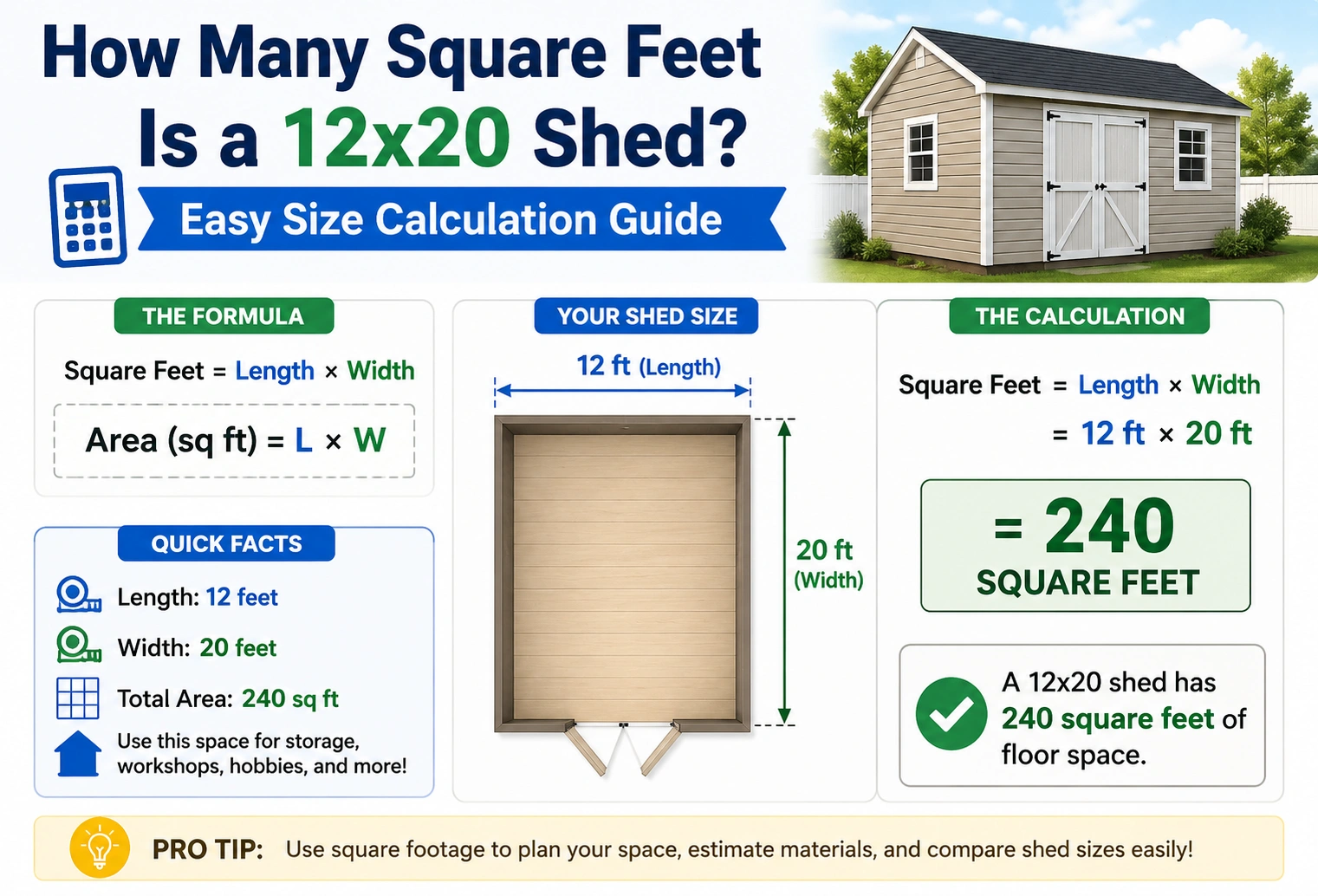
If you’re wondering how many square feet a 12×20 shed contains, the calculation is simple. A shed that measures 12 feet wide and 20 feet long provides a substantial amount of floor space for storage, workshops, and outdoor equipment.
The area is found by multiplying the length by the width.
Calculation:
A 12×20 shed contains 240 square feet of floor space.
Quick Answer
The exact calculation is:
A 12×20 shed equals 240 square feet.
Understanding Shed Square Footage
What Square Feet Means
Square footage measures the total floor area inside a structure. It helps determine how much usable space is available for storage, equipment, or work areas.
Why Shed Size Matters
Knowing the square footage helps when comparing shed models. It also makes it easier to estimate flooring materials, storage capacity, and project costs.
Common Shed Dimensions
Many residential sheds range from:
- 8×10 = 80 square feet
- 10×12 = 120 square feet
- 12×16 = 192 square feet
- 12×20 = 240 square feet
How to Calculate a 12×20 Shed’s Area
The standard area formula is:
Formula
Step-by-Step Calculation
Step 1: Identify the dimensions
Length = 20 feet
Width = 12 feet
Step 2: Multiply the measurements
Step 3: Determine the total area
The shed provides 240 square feet of usable floor space.
What Can Fit Inside a 12×20 Shed?
A 240-square-foot shed offers enough room for many storage and workspace needs.
Common uses include:
- Lawn equipment storage
- Garden tools
- Bicycles
- ATVs or small vehicles
- Workshop benches
- Seasonal decorations
- Outdoor furniture
Many homeowners use a 12×20 shed as both a storage building and a hobby workspace.
12×20 Shed Size Comparison
| Shed Size | Square Feet |
|---|---|
| 8×10 | 80 sq ft |
| 10×12 | 120 sq ft |
| 10×16 | 160 sq ft |
| 12×16 | 192 sq ft |
| 12×20 | 240 sq ft |
| 12×24 | 288 sq ft |
Common Uses for a 12×20 Shed
Storage Building
A 12×20 shed provides enough space for large equipment and household storage items.
Workshop
Many people install workbenches, shelving, and power tools inside a 240-square-foot shed.
Home Office
Some homeowners convert larger sheds into backyard offices or studio spaces.
Recreation Room
The size can support hobby rooms, gaming areas, or fitness equipment.
Practical Examples
Example 1: Standard Storage Shed
Dimensions:
- 12 ft × 20 ft
Calculation:
Result:
- 240 square feet
Example 2: Workshop Layout
A 12×20 workshop offers 240 square feet for tools, storage cabinets, and work areas.
Example 3: Garden Equipment Storage
A shed of this size can store multiple lawn mowers, wheelbarrows, and gardening supplies while still leaving room to move around comfortably.
FAQs
How many square feet is a 12×20 shed?
A 12×20 shed contains 240 square feet.
How do you calculate the square footage of a shed?
Use the formula:
Is a 12×20 shed large?
Yes. A 12×20 shed is considered a large residential shed and provides substantial storage or workspace.
Can a vehicle fit in a 12×20 shed?
Many small vehicles, motorcycles, riding mowers, and ATVs can fit depending on door size and interior layout.
How many square yards is a 12×20 shed?
Calculation:
A 12×20 shed contains approximately 26.67 square yards.
Conclusion
A 12×20 shed provides 240 square feet of floor space, making it one of the more versatile shed sizes available for residential properties. The size is large enough for storage, workshops, hobby areas, and many other uses. By multiplying the shed’s length and width, you can quickly determine its total area and compare it with other shed options before making a purchase or starting a project.
Final calculation:
A 12×20 shed equals 240 square feet.
Discover More Articles
30×30 Is How Many Square Feet? Easy Area Calculation Guide