
If you’re shopping for a new air conditioning system, one of the most common questions is how many square feet will a 4 ton AC cool. Choosing the correct air conditioner size is important because an oversized or undersized unit can reduce comfort, increase energy bills, and shorten the system’s lifespan.
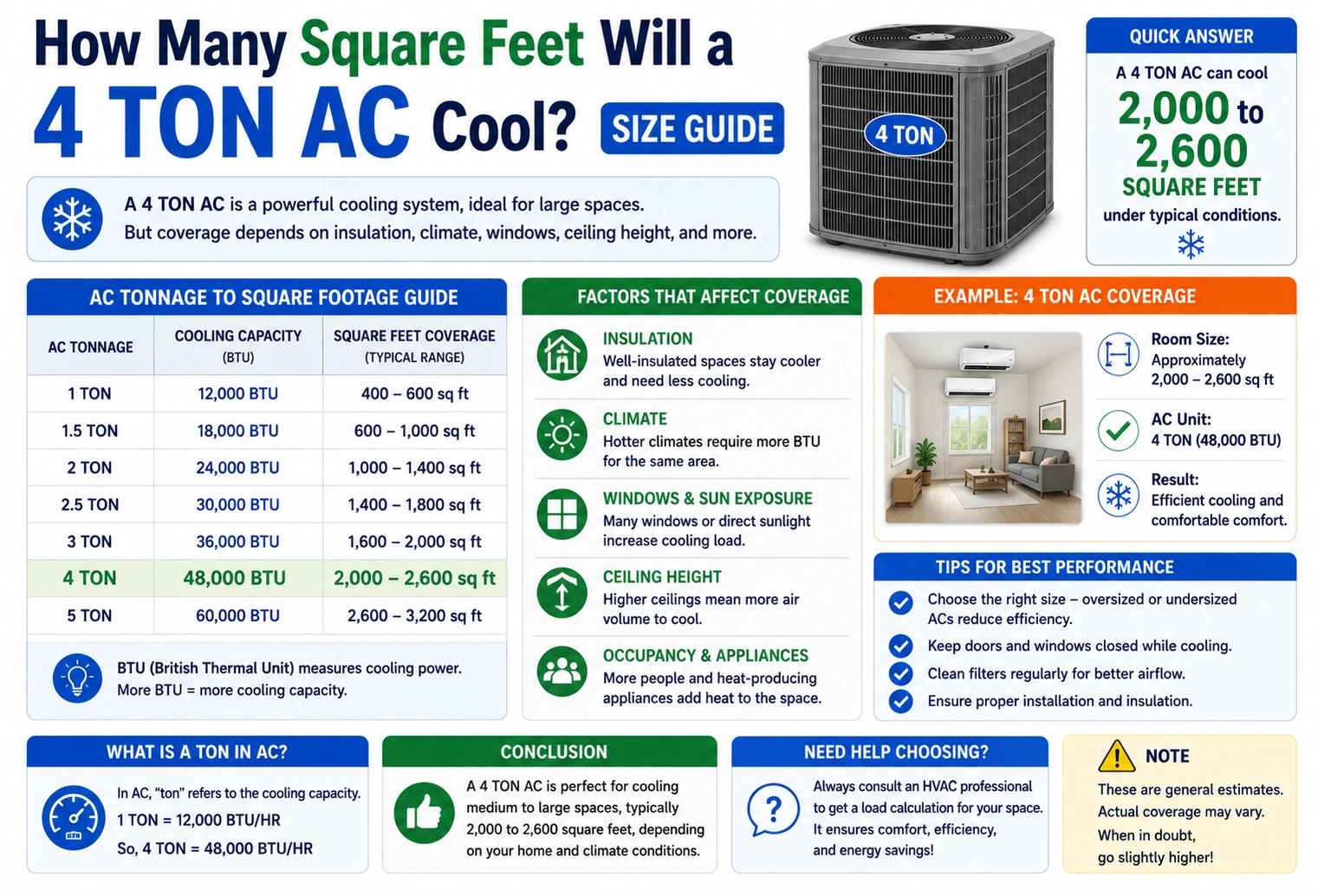
A 4-ton air conditioner has a cooling capacity of 48,000 BTUs (British Thermal Units) per hour. Under average conditions, it can typically cool 2,000 to 2,400 square feet of living space. However, the actual coverage depends on factors such as climate, insulation, ceiling height, window area, and home design.
This guide explains how much space a 4-ton AC can cool, what affects its performance, and how to determine if it’s the right choice for your property.
Quick Answer
A 4-ton AC typically cools:
- 2,000–2,400 square feet in average conditions
- 48,000 BTUs per hour
- Suitable for many medium to large homes
Keep in mind that these figures are estimates. A professional HVAC load calculation provides the most accurate sizing.
What Does a 4 Ton AC Mean?
The term “ton” in air conditioning does not refer to the weight of the unit. Instead, it describes its cooling capacity.
- 1 ton = 12,000 BTUs per hour
- 4 tons = 48,000 BTUs per hour
BTUs measure the amount of heat an air conditioner can remove from a building each hour. A higher BTU rating generally means the system can cool a larger space.
How Many Square Feet Can a 4 Ton AC Cool?
As a general guideline, a 4-ton central air conditioner can cool approximately:
| Home Conditions | Estimated Coverage |
|---|---|
| Excellent insulation, mild climate | 2,300–2,400 sq ft |
| Average insulation | 2,000–2,200 sq ft |
| Hot climate or poor insulation | 1,800–2,000 sq ft |
These ranges are based on common HVAC sizing recommendations. Actual cooling needs vary by home.
Factors That Affect Cooling Coverage
Several factors influence how much area a 4-ton AC can cool effectively.
Climate
Homes in hotter regions require more cooling power than homes in cooler climates. A house in Arizona may need a larger AC than a similar-sized house in Maine.
Insulation
Well-insulated walls, ceilings, and attics reduce heat gain, allowing the AC to cool more efficiently.
Poor insulation forces the system to run longer and may reduce the effective cooling area.
Ceiling Height
Standard sizing assumes 8-foot ceilings.
If your home has vaulted or 10- to 12-foot ceilings, you’ll likely need additional cooling capacity because there’s more air volume to condition.
Sun Exposure
Homes with large west-facing windows or little shade absorb more solar heat, increasing cooling demand.
Windows and Doors
Older windows or poorly sealed doors can let cool air escape and warm air enter, making the AC work harder.
Number of Occupants
Each person generates body heat. Larger households may require more cooling capacity, especially during warmer months.
Appliances and Lighting
Ovens, dryers, computers, and other electronics generate heat that adds to the cooling load.
4 Ton AC Coverage Chart
| AC Size | BTU Capacity | Typical Coverage |
| 2 Ton | 24,000 BTU | 900–1,200 sq ft |
| 2.5 Ton | 30,000 BTU | 1,200–1,500 sq ft |
| 3 Ton | 36,000 BTU | 1,500–1,800 sq ft |
| 3.5 Ton | 42,000 BTU | 1,800–2,100 sq ft |
| 4 Ton | 48,000 BTU | 2,000–2,400 sq ft |
| 5 Ton | 60,000 BTU | 2,400–3,000 sq ft |
These are general estimates and may vary depending on home construction and climate.
Is a 4 Ton AC Right for Your Home?
A 4-ton system is often a good fit if your home:
- Is approximately 2,000–2,400 square feet
- Has average insulation
- Has standard ceiling heights
- Is located in a moderate climate
- Has a typical number of occupants
However, homes with unusual layouts, extensive glass, or high ceilings may require a different size.
Benefits of Proper AC Sizing
Choosing the correct AC size provides several advantages:
- Better indoor comfort
- More consistent temperatures
- Lower energy bills
- Reduced humidity
- Longer equipment lifespan
- Fewer repairs
- Improved energy efficiency
An oversized unit may short-cycle, while an undersized unit may run continuously without cooling effectively.
Common Sizing Mistakes
Choosing Based Only on Square Footage
Square footage is just one factor. HVAC professionals also consider insulation, windows, climate, and airflow.
Ignoring Local Climate
Homes in hot, humid regions often need more cooling capacity than homes of the same size in cooler areas.
Forgetting Ceiling Height
Higher ceilings increase the amount of air that must be cooled.
Replacing an Old Unit with the Same Size
Home renovations, improved insulation, or new windows may change your home’s cooling requirements.
Practical Example
Imagine a 2,150-square-foot home with:
- Good insulation
- 8-foot ceilings
- Double-pane windows
- Moderate climate
A 4-ton AC would likely provide efficient cooling for this home.
If the same home had poor insulation and large sun-facing windows, a professional might recommend a different system size after performing a load calculation.
Expert Tips Before Buying
Request a Manual J Load Calculation
HVAC contractors use a Manual J calculation to determine the correct system size based on your home’s unique characteristics.
Improve Insulation
Better insulation can reduce cooling costs and improve AC performance.
Seal Air Leaks
Weatherstripping and caulking help keep conditioned air inside.
Replace Old Windows
Energy-efficient windows reduce heat gain during summer.
Schedule Regular Maintenance
Cleaning filters and servicing your system annually helps maintain peak performance.
9. FAQs
How many square feet will a 4 ton AC cool?
A 4-ton AC typically cools between 2,000 and 2,400 square feet, depending on climate, insulation, and other factors.
How many BTUs does a 4 ton air conditioner have?
A 4-ton air conditioner provides 48,000 BTUs of cooling per hour.
Is a 4 ton AC too big for a 1,500-square-foot home?
In many cases, yes. An oversized system may cool the home too quickly, leading to short cycling and poor humidity control. Proper sizing should be based on a full load calculation.
What factors affect AC coverage?
Climate, insulation, ceiling height, windows, sun exposure, occupancy, and home layout all influence how much space an AC can cool.
Should I rely only on square footage when choosing an AC?
No. Square footage is a useful starting point, but a professional HVAC load calculation provides the most accurate sizing.
10. Conclusion
If you’re wondering how many square feet will a 4 ton AC cool, the typical answer is 2,000 to 2,400 square feet under average conditions. Because a 4-ton system delivers 48,000 BTUs per hour, it’s suitable for many medium to large homes. However, insulation quality, climate, ceiling height, windows, and other factors can significantly affect cooling performance. Before purchasing a new air conditioner, it’s best to combine square footage estimates with a professional load calculation to ensure the system is properly sized for your home’s unique needs.
Discover More Articles
How Many Square Feet Is an 8×12 Shed? Size Guide