
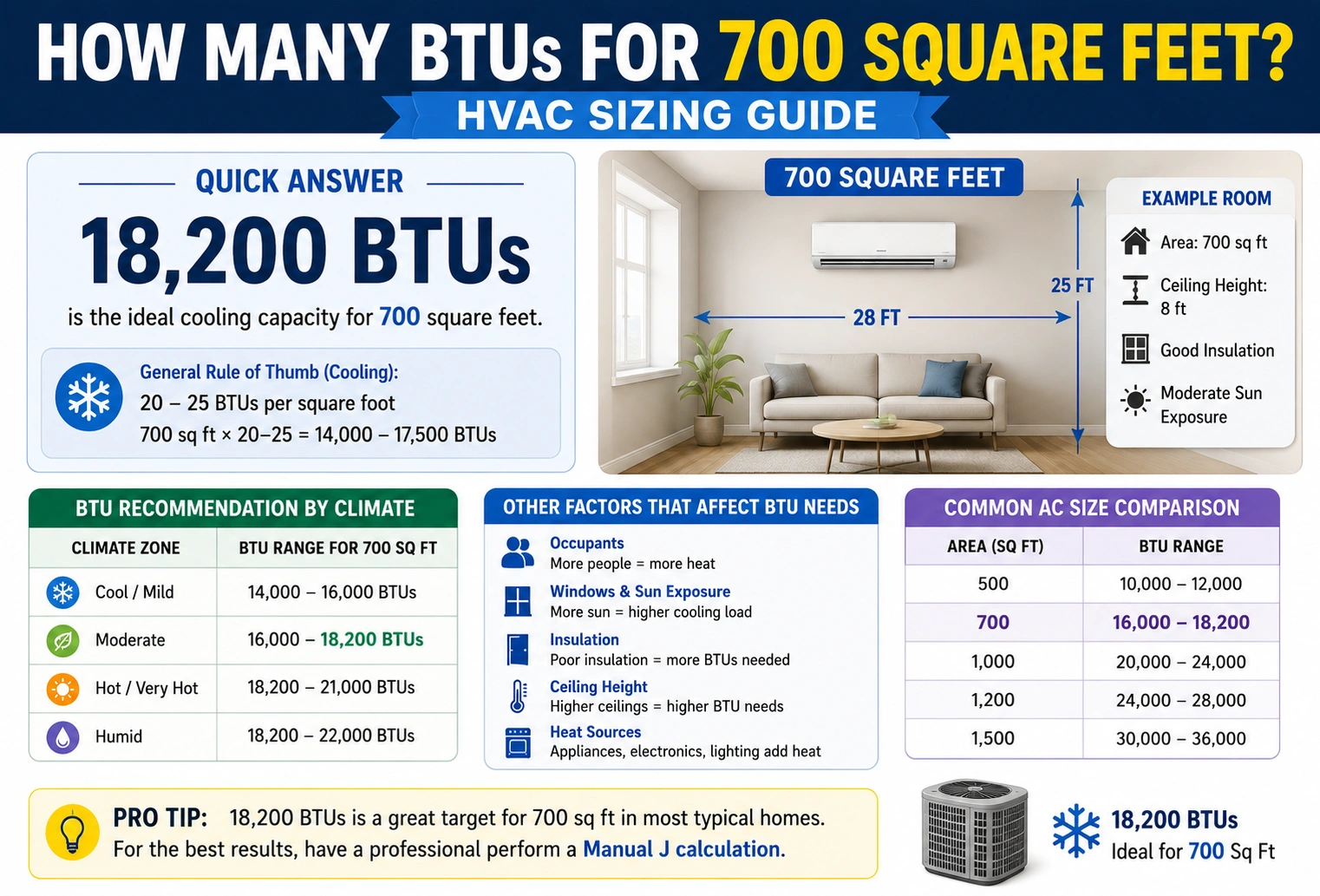
If you’re shopping for an air conditioner, heat pump, mini-split, or space heater, you may be wondering how many BTUs for 700 square feet are needed. Choosing the correct BTU capacity is important because an undersized unit won’t maintain a comfortable temperature, while an oversized system may cycle on and off too frequently, reducing efficiency and increasing energy costs.
For most homes, a 700-square-foot space typically requires between 14,000 and 18,000 BTUs for cooling, depending on insulation, ceiling height, climate, and sun exposure. Heating requirements may be similar or higher in colder climates.
This guide explains how to estimate the right BTU size and the factors that can change your requirements.
Quick Answer
For a 700-square-foot room or apartment, the recommended cooling capacity is generally:
| Application | Recommended BTUs |
|---|---|
| Air Conditioning | 14,000–18,000 BTUs |
| Heating (Moderate Climate) | 18,000–21,000 BTUs |
| Heating (Cold Climate) | 21,000–28,000 BTUs |
A 15,000 BTU air conditioner is often a good choice for a well-insulated 700-square-foot area.
What Is a BTU?
BTU stands for British Thermal Unit.
It measures the amount of heat an HVAC system can remove (cooling) or produce (heating).
The higher the BTU rating:
- The larger the space it can condition
- The greater its cooling or heating capacity
Selecting the correct BTU size helps improve comfort and energy efficiency.
How Many BTUs for 700 Square Feet?
Although every home is different, HVAC professionals often use a basic guideline.
Cooling
A common rule of thumb is 20 BTUs per square foot.
Calculation:
700 × 20 = 14,000 BTUs
However, many homes require additional capacity due to:
- High ceilings
- Direct sunlight
- Poor insulation
- Large windows
- Multiple occupants
In these situations, 15,000–18,000 BTUs is often more appropriate.
Heating
Heating requirements depend heavily on climate.
Typical estimates include:
- Mild climate: 18,000 BTUs
- Moderate climate: 20,000–22,000 BTUs
- Cold climate: 24,000–28,000 BTUs
Always consider your local weather conditions when selecting a heater.
BTU Sizing Chart
| Room Size | Recommended Cooling BTUs |
| 300 sq ft | 6,000–8,000 |
| 400 sq ft | 8,000–10,000 |
| 500 sq ft | 10,000–12,000 |
| 600 sq ft | 12,000–14,000 |
| 700 sq ft | 14,000–18,000 |
| 800 sq ft | 16,000–20,000 |
| 1,000 sq ft | 20,000–24,000 |
This chart provides general recommendations for residential cooling.
Factors That Affect BTU Requirements
Several factors influence how many BTUs your space actually needs.
Climate
Homes in hot regions require more cooling capacity.
Insulation
Well-insulated homes lose less heat and gain less heat from outdoors.
Ceiling Height
Rooms with ceilings higher than 8 feet contain more air and require more BTUs.
Sun Exposure
South- and west-facing rooms typically need additional cooling.
Number of Occupants
More people generate more body heat.
Appliances
Kitchens, computers, and electronics increase indoor heat.
How to Calculate BTUs for 700 Square Feet
A simple formula provides a starting estimate.
Cooling BTUs = Square Feet × 20
For 700 square feet:
700 × 20 = 14,000 BTUs
You may need to increase this estimate by 10–20% if your room:
- Gets direct afternoon sun
- Has poor insulation
- Includes many windows
- Has vaulted ceilings
Choosing the Right Air Conditioner or Heater
Several HVAC systems are suitable for a 700-square-foot area.
Window Air Conditioner
Ideal for:
- Apartments
- Bedrooms
- Living rooms
Recommended size:
14,000–15,000 BTUs
Portable Air Conditioner
Best for temporary cooling or spaces where window units aren’t practical.
Choose a unit rated for at least 14,000 BTUs.
Mini-Split System
Mini-splits offer:
- Quiet operation
- High energy efficiency
- Zoned temperature control
A 15,000–18,000 BTU mini-split is commonly recommended.
Space Heater
For supplemental heating, choose a heater sized appropriately for the room and your climate.
Larger homes may require a central HVAC system instead of portable heaters.
Common BTU Sizing Mistakes
Buying a Unit That’s Too Small
An undersized unit runs continuously and may never reach the desired temperature.
Buying an Oversized Unit
A system that’s too large cycles on and off frequently, reducing comfort and efficiency.
Ignoring Ceiling Height
Tall ceilings increase the volume of air that must be heated or cooled.
Forgetting Climate
The same room may require different BTU ratings depending on where you live.
Practical Example
Suppose you have a 700-square-foot apartment with:
- 8-foot ceilings
- Good insulation
- Moderate climate
- Average sunlight
Recommended cooling capacity:
14,000–15,000 BTUs
If the apartment has large west-facing windows and receives intense afternoon sun, a 16,000–18,000 BTU system may perform better.
Expert Tips
Measure Carefully
Calculate your actual square footage before purchasing an HVAC unit.
Consider Future Needs
If you plan to cool adjoining rooms, choose a larger capacity system.
Improve Insulation
Better insulation reduces heating and cooling costs.
Consult an HVAC Professional
For whole-home systems, a Manual J load calculation provides the most accurate sizing.
9. FAQs
How many BTUs do I need for 700 square feet?
Most 700-square-foot spaces require 14,000–18,000 BTUs for cooling, depending on insulation, ceiling height, and climate.
Is a 12,000 BTU air conditioner enough for 700 square feet?
In most cases, no. A 12,000 BTU unit is generally better suited for spaces around 450–550 square feet.
What size mini-split is best for 700 square feet?
A 15,000–18,000 BTU mini-split is typically recommended for efficient cooling.
Do heating BTU requirements differ from cooling?
Yes. Heating needs vary more significantly based on outdoor temperatures and local climate.
Can I oversize an air conditioner?
Oversizing can lead to short cycling, poor humidity control, and reduced energy efficiency. It’s best to choose a properly sized unit.
10. Conclusion
If you’re wondering how many BTUs for 700 square feet, a cooling system rated between 14,000 and 18,000 BTUs is suitable for most homes, with 14,000–15,000 BTUs being adequate for well-insulated spaces in moderate climates. Heating requirements generally range from 18,000 to 28,000 BTUs, depending on your location and insulation. Choosing the correct BTU rating ensures better comfort, lower energy bills, and longer HVAC system life. Before purchasing, consider room size, ceiling height, climate, insulation, and sun exposure to select the most efficient system for your needs.
Discover More Articles
How Many Square Feet Is 20×15? Easy Area Calculation Guide