

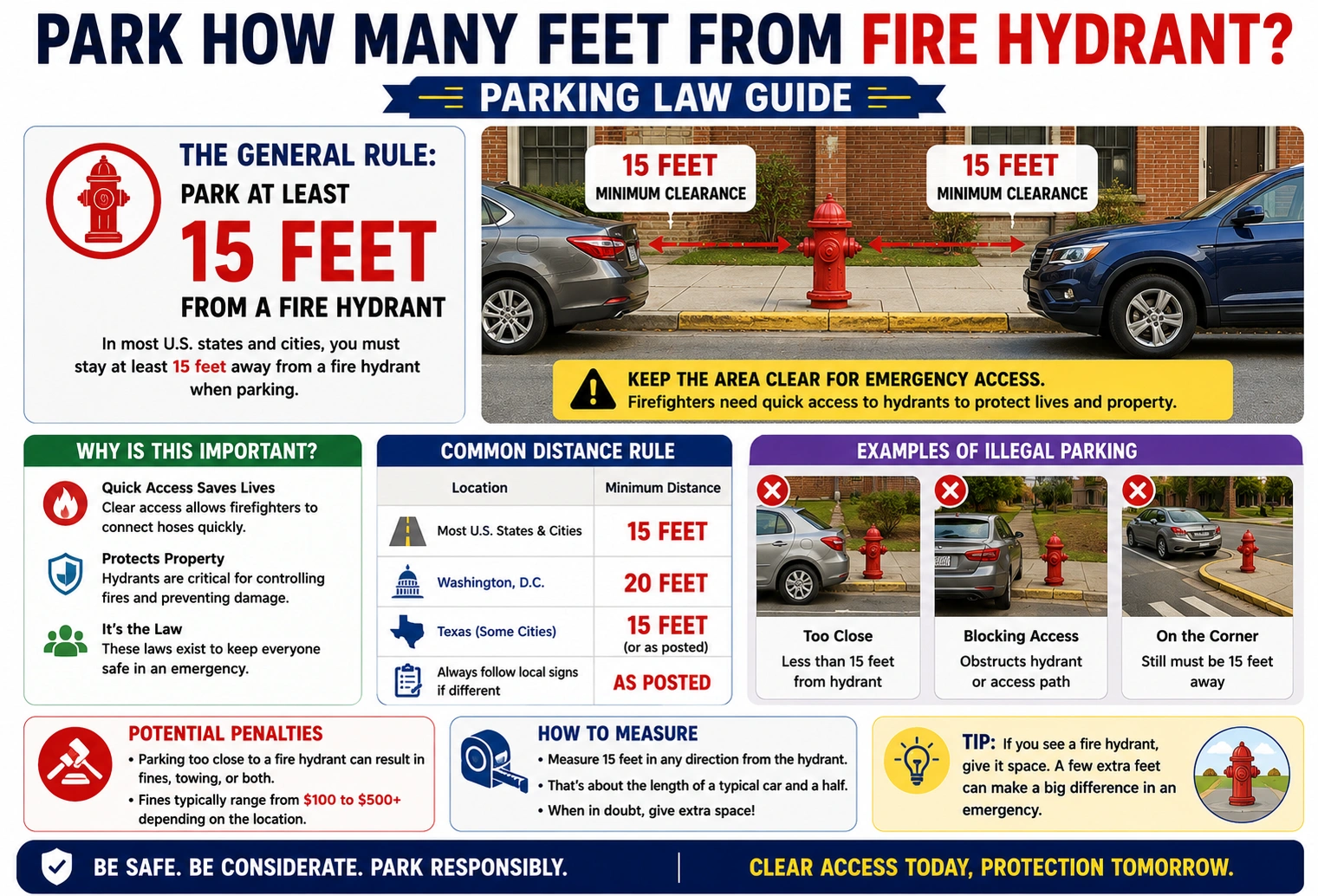
If you’ve ever wondered park how many feet from fire hydrant, you’re not alone. Parking too close to a fire hydrant can result in a costly ticket, your vehicle being towed, or even damage to your car during an emergency.
Fire hydrants provide firefighters with quick access to water during fires. Blocking that access—even partially—can delay emergency response and put lives and property at risk.
Although parking laws vary by state, city, and country, there is a commonly recognized minimum distance used in many places.
Quick Answer
In many U.S. states and cities, you must park at least 15 feet (4.6 meters) away from a fire hydrant.
However, the required distance can vary depending on local laws.
| Location | Typical Minimum Distance |
|---|---|
| Many U.S. States | 15 feet |
| Some Cities | 10–20 feet |
| Other Countries | Varies by local law |
Always check local parking regulations, as municipal rules may differ from state laws.
Why Fire Hydrant Parking Rules Matter
Fire hydrants must remain easily accessible at all times.
During a fire, every second counts.
Parking too close can:
- Block firefighter access
- Delay emergency response
- Increase property damage
- Endanger lives
- Result in fines or towing
Even if firefighters can connect a hose, a nearby vehicle may slow their work.
Standard Parking Distance from a Fire Hydrant
The most widely used rule in the United States is:
Park at least 15 feet away from the fire hydrant.
This distance provides enough room for firefighters to:
- Connect hoses quickly
- Open hydrant valves
- Move equipment safely
- Access the hydrant from multiple angles
A good rule is to leave enough space for a large emergency vehicle to operate comfortably.
Fire Hydrant Parking Laws by State
Parking regulations are established by state and local governments.
Here are examples of common requirements:
| State or Area | Typical Minimum Distance |
| California | 15 feet |
| Texas | 15 feet |
| Florida | 15 feet |
| New York | 15 feet |
| Illinois | 15 feet |
| Some Local Cities | 10–20 feet |
Although 15 feet is the most common standard, always verify the rules where you are driving.
Why States Have Different Rules
Several factors influence local parking regulations.
Street Width
Narrow streets may require additional clearance.
Traffic Volume
Busy urban areas often enforce stricter parking rules.
Emergency Access
Local fire departments may establish minimum clearance distances.
Municipal Ordinances
Cities can adopt regulations that differ from statewide recommendations.
What Happens If You Park Too Close?
Parking too close to a fire hydrant can have serious consequences.
Parking Ticket
Many jurisdictions issue citations immediately.
Vehicle Towing
Your vehicle may be towed at your expense.
Vehicle Damage
In an emergency, firefighters may break vehicle windows to route a hose through the car if necessary to reach the hydrant.
Legal Penalties
Repeated violations may result in higher fines or additional penalties.
Tips for Parking Near Fire Hydrants
Look for Painted Curbs
Many cities paint curbs red or mark areas where parking is prohibited.
Measure the Distance
If you’re unsure, leave extra space rather than risking a ticket.
Read Parking Signs
Some streets include additional parking restrictions.
Think About Emergency Access
Even if parking seems legal, ask yourself whether firefighters would have enough room to work.
Common Parking Mistakes
Assuming Every State Has the Same Rule
Parking distances differ by jurisdiction.
Parking Beside the Hydrant
Even if part of your vehicle appears clear, it may still violate local regulations.
Ignoring Painted Curbs
Red curbs usually indicate no parking.
Estimating Too Closely
Leaving only a few inches beyond the minimum distance can still lead to disputes. When possible, leave additional clearance.
Fire Hydrant Parking Distance Chart
| Situation | Recommendation |
| Standard U.S. Rule | 15 feet |
| Heavy Traffic Areas | Follow posted signs |
| Residential Streets | Check local ordinances |
| Commercial Areas | Observe curb markings |
| Uncertain Distance | Leave extra space |
Practical Example
Imagine you park on a residential street.
You notice a fire hydrant ahead of your vehicle.
If local law requires 15 feet of clearance, move your car far enough away so firefighters can easily access the hydrant without obstruction.
When in doubt, parking farther away is the safest choice.
Expert Tips
Learn Local Rules
Traffic laws vary by city and state.
Avoid Guessing
If you’re uncertain about the distance, choose another parking space.
Watch for Curb Colors
Red-painted curbs generally prohibit parking near hydrants.
Consider Emergency Needs
Remember that hydrants must remain accessible 24 hours a day.
9. FAQs
How many feet should you park from a fire hydrant?
In many U.S. jurisdictions, you must park at least 15 feet away, but local laws may differ.
Can I park next to a fire hydrant if I’m staying in the car?
In many places, no. The restriction generally applies whether the vehicle is attended or unattended.
What happens if I park too close to a fire hydrant?
You may receive a parking ticket, have your vehicle towed, or, in an emergency, firefighters may damage the vehicle if it’s obstructing access.
Is the rule the same everywhere?
No. Parking distances vary by state, city, and country, so always check local regulations.
How can I tell if parking is prohibited?
Look for red curbs, posted parking signs, painted curb markings, or local traffic regulations.
10. Conclusion
If you’re wondering park how many feet from fire hydrant, the answer in many U.S. states and cities is at least 15 feet. However, local ordinances may require more or less clearance, so it’s important to check the laws where you’re parking. Keeping a safe distance from fire hydrants helps firefighters respond quickly during emergencies, protects public safety, and helps you avoid fines, towing, or vehicle damage. When you’re unsure, leaving extra space is always the safest and most responsible choice.
Discover More Articles
How Many Square Feet Is 20×15? Easy Area Calculation Guide