

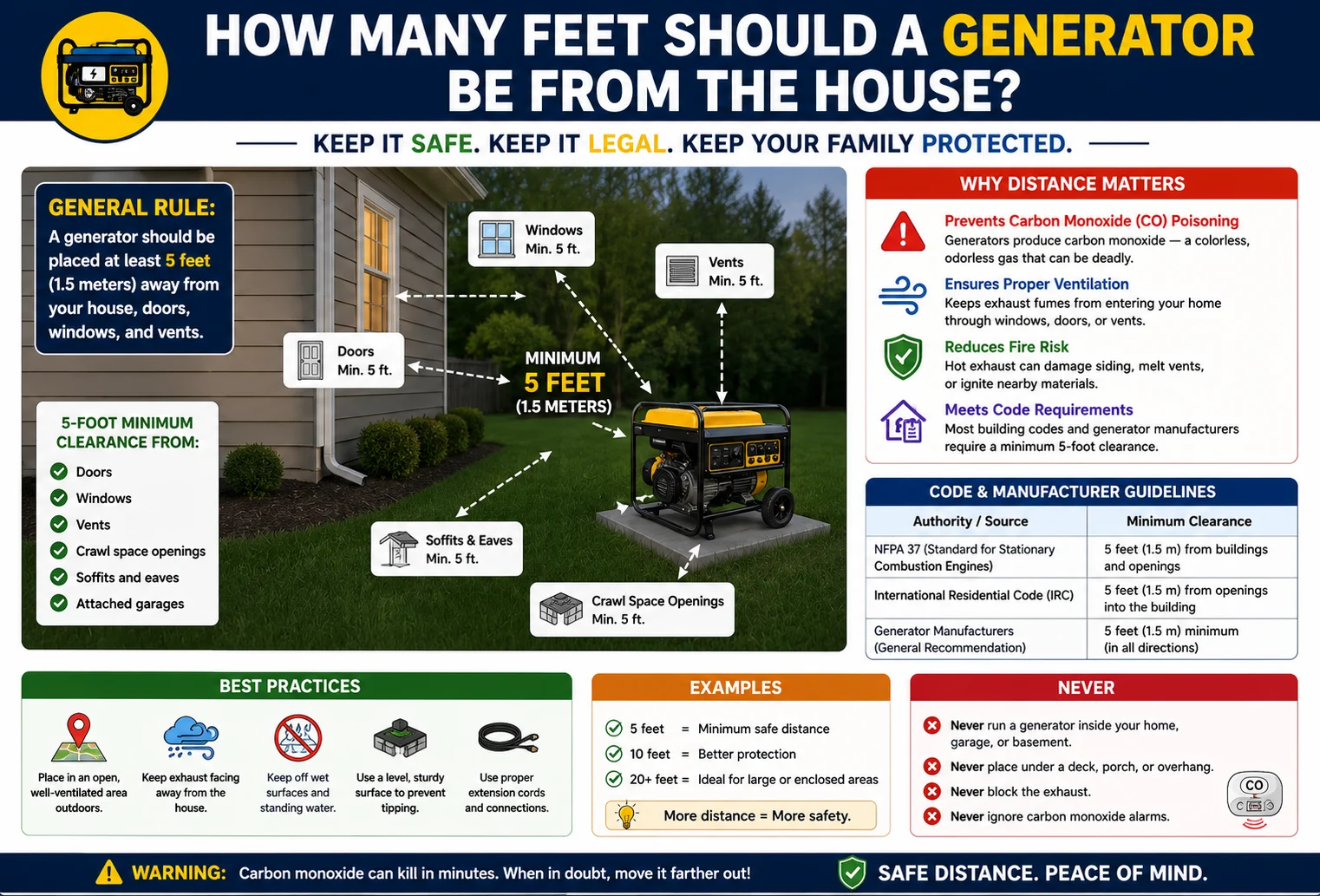
A generator can provide reliable backup power during outages, but placing it in the wrong location can create serious safety hazards. One of the most common questions homeowners ask is how many feet should a generator be from the house.
The general recommendation is:
✅ Place a portable generator at least 20 feet away from your home whenever possible, with the exhaust directed away from the house.
This distance helps reduce the risk of carbon monoxide entering your home through doors, windows, vents, or other openings. Standby generators are permanently installed and must also follow manufacturer instructions and local building codes regarding minimum clearances.
This guide explains recommended distances, safety precautions, installation tips, and common mistakes to avoid.
Quick Answer
Here are the key recommendations:
| Generator Type | Recommended Distance |
|---|---|
| Portable Generator | At least 20 feet from the house whenever possible |
| Standby Generator | Follow the manufacturer’s installation requirements and local building codes (often a minimum clearance from walls and openings is required) |
Answer:
✅ A portable generator should ideally be placed at least 20 feet from your home, with the exhaust pointing away from doors, windows, and vents.
Why Generator Distance Matters
Generators produce exhaust gases that contain carbon monoxide (CO), a colorless and odorless gas that can be deadly if it enters enclosed spaces.
Proper placement helps:
- Reduce carbon monoxide exposure
- Improve ventilation around the generator
- Lower fire risks
- Prevent overheating
- Protect nearby structures
Even outdoor use can be dangerous if the generator is placed too close to windows, garages, crawl spaces, or air intakes.
How Many Feet Should a Generator Be From the House?
Portable Generators
For most portable generators, safety experts recommend placing the unit:
- At least 20 feet away from the home whenever possible
- On a dry, level surface
- Outdoors only
- With the exhaust directed away from occupied buildings
Never operate a portable generator:
- Inside a garage
- In a basement
- On a porch
- Inside a shed
- Under an open window
- In any enclosed or partially enclosed space
Standby Generators
Standby generators are permanently installed and connected to your home’s electrical system.
Their placement depends on:
- Manufacturer installation instructions
- Local building and fire codes
- Required clearances from walls, windows, doors, and air intakes
Many residential standby generators require several feet of clearance around the unit for airflow and maintenance, but always follow the specific installation manual and applicable codes.
Safe Generator Placement Guidelines
Follow these best practices whenever using a generator.
Choose an Open Outdoor Area
Place the generator in a well-ventilated outdoor location with plenty of open space.
Point the Exhaust Away From the House
The exhaust outlet should never face:
- Doors
- Windows
- Air conditioning units
- Crawl space vents
- Garage doors
Keep the Generator Dry
Protect the generator from rain using a generator-rated canopy or cover that does not block ventilation. Never operate it in standing water.
Use Carbon Monoxide Alarms
Install battery-powered or hardwired carbon monoxide detectors on every level of your home and test them regularly.
Portable vs. Standby Generator Placement
| Feature | Portable Generator | Standby Generator |
| Installation | Temporary | Permanent |
| Distance | At least 20 feet whenever possible | Per manufacturer and local code |
| Fuel | Gasoline, propane, or diesel | Natural gas or propane |
| Starts Automatically | No | Yes |
| Professional Installation | Optional | Usually required |
Common Generator Placement Mistakes
Avoid these common errors.
Running a Generator Inside a Garage
Even with the garage door open, carbon monoxide can quickly build up and enter the home.
Placing It Too Close to Windows
Exhaust fumes can enter through open or closed windows, creating a dangerous indoor environment.
Operating Under Decks or Covered Patios
These areas can trap exhaust gases and reduce ventilation.
Ignoring Wind Direction
Wind can carry exhaust toward the house. Whenever possible, position the generator so prevailing winds move fumes away from occupied areas.
Using Indoor Extension Cords Outdoors
Always use heavy-duty extension cords rated for outdoor use.
Benefits of Proper Generator Placement
Correct placement provides several advantages:
- Protects your family from carbon monoxide poisoning
- Reduces fire hazards
- Improves generator performance
- Allows better cooling and airflow
- Extends the generator’s lifespan
- Helps comply with safety recommendations
Expert Safety Tips
- Read your generator’s owner’s manual before use.
- Never refuel a hot generator—allow it to cool first.
- Store fuel in approved containers away from living areas.
- Perform regular maintenance according to the manufacturer’s schedule.
- Test your generator periodically so it’s ready for emergencies.
- If installing a standby generator, hire a qualified professional to ensure compliance with local codes.
9. FAQs
1. How many feet should a portable generator be from the house?
A portable generator should be at least 20 feet away from the home whenever possible, with the exhaust directed away from doors, windows, and vents.
2. Can I run a generator in my garage if the door is open?
No. Even with the garage door open, dangerous levels of carbon monoxide can accumulate and enter your home.
3. Can I place a generator under a covered patio?
No. Generators should be used only in well-ventilated outdoor areas where exhaust gases can disperse safely.
4. How close can a standby generator be to a house?
Standby generators must be installed according to the manufacturer’s instructions and local building codes, which specify minimum clearances from structures and openings.
5. Why is carbon monoxide such a concern?
Carbon monoxide is an odorless, colorless gas produced by generators. Breathing it can cause serious illness or death, making proper generator placement and working CO alarms essential.
10. Conclusion
If you’re wondering how many feet should a generator be from the house, the safest general recommendation for a portable generator is to place it at least 20 feet away whenever possible, with the exhaust directed away from windows, doors, and vents. This greatly reduces the risk of carbon monoxide entering your home.
For standby generators, always follow the manufacturer’s installation instructions and local building codes, as required clearances can vary by model. Combined with proper ventilation, regular maintenance, and functioning carbon monoxide detectors, correct generator placement helps ensure safe and reliable backup power whenever you need it.
Discover More Articles
How Many Feet Is 31 Meters? Exact Conversion Guide
How Many Feet Is a Short Bed Truck? Standard Truck Bed Guide
How Many Square Feet for 2 Guinea Pigs? Complete Cage Size Guide