
If you’re planning to keep two guinea pigs, one of the most important decisions you’ll make is choosing the right cage size. These social animals thrive when they have enough room to exercise, explore, hide, and interact with each other.
So, how many square feet for 2 guinea pigs?
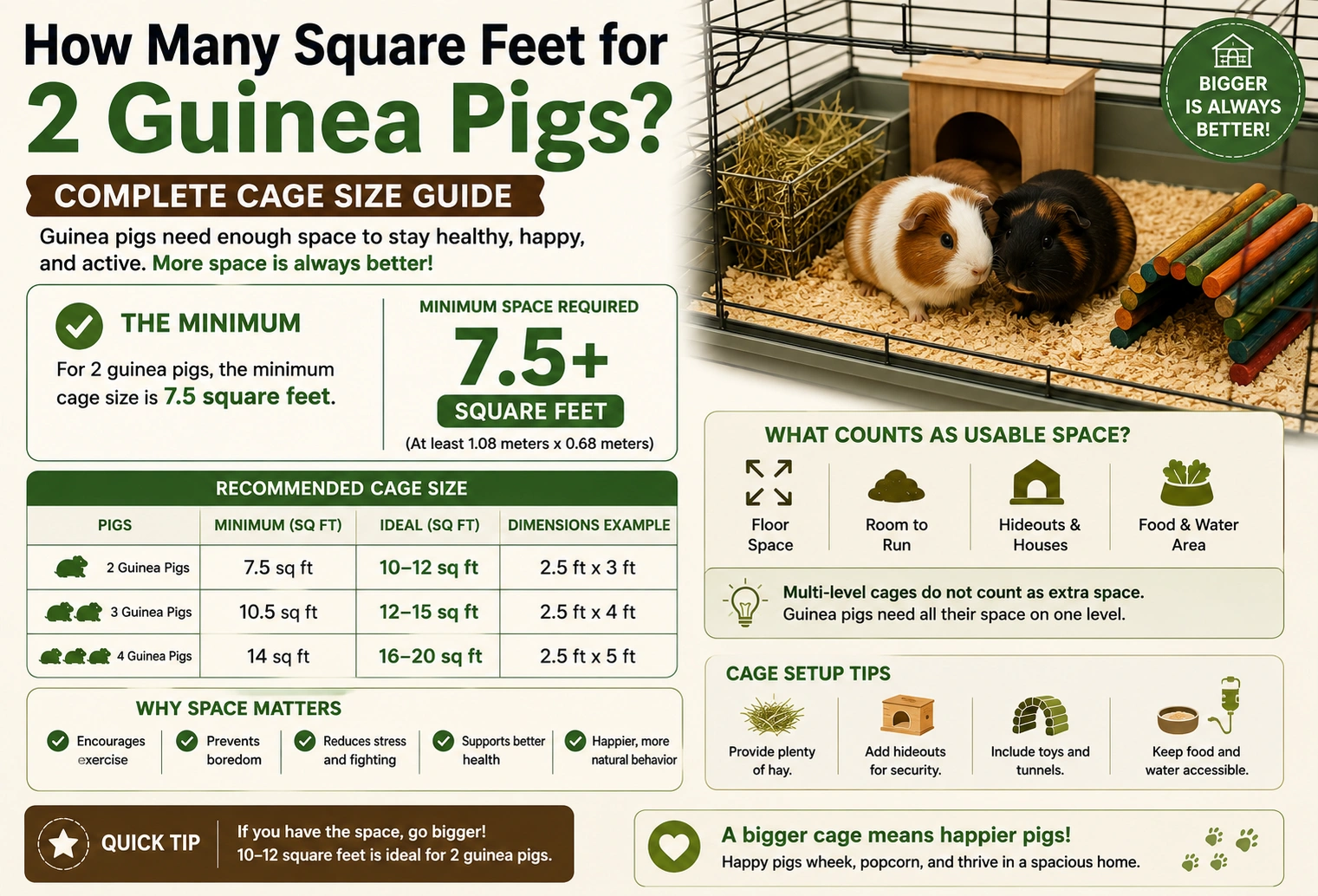
✅ The recommended minimum is 10.5 square feet (about 0.98 square meters).
While some older guides mention 7.5 square feet as the minimum, modern animal welfare recommendations encourage providing at least 10.5 square feet whenever possible. A larger enclosure helps reduce stress, prevents territorial behavior, and gives your pets a healthier, happier life.
This guide explains recommended cage sizes, ideal dimensions, setup tips, and common mistakes to avoid.
Quick Answer
For two guinea pigs, the general recommendations are:
| Number of Guinea Pigs | Recommended Cage Size |
|---|---|
| 2 Guinea Pigs | 10.5 sq ft or larger |
| Ideal Size | 12–16 sq ft |
Answer:
✅ Two guinea pigs should have at least 10.5 square feet of uninterrupted floor space. Bigger is always better.
Why Cage Size Matters
Unlike hamsters or mice, guinea pigs are active animals that spend most of their time on the ground. They need room to:
- Run and exercise
- Explore their environment
- Establish personal space
- Prevent boredom
- Reduce stress
- Avoid conflicts between cage mates
A cage that is too small can lead to:
- Weight gain
- Aggressive behavior
- Poor muscle development
- Stress-related illnesses
- Lack of exercise
Providing adequate space is one of the best ways to support their physical and mental health.
How Many Square Feet for 2 Guinea Pigs?
Minimum Recommended Space
Modern guinea pig care organizations generally recommend:
10.5 square feet (approximately 30 × 50 inches)
This provides enough room for two guinea pigs to move comfortably.
Ideal Space
If your home allows, aim for:
- 12 square feet
- 13 square feet
- 16 square feet or more
Extra space gives guinea pigs more opportunities to exercise and enriches their daily lives.
Cage Dimensions
Some common cage sizes include:
| Cage Dimensions | Floor Space |
| 30 × 50 inches | 10.4 sq ft |
| 30 × 56 inches | 11.7 sq ft |
| 30 × 60 inches | 12.5 sq ft |
| 36 × 60 inches | 15 sq ft |
Longer cages are generally better than taller cages because guinea pigs rarely climb.
Cage Size Comparison Table
| Number of Guinea Pigs | Recommended Floor Space |
| 1 | 7.5–8 sq ft |
| 2 | 10.5 sq ft minimum |
| 3 | 13 sq ft or more |
| 4 | 16 sq ft or more |
If you plan to add more guinea pigs in the future, consider buying a larger enclosure now.
Best Cage Types for Two Guinea Pigs
Several cage styles work well for guinea pigs.
C&C Cages
Cube and Coroplast (C&C) cages are among the most popular because they:
- Offer plenty of floor space
- Are easy to customize
- Expand as needed
- Provide excellent ventilation
Large Wire Cages
Wire cages with solid plastic bottoms also work well if they meet the recommended floor space.
DIY Enclosures
Many owners build custom enclosures using safe materials, allowing them to maximize available space.
Avoid small pet-store cages that do not meet minimum size recommendations.
How to Set Up the Cage
Providing enough square footage is only part of creating a healthy home.
Include the following essentials:
Bedding
Choose absorbent, guinea pig-safe bedding such as:
- Paper bedding
- Aspen shavings (avoid cedar and pine unless kiln-dried and considered safe by your veterinarian)
- Washable fleece liners
Hideouts
Provide at least one hideout per guinea pig, plus an extra one to reduce competition.
Food Area
Include:
- Hay rack
- Food bowl
- Fresh vegetables
- Water bottle
Exercise Space
Leave an open area where your guinea pigs can:
- Zoom around
- Popcorn (their joyful hopping behavior)
- Explore safely
Toys and Enrichment
Offer:
- Cardboard tunnels
- Chew toys
- Paper bags
- Foraging activities
Changing toys occasionally helps keep the environment interesting.
Benefits of a Larger Cage
A spacious enclosure offers several advantages.
Better Health
More room encourages regular exercise and helps maintain a healthy weight.
Less Fighting
Additional space reduces territorial disputes between cage mates.
Easier Cleaning
Larger cages often stay cleaner because waste is spread over a greater area.
Happier Pets
Guinea pigs naturally enjoy exploring, hiding, and running. More space allows them to express these behaviors.
Common Cage Size Mistakes
Avoid these common errors.
Buying the Smallest Cage Available
Many commercial cages marketed for guinea pigs are too small for long-term housing.
Prioritizing Height Over Floor Space
Unlike rats or ferrets, guinea pigs need horizontal space rather than multiple levels.
Forgetting Future Expansion
If you may adopt another guinea pig later, plan for a larger enclosure from the beginning.
Overcrowding the Cage
Too many hideouts, toys, or accessories can reduce usable floor space.
Expert Tips
- Choose the largest cage your home can comfortably accommodate.
- Provide unlimited grass hay and fresh water.
- Clean the cage regularly to maintain hygiene.
- Allow supervised floor time outside the cage whenever possible.
- Observe your guinea pigs daily for changes in behavior or health.
9. FAQs
1. How many square feet do 2 guinea pigs need?
Two guinea pigs should have at least 10.5 square feet of floor space, with larger enclosures being even better.
2. Is 7.5 square feet enough for two guinea pigs?
While some older recommendations listed 7.5 square feet as a minimum, most modern care guidelines recommend 10.5 square feet or more for better welfare.
3. Can guinea pigs live in a multi-level cage?
Guinea pigs prefer wide, single-level enclosures with plenty of floor space. Small ramps are acceptable, but additional levels should not replace adequate ground space.
4. What is the best cage for two guinea pigs?
A large C&C cage or another enclosure with at least 10.5 square feet of uninterrupted floor space is an excellent choice.
5. Do guinea pigs need time outside the cage?
Yes. Supervised floor time in a safe, enclosed area provides extra exercise and mental stimulation, even if they have a spacious cage.
10. Conclusion
If you’re wondering how many square feet for 2 guinea pigs, the recommended minimum is 10.5 square feet, although 12 square feet or more is even better. A larger enclosure gives your guinea pigs the room they need to exercise, explore, and live comfortably together.
When choosing a cage, prioritize floor space over height, include essential accessories like hideouts, bedding, hay, and enrichment toys, and provide regular out-of-cage exercise. By giving your guinea pigs a spacious, well-designed habitat, you’ll help them stay healthy, active, and happy for years to come.
Discover More Articles
How Many Square Feet Will a Bag of Concrete Cover?