
If you’re learning to drive or preparing for a driver’s license exam, you may wonder: how many feet should you turn off your high beams?
The quick answer is:
500 Feet
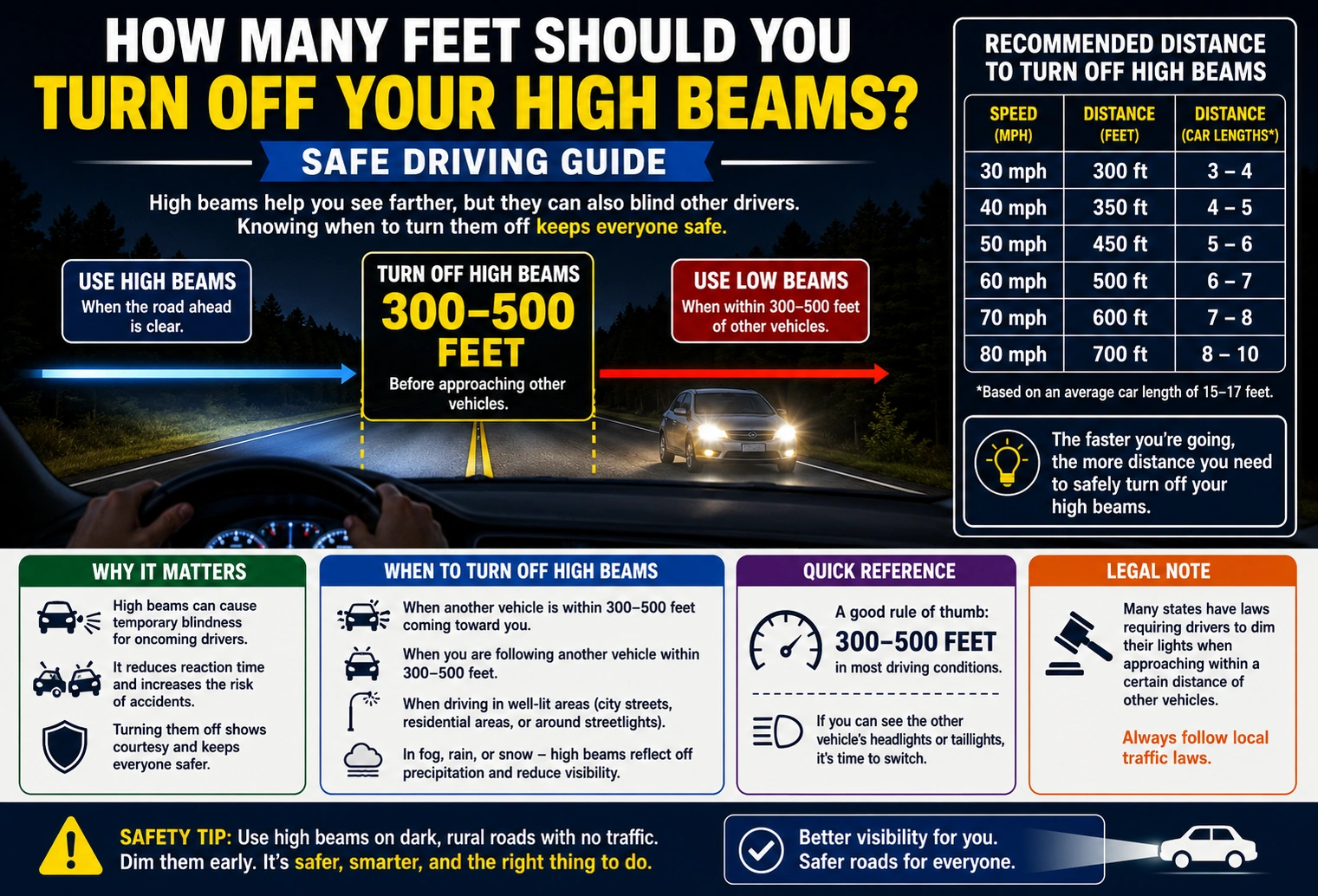
Most driver education programs and state driving manuals recommend dimming your high beams when you are within 500 feet of an oncoming vehicle.
Quick Answer
The standard rule is:
- Turn off high beams within 500 feet of an oncoming vehicle.
- Switch to low beams to avoid blinding other drivers.
Many state driver’s manuals use the 500-foot guideline.
When Should You Turn Off Your High Beams?
High beams are useful on dark roads, but they should not be used in situations where they may impair another driver’s vision.
Oncoming Vehicles
When approaching another vehicle:
500 Feet
is the commonly recommended distance for switching from high beams to low beams.
This reduces glare and improves safety for both drivers.
Vehicles Ahead of You
Many driving manuals recommend dimming your high beams when following another vehicle within:
200 to 300 Feet
This prevents excessive light from reflecting through the other driver’s mirrors.
Urban Areas
High beams are generally unnecessary in:
- Well-lit city streets
- Residential neighborhoods
- Areas with sufficient street lighting
Low beams are usually the safer option.
Why Dimming High Beams Is Important
Preventing Glare
High beams can temporarily reduce another driver’s ability to see the road.
Even a few seconds of glare can increase accident risk.
Improving Road Safety
Proper headlight use helps:
- Maintain visibility
- Reduce driver distraction
- Improve reaction times
Legal Requirements
Many states include high-beam usage rules in traffic laws and driver’s license exams.
Failing to dim headlights can result in traffic citations in some jurisdictions.
High Beam Distance Rules
The most common recommendations are:
| Situation | Recommended Distance |
|---|---|
| Oncoming vehicle | 500 feet |
| Following another vehicle | 200–300 feet |
| Well-lit streets | Use low beams |
| Fog, heavy rain, or snow | Use low beams |
Common High Beam Mistakes
Avoid these common errors.
Waiting Too Long to Dim
Switching at the last moment can still create dangerous glare.
Using High Beams in Fog
High beams often reflect off fog, rain, or snow and reduce visibility.
Low beams perform better in poor weather.
Forgetting Vehicles Ahead
Drivers often remember oncoming traffic but forget to dim for vehicles they are following.
Expert Night Driving Tips
Professional driving instructors recommend:
Scan the Road Ahead
Watch for approaching headlights and dim early.
Keep Windshields Clean
Dirty windshields can worsen glare at night.
Use High Beams Responsibly
Use them only when road conditions require additional visibility.
Reduce Speed When Visibility Is Limited
Even with high beams, reaction time remains important.
Real-World Example
Imagine you’re driving on a dark rural road.
You notice an approaching vehicle.
When the vehicle reaches approximately:
500 Feet Away
you should switch from high beams to low beams.
This helps both drivers maintain safe visibility.
FAQs
1. How many feet should you turn off your high beams before an oncoming vehicle?
Most driving manuals recommend switching to low beams within 500 feet.
2. How close can you follow another vehicle with high beams on?
Generally, you should dim your high beams when within 200–300 feet of the vehicle ahead.
3. Should high beams be used in fog?
No. Low beams usually provide better visibility in fog, rain, or snow.
4. Why are high beams dangerous around other drivers?
They can cause glare that temporarily reduces another driver’s vision.
5. Is the 500-foot rule used on driver’s license tests?
Yes. Many DMV exams include questions about dimming high beams at 500 feet.
Conclusion
Understanding how many feet should you turn off your high beams is an important part of safe nighttime driving. The standard recommendation is:
500 Feet Before An Oncoming Vehicle
Key points to remember:
- Dim high beams within 500 feet of oncoming traffic
- Dim high beams when following another vehicle within 200–300 feet
- Use low beams in fog, rain, snow, and well-lit areas
Following these guidelines improves visibility, reduces glare, and helps keep everyone on the road safer.
Discover More Articles
How Many Feet of Intestines Do Humans Have? Complete Digestive System Guide
How Many Stories Is 45 Feet? Building Height Conversion Guide
How Many Feet High Is Denver? The Mile High City Elevation Guide