

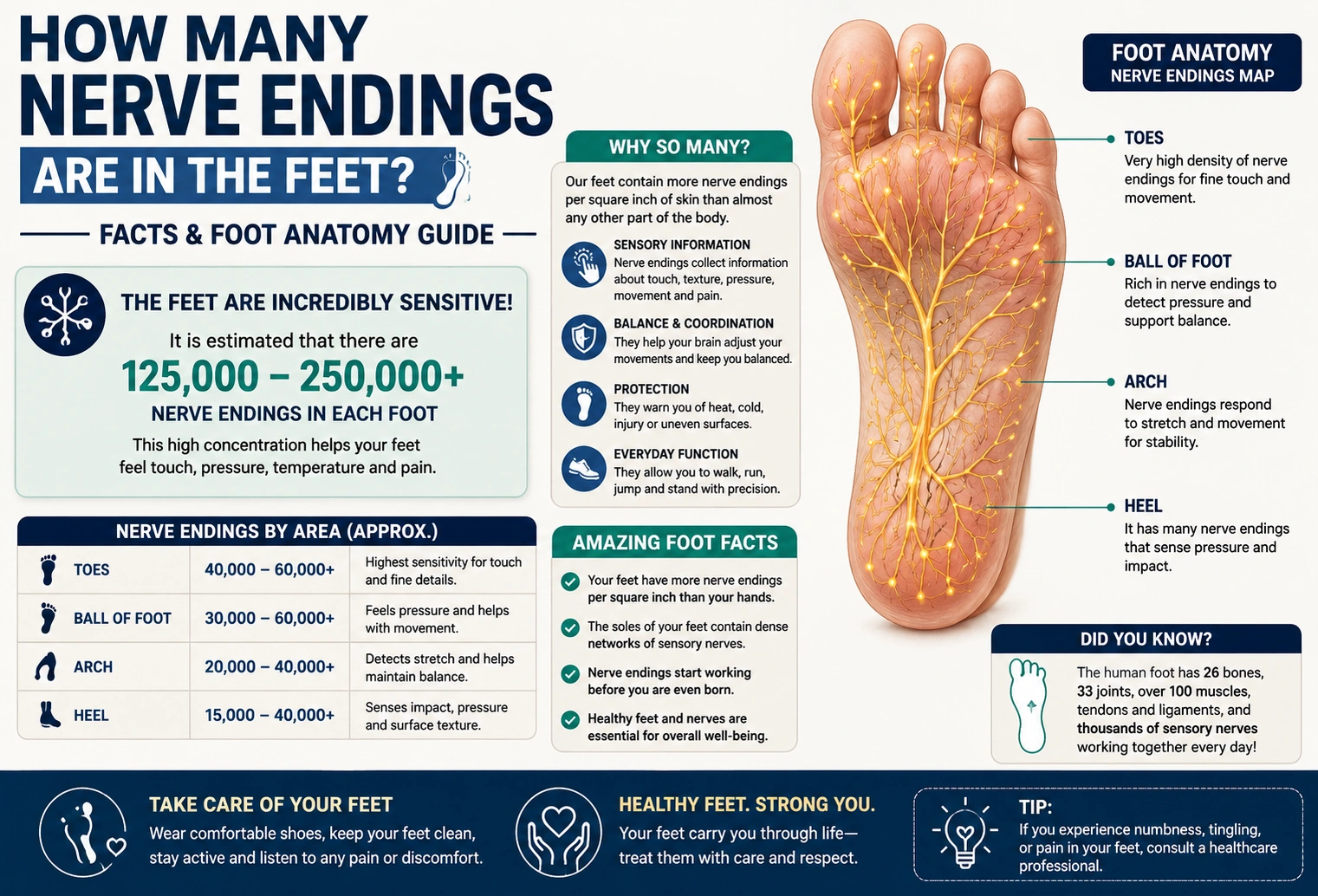
The human feet are among the most sensitive parts of the body. A commonly cited estimate is that each foot contains approximately 7,000 nerve endings, meaning both feet together have around 14,000 nerve endings.
These nerve endings constantly send information to the brain about pressure, temperature, vibration, pain, and body position. This sensory feedback helps you maintain balance, walk safely, and react quickly to changes in your environment.
Answer:
✅ Each foot contains approximately 7,000 nerve endings, for an estimated total of about 14,000 nerve endings in both feet.
Quick Answer
| Measurement | Estimate |
|---|---|
| Nerve endings in one foot | ~7,000 |
| Nerve endings in both feet | ~14,000 |
While the exact number varies among individuals, 7,000 nerve endings per foot is the figure most commonly referenced in anatomy and foot health discussions.
Why the Feet Have So Many Nerve Endings
Your feet support your entire body and are responsible for balance and movement. The high concentration of nerve endings allows them to detect:
- Pressure
- Touch
- Temperature
- Pain
- Vibration
- Surface texture
- Body position (proprioception)
Without this constant stream of information, walking, running, and maintaining balance would be much more difficult.
Foot Anatomy and Major Nerves
Several important nerves supply the feet.
These include:
- Tibial nerve
- Medial plantar nerve
- Lateral plantar nerve
- Sural nerve
- Deep fibular (peroneal) nerve
- Superficial fibular (peroneal) nerve
These nerves branch into thousands of smaller sensory fibers that connect to the skin, muscles, joints, and toes.
Functions of Foot Nerve Endings
The nerve endings in your feet perform several essential functions.
Sensation
They detect touch, heat, cold, and pain, helping you avoid injury.
Balance
Sensory feedback from your feet helps your brain coordinate posture and movement.
Walking and Running
Nerves continuously monitor pressure changes as you move, allowing smooth and coordinated motion.
Protective Reflexes
If you step on a sharp object or an extremely hot surface, nerve endings trigger an immediate withdrawal reflex.
Conditions That Affect Foot Nerves
Several medical conditions can damage or irritate the nerves in the feet, including:
- Peripheral neuropathy
- Diabetes-related nerve damage
- Tarsal tunnel syndrome
- Sciatica
- Nerve compression
- Foot injuries
- Vitamin deficiencies
Symptoms may include:
- Numbness
- Tingling
- Burning sensations
- Sharp pain
- Muscle weakness
- Loss of balance
Persistent symptoms should be evaluated by a healthcare professional.
Tips for Maintaining Healthy Foot Nerves
You can help protect your foot nerves by:
- Wearing properly fitted shoes
- Controlling blood sugar if you have diabetes
- Exercising regularly
- Maintaining a healthy weight
- Inspecting your feet daily for injuries
- Avoiding prolonged pressure on the feet
- Stretching and strengthening foot muscles
- Seeking prompt treatment for foot pain or numbness
Good foot care supports long-term nerve health and mobility.
Interesting Facts About the Feet
- Each foot contains 26 bones.
- Each foot has 33 joints.
- More than 100 muscles, tendons, and ligaments work together in each foot.
- The feet support your body weight and absorb impact with every step.
- Thousands of nerve endings make the feet highly sensitive to changes in the environment.
9. FAQs
1. How many nerve endings are in one foot?
Each foot contains approximately 7,000 nerve endings.
2. How many nerve endings are in both feet?
Together, both feet contain around 14,000 nerve endings.
3. Why are feet so sensitive?
The feet have thousands of sensory nerve endings that detect pressure, touch, temperature, pain, and movement, helping maintain balance and coordination.
4. Can nerve damage affect the feet?
Yes. Conditions such as diabetes, peripheral neuropathy, and nerve compression can reduce sensation or cause pain, tingling, or numbness in the feet.
5. Do foot massages stimulate nerve endings?
Yes. Foot massages stimulate the skin and underlying tissues, activating sensory nerve endings and often providing temporary relaxation and relief from muscle tension.
10. Conclusion
If you’re wondering how many nerve endings are in the feet, the commonly accepted estimate is about 7,000 nerve endings in each foot, or approximately 14,000 in both feet combined. These nerve endings play a crucial role in sensing touch, temperature, pressure, and pain while helping you maintain balance and coordinate movement.
Understanding the importance of foot nerves highlights why proper footwear, regular foot care, and prompt attention to symptoms such as numbness or tingling are essential for maintaining healthy, active feet.
Discover More Articles
How Many Miles Is 18,000 Feet? Exact Conversion Guide
How Many Inches Are in 13 Feet? Exact Conversion Guide
How Many Square Feet in a Box of Tile? Complete Coverage Guide