

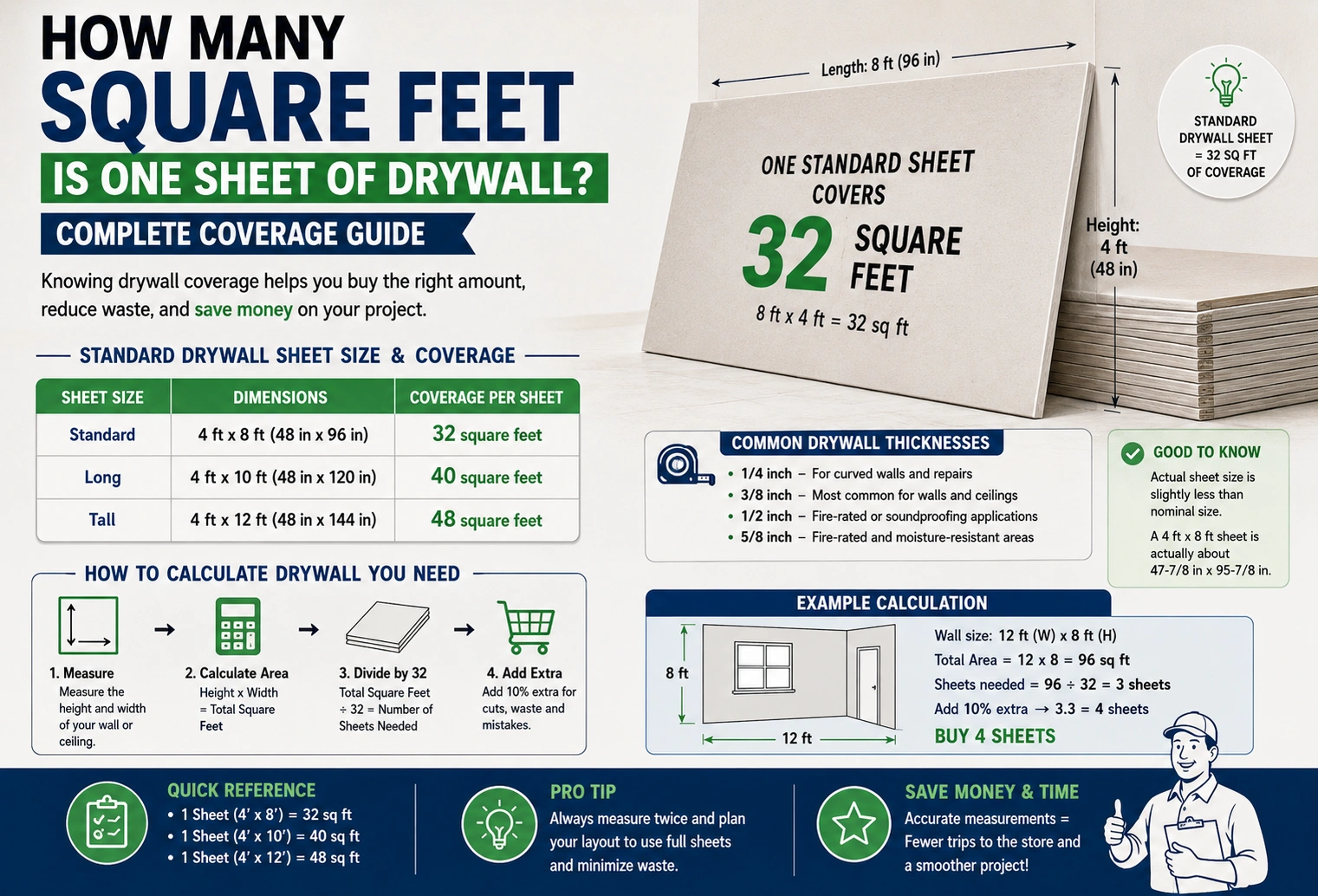
If you’re planning a remodeling or construction project, one of the first questions you’ll ask is how many square feet is one sheet of drywall.
The answer depends on the sheet’s dimensions.
The most common drywall sheet measures:
- 4 feet wide
- 8 feet long
Area calculation:
4 × 8 = 32 square feet
Answer:
✅ One standard 4×8 sheet of drywall covers 32 square feet.
Larger drywall sheets are also available for taller walls and ceilings.
Quick Answer
| Drywall Sheet Size | Coverage |
|---|---|
| 4 × 8 ft | 32 sq ft |
| 4 × 10 ft | 40 sq ft |
| 4 × 12 ft | 48 sq ft |
| 4 × 14 ft | 56 sq ft |
| 4 × 16 ft | 64 sq ft |
The standard 4×8 sheet is the most commonly used size for residential construction.
Standard Drywall Sheet Sizes
Drywall is manufactured in several standard lengths while typically maintaining a width of 4 feet.
Common sizes include:
| Sheet Dimensions | Square Feet Covered |
| 4 × 8 ft | 32 sq ft |
| 4 × 10 ft | 40 sq ft |
| 4 × 12 ft | 48 sq ft |
| 4 × 14 ft | 56 sq ft |
| 4 × 16 ft | 64 sq ft |
Longer sheets reduce the number of seams and finishing work, especially on tall walls.
How to Calculate Drywall Coverage
Calculating drywall coverage is simple.
Formula:
Coverage = Width × Length
Examples:
- 4 × 8 = 32 sq ft
- 4 × 10 = 40 sq ft
- 4 × 12 = 48 sq ft
To estimate the number of sheets you’ll need:
- Measure the total wall or ceiling area.
- Calculate the total square footage.
- Divide by the coverage of one drywall sheet.
- Add 10–15% extra for cuts and waste.
Example Calculation
Suppose your wall measures:
- 12 feet high
- 20 feet long
Total wall area:
12 × 20 = 240 square feet
Using standard 4×8 drywall:
240 ÷ 32 = 7.5 sheets
You’ll need approximately 8 sheets, plus one additional sheet for waste depending on the layout.
Drywall Coverage Chart
| Project Area | Approximate 4×8 Sheets Needed* |
| 100 sq ft | 4 sheets |
| 200 sq ft | 7 sheets |
| 300 sq ft | 10 sheets |
| 400 sq ft | 13 sheets |
| 500 sq ft | 16 sheets |
| 1,000 sq ft | 32 sheets |
*Always purchase extra material for waste and mistakes.
Factors That Affect the Number of Sheets Needed
Several factors influence drywall requirements:
- Door openings
- Window openings
- Ceiling height
- Room layout
- Waste from cutting
- Installation pattern
- Drywall orientation (vertical or horizontal)
Complex rooms often require more material than simple rectangular spaces.
Drywall Estimating Tips
For more accurate estimates:
- Measure every wall separately.
- Include ceilings if they will be drywalled.
- Round measurements up when necessary.
- Purchase 10–15% extra drywall to account for waste.
- Consider using longer sheets to reduce seams.
Planning ahead helps minimize material shortages during installation.
Common Mistakes
Forgetting Ceiling Area
Many estimates include only walls. If you’re installing drywall on the ceiling, calculate that area separately.
Not Allowing for Waste
Cutting around doors, windows, and outlets creates waste. Ordering extra sheets helps avoid delays.
Using the Wrong Sheet Size
Confirm whether you’re using 4×8, 4×10, 4×12, or another size before estimating coverage.
9. FAQs
1. How many square feet does one sheet of drywall cover?
A standard 4×8 sheet covers 32 square feet.
2. What is the most common drywall sheet size?
The most common size is 4 feet by 8 feet.
3. How many drywall sheets do I need for 1,000 square feet?
Using standard 4×8 sheets, you’ll need about 32 sheets, plus extra for waste.
4. Should I buy extra drywall?
Yes. Most professionals recommend purchasing 10–15% more than your calculated requirement to account for cuts and installation waste.
5. Are larger drywall sheets better?
Longer sheets can reduce seams and finishing work, making them a good choice for larger walls or higher ceilings if they can be handled safely.
10. Conclusion
If you’re wondering how many square feet is one sheet of drywall, the standard 4×8 sheet covers 32 square feet. Larger sheets such as 4×10, 4×12, and 4×16 provide 40, 48, and 64 square feet of coverage, respectively.
Understanding drywall coverage makes it easier to estimate materials for remodeling and construction projects. Measure your walls and ceilings carefully, divide the total area by the sheet coverage, and add 10–15% extra to account for waste and cutting.
Discover More Articles
How Many Miles Is 18,000 Feet? Exact Conversion Guide
How Many Square Feet in a Box of Tile? Complete Coverage Guide