
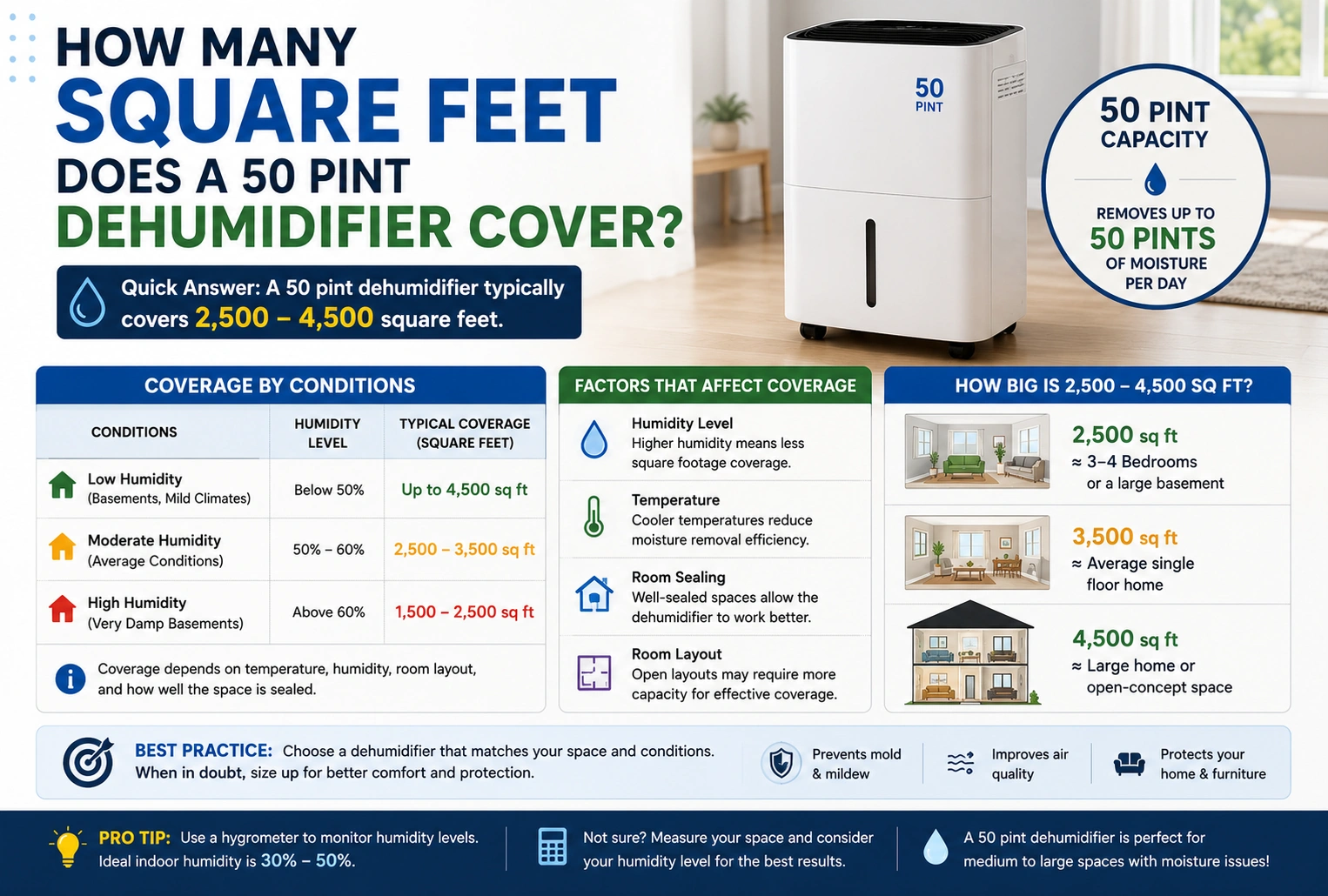
If you’re asking how many square feet does a 50 pint dehumidifier cover, the typical answer is:
A 50-pint dehumidifier can generally cover between 3,000 and 4,500 square feet, depending on the humidity level and the manufacturer’s specifications.
For moderately damp spaces, many 50-pint models perform well in areas of approximately 4,000 square feet. In very damp or wet environments, the effective coverage may be closer to 3,000 square feet.
Quick Answer
| Dehumidifier Size | Recommended Coverage |
|---|---|
| 50 Pint | 3,000–4,500 sq ft |
Always check the manufacturer’s recommendations, as actual performance varies by model and room conditions.
Recommended Coverage Area
A 50-pint dehumidifier is commonly used for:
- Large basements
- Entire floors of a home
- Large living areas
- Garages
- Workshops
- Open-concept homes
Many Energy Star-rated models advertise coverage of around 4,000 to 4,500 square feet under typical household conditions.
How Moisture Levels Affect Coverage
Coverage depends on more than just room size.
Moderately Damp Rooms
If the room feels humid but doesn’t have standing water or severe moisture problems, a 50-pint unit may effectively cover up to 4,500 square feet.
Very Damp Basements
Spaces with persistent moisture, condensation, or musty odors may reduce the effective coverage to approximately 3,000–3,500 square feet.
Extremely Wet Areas
Rooms with water intrusion, flooding, or excessive humidity may require multiple units or a larger-capacity commercial dehumidifier.
Coverage Chart
| Moisture Level | Approximate Coverage |
| Slightly Damp | Up to 4,500 sq ft |
| Moderately Damp | Around 4,000 sq ft |
| Very Damp | 3,000–3,500 sq ft |
| Extremely Wet | May require multiple units |
These estimates are general guidelines and may vary between manufacturers.
Choosing the Right Dehumidifier
When selecting a dehumidifier, consider more than square footage.
Room Size
Larger rooms require higher-capacity units to maintain comfortable humidity levels.
Humidity Level
The wetter the space, the more moisture the dehumidifier must remove each day.
Airflow
Open floor plans allow air to circulate more freely, improving dehumidifier performance.
Temperature
Most residential dehumidifiers operate most efficiently within their recommended temperature range.
Drainage Options
Choose between:
- Manual water bucket
- Continuous gravity drain
- Built-in pump (available on some models)
The best option depends on where the unit will be installed.
Real-World Examples
A 50-pint dehumidifier is suitable for many residential spaces where excess moisture is a concern.
Finished Basement
A large basement with occasional dampness can often be maintained effectively with a 50-pint unit, provided doors and windows remain closed during operation.
Open-Concept Living Area
Homes with connected living rooms, kitchens, and dining areas may benefit from a 50-pint dehumidifier, especially in humid climates.
Garage or Workshop
Garages and workshops often experience moisture buildup due to weather changes. A properly sized dehumidifier can help protect tools, equipment, and stored materials from rust and mold.
Rental Property
Landlords frequently install 50-pint dehumidifiers in lower-level apartments or basements to reduce humidity and improve indoor comfort.
Signs You May Need a Larger Unit
Although a 50-pint model works well for many homes, some situations may require additional capacity.
Consider a larger or additional dehumidifier if you notice:
- Persistent condensation on windows
- Mold or mildew growth
- Musty odors that do not disappear
- Standing water after heavy rain
- Humidity levels remaining above 50–60% despite continuous operation
In these situations, a single residential unit may not be sufficient.
Common Buying Mistakes
Choosing Based Only on Square Footage
Coverage area is important, but moisture level is equally critical. A very damp room may require a larger-capacity unit even if the room is relatively small.
Ignoring Airflow
Blocking the air intake or exhaust can reduce efficiency. Leave adequate clearance around the dehumidifier according to the manufacturer’s instructions.
Emptying the Bucket Too Often
If the unit runs continuously, consider using the continuous drain option or a model with a built-in pump to reduce maintenance.
Poor Placement
Place the dehumidifier where air can circulate freely, away from walls, furniture, or curtains that may block airflow.
Tips for Better Performance
Keep Doors and Windows Closed
Closing openings prevents humid outdoor air from entering the space while the dehumidifier is running.
Clean the Air Filter
A clean filter improves airflow and helps the unit operate more efficiently.
Monitor Indoor Humidity
Aim to maintain indoor relative humidity between 30% and 50% for comfort and to help reduce the risk of mold growth.
Perform Regular Maintenance
Empty the water bucket (if applicable), clean the filter, and inspect the drain hose periodically to keep the unit working efficiently.
Frequently Asked Questions
How many square feet can a 50-pint dehumidifier cover?
Most 50-pint dehumidifiers are designed to cover approximately 3,000 to 4,500 square feet, depending on humidity levels and the specific model.
Is a 50-pint dehumidifier good for a basement?
Yes. A 50-pint unit is commonly recommended for medium to large basements, especially those with moderate to high humidity.
Can one dehumidifier handle an entire house?
It depends on the home’s layout and humidity levels. An open floor plan may allow a single unit to serve a large area, while multi-story homes or spaces with isolated rooms may require more than one unit.
What humidity level should I maintain indoors?
Most experts recommend keeping indoor humidity between 30% and 50% for comfort and to discourage mold and mildew growth.
Does a larger dehumidifier use more electricity?
Higher-capacity models may consume more power, but they often remove moisture more quickly and may run for shorter periods, improving overall efficiency in large or damp spaces.
Conclusion
If you’re wondering how many square feet does a 50 pint dehumidifier cover, the general recommendation is 3,000 to 4,500 square feet, depending on the humidity level, airflow, and the manufacturer’s specifications. In moderately damp conditions, many models effectively handle around 4,000 square feet, while very damp spaces may reduce effective coverage to about 3,000 square feet.
Choosing the correct dehumidifier involves considering both room size and moisture level. By selecting the right capacity, placing the unit properly, and performing regular maintenance, you can improve indoor air quality, reduce excess humidity, and help protect your home from mold, mildew, and moisture damage.
Discover More Articles
How Many Board Feet in a 2x6x8? Easy Lumber Calculation Guide
How Many Cubic Feet Is 2 Yards? Exact Conversion Guide
How Many Feet of Lights for an 8ft Tree? Complete Lighting Guide