

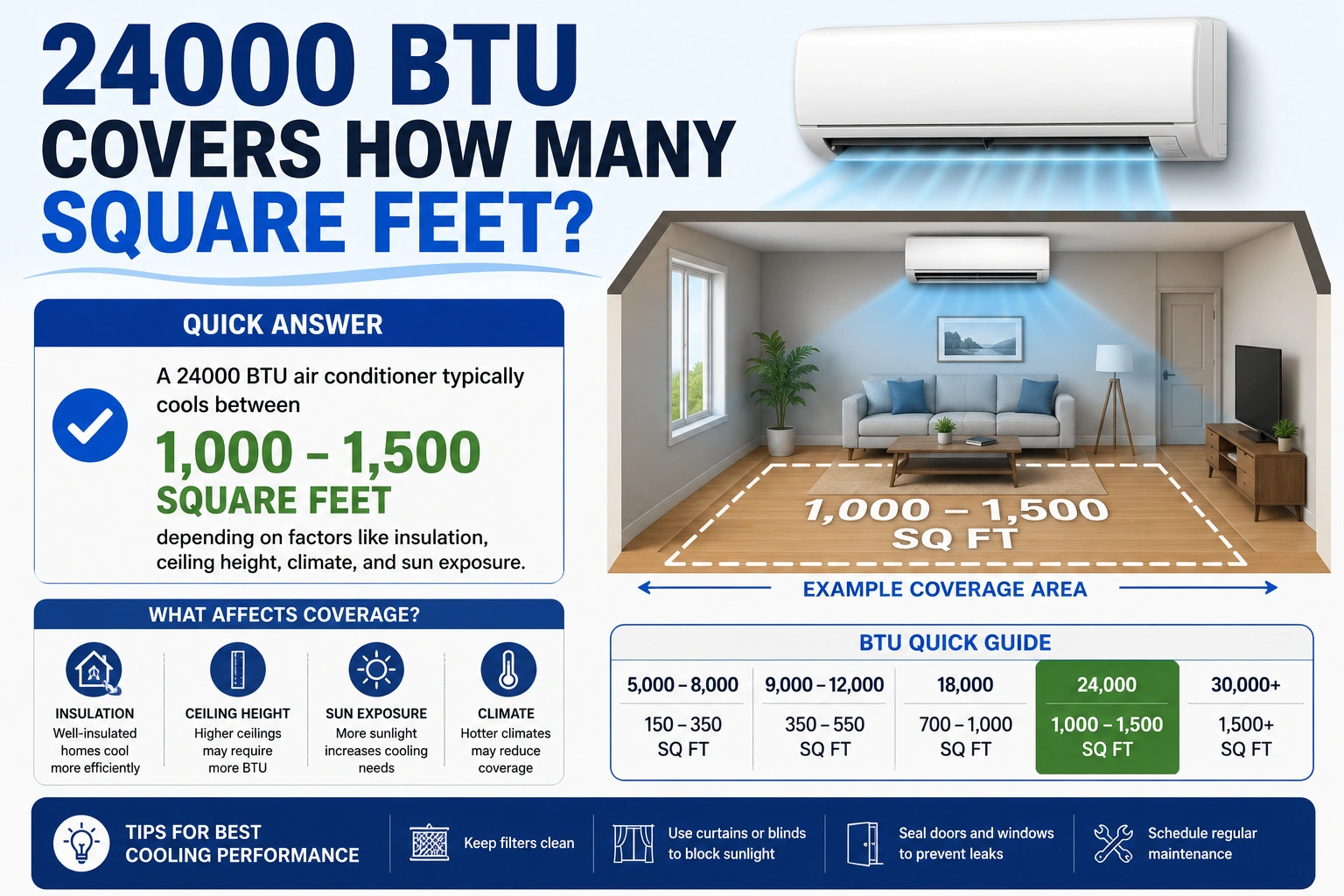
If you are shopping for an air conditioner or mini split system, you may ask: 24000 BTU covers how many square feet? Choosing the correct BTU size is important for comfort, energy efficiency, and long-term cooling performance.
The quick answer is:
24,000 BTU≈1,000 to 1,500 square feet
A 24,000 BTU air conditioner is generally suitable for:
- Large living rooms
- Open floor plans
- Small apartments
- Offices
- Medium-sized homes
However, actual coverage depends on several factors including:
- Ceiling height
- Climate
- Insulation
- Sun exposure
- Number of occupants
This guide explains BTU sizing, square footage calculations, room examples, and expert cooling tips.
Understanding BTU and Cooling Capacity
Before calculating cooling coverage, it helps to understand what BTU means.
What Is BTU?
BTU stands for:
British Thermal Unit
It measures how much heat an air conditioner can remove from a room per hour.
Higher BTU ratings provide greater cooling power.
Why BTU Matters
Choosing the right BTU size helps:
- Maintain comfortable temperatures
- Improve energy efficiency
- Reduce electricity costs
- Prevent excessive AC wear
An incorrectly sized air conditioner may cool poorly or waste energy.
24000 BTU Covers How Many Square Feet?
A standard 24,000 BTU air conditioner typically cools:
1,000 to 1,500 square feet
Most HVAC sizing charts place 24,000 BTU units within this range under average conditions.
Ideal Room Sizes
A 24,000 BTU system commonly works well for:
| Space Type | Approximate Size |
|---|---|
| Large living room | 1,000 sq ft |
| Open floor plan | 1,200 sq ft |
| Small apartment | 1,300 sq ft |
| Office space | 1,500 sq ft |
Actual performance varies based on room conditions.
BTU to Square Feet Formula
HVAC professionals often use simple formulas for estimating cooling needs.
Standard Cooling Formula
A common estimate is:
20 BTU per square foot
Example Calculation
Suppose your home measures:
1,200 square feet
Estimated cooling requirement:
1,200×20=24,000 BTU
A 24,000 BTU unit would likely cool the space effectively.
Factors That Affect Cooling Coverage
BTU recommendations are not always exact.
Several conditions influence cooling performance.
Ceiling Height
Rooms with high ceilings contain more air volume and may require additional BTUs.
Climate
Hot climates increase cooling demands.
Homes in warmer regions often need larger AC units.
Sunlight Exposure
Rooms with heavy sun exposure heat up faster.
South-facing rooms may require stronger cooling systems.
Insulation
Well-insulated homes retain cool air more effectively.
Poor insulation increases cooling loss.
Occupancy
More people generate additional heat.
Busy rooms may need extra cooling capacity.
24000 BTU Coverage Chart
Here is a general BTU sizing chart.
| BTU Rating | Approximate Coverage |
|---|---|
| 8,000 BTU | 300–350 sq ft |
| 12,000 BTU | 450–550 sq ft |
| 18,000 BTU | 700–1,000 sq ft |
| 24,000 BTU | 1,000–1,500 sq ft |
| 36,000 BTU | 1,500–2,000 sq ft |
This chart provides quick sizing estimates.
Common Uses for a 24000 BTU Air Conditioner
A 24,000 BTU system works well for many residential and commercial spaces.
Large Living Rooms
Large family rooms often require stronger cooling systems.
Open Floor Plans
Open layouts allow air to circulate across multiple connected spaces.
Apartments
Many large apartments use 24,000 BTU systems for whole-unit cooling.
Offices and Garages
Converted garages and office spaces may benefit from high-capacity mini split systems.
Choosing the Right AC Size
Correct sizing improves comfort and efficiency.
Problems With an Undersized AC
Small units may:
- Run constantly
- Struggle to cool
- Increase energy bills
Problems With an Oversized AC
Oversized systems may:
- Cycle too quickly
- Create humidity issues
- Waste electricity
Energy Efficiency Matters
Modern high-efficiency systems reduce operating costs significantly.
Look for high SEER ratings when purchasing an AC unit.
Common BTU Calculation Mistakes
Many homeowners miscalculate cooling needs.
Ignoring Insulation
Poor insulation increases heat transfer dramatically.
Forgetting Ceiling Height
Square footage alone may not reflect actual room volume.
Overestimating Coverage
Extremely large spaces may require multiple cooling zones instead of one oversized unit.
Expert Tips for Better Cooling Efficiency
Professionals recommend several best practices.
Improve Insulation
Better insulation reduces cooling loss and energy costs.
Use Ceiling Fans
Fans improve air circulation and reduce AC workload.
Maintain Your AC System
Regular maintenance helps:
- Improve efficiency
- Extend system lifespan
- Lower repair costs
Real-World Example
Suppose your open-concept living area measures:
1,250 square feet
Using the standard formula:
1,250×20=25,000 BTU
A 24,000 BTU air conditioner would likely provide effective cooling under normal conditions.
FAQs
1. How many square feet can a 24000 BTU AC cool?
A 24,000 BTU unit typically cools 1,000–1,500 square feet.
2. Is 24000 BTU enough for a large room?
Yes. It works well for large rooms and open floor plans.
3. How do I calculate the right BTU size?
A common estimate uses approximately 20 BTU per square foot.
4. Can a 24000 BTU unit cool multiple rooms?
Yes, especially in open floor plans or with ducted systems.
5. Does ceiling height affect BTU requirements?
Yes. Higher ceilings usually require additional cooling power.
Conclusion
Understanding 24000 BTU covers how many square feet helps homeowners choose the right cooling system for comfort and energy efficiency. In most cases:
24,000 BTU≈1,000 to 1,500 square feet
However, actual cooling performance depends on insulation, climate, sunlight, and room layout. Choosing the proper BTU size ensures better airflow, lower energy costs, and improved indoor comfort year-round.
Discover More Articles
How Many Square Feet Does a Gallon of Paint Cover?