

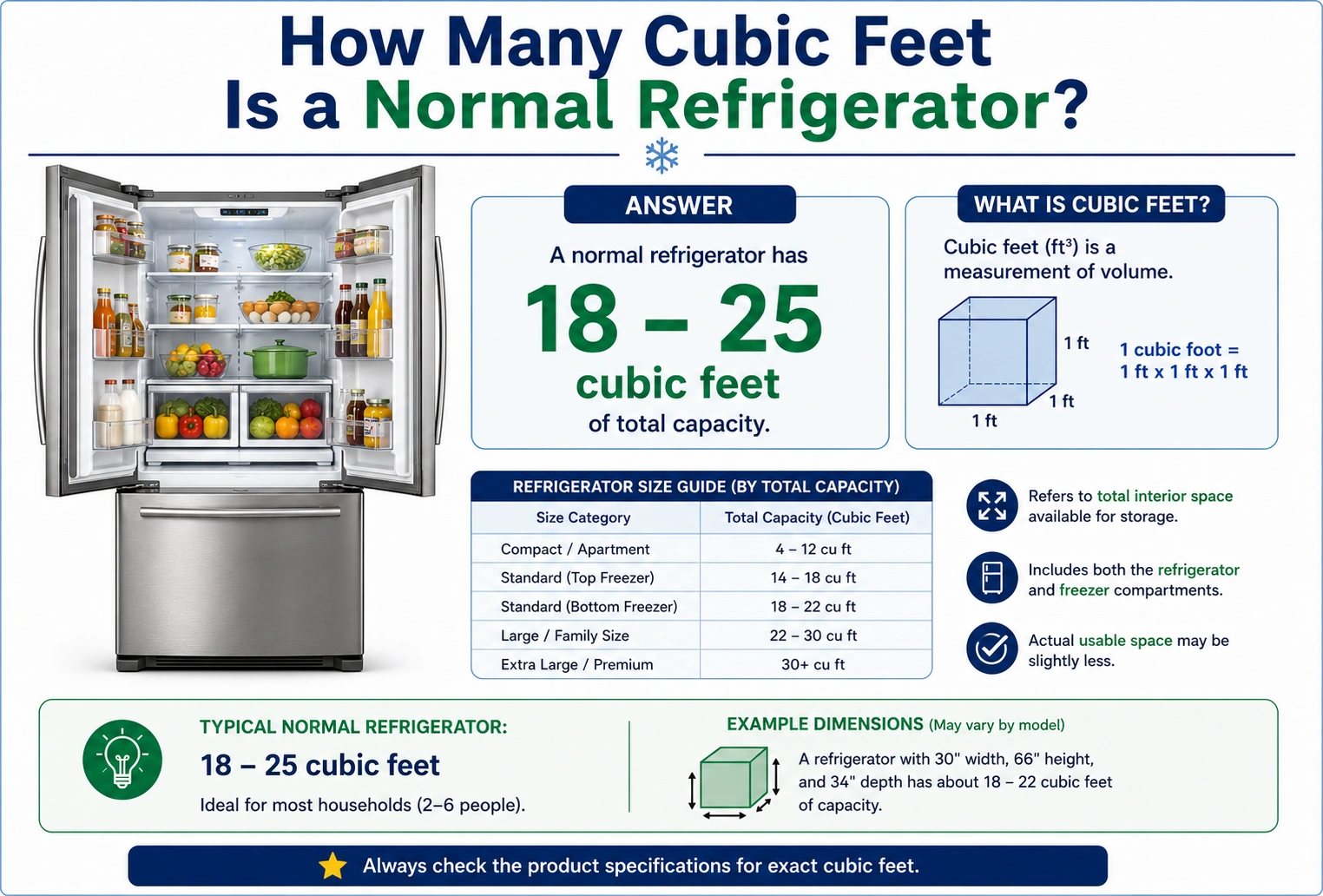
If you are wondering “how many cubic feet is a normal refrigerator,” the average answer is:
Average Refrigerator Size≈18–25 cubic feet
Most standard household refrigerators fall between:
- 18 and 25 cubic feet
This size range works well for:
- Small families
- Couples
- Apartments
- Standard kitchens
Refrigerator capacity affects:
- Food storage
- Kitchen organization
- Energy usage
- Appliance efficiency
Understanding refrigerator cubic feet helps homeowners choose the right appliance for their space and lifestyle.
In this complete guide, you will learn:
- Average refrigerator sizes
- What cubic feet means
- How to measure refrigerator capacity
- Different fridge types and capacities
- Helpful refrigerator charts
- Expert buying tips
Let’s begin.
Quick Answer About Refrigerator Size
A normal refrigerator usually measures:
- 18–25 cubic feet
Smaller refrigerators may range from:
- 10–18 cubic feet
Larger family refrigerators can exceed:
- 25 cubic feet
The average family refrigerator commonly falls around:
- 20–22 cubic feet
What Does Cubic Feet Mean in Refrigerators?
Before comparing refrigerator sizes, it helps to understand cubic feet.
Cubic Feet Definition
Cubic feet measures:
- The amount of internal storage space inside a refrigerator
The formula for cubic feet is:
Cubic Feet=Length×Width×Height
Manufacturers calculate usable interior space using this measurement.
Why Refrigerator Capacity Matters
Refrigerator size affects:
- Food storage
- Grocery organization
- Energy consumption
- Kitchen convenience
A refrigerator that is too small can create clutter.
A refrigerator that is too large may waste energy and kitchen space.
Refrigerator Storage Space Explained
Cubic feet includes:
- Refrigerator compartment
- Freezer compartment
However, shelves and drawers reduce actual usable storage slightly.
Average Refrigerator Sizes
Refrigerators come in many sizes.
Small Refrigerators
Small refrigerators typically range from:
- 10–18 cubic feet
These work well for:
- Apartments
- Dorm rooms
- Offices
- Small households
Standard Family Refrigerators
Most normal household refrigerators range between:
18–25 cubic feet
This size works well for:
- Families of 3–5 people
Large Refrigerators
Large refrigerators often exceed:
- 25 cubic feet
These are common in:
- Large homes
- Big families
- Luxury kitchens
How to Measure Refrigerator Cubic Feet
You can estimate refrigerator size yourself.
Refrigerator Measurement Formula
Use this formula:
Cubic Feet=1728Length×Width×Height
The number 1728 converts cubic inches into cubic feet.
Step-by-Step Measurement Guide
Measure:
- Interior width
- Interior depth
- Interior height
Then multiply the numbers together.
Example Calculation
Suppose the refrigerator interior measures:
- 30 inches wide
- 30 inches deep
- 60 inches high
Step 1:
30×30×60=54,000
Step 2:
54,000÷1728≈31.25
So the refrigerator capacity is approximately:
- 31.25 cubic feet
Refrigerator Size Chart
Here is a quick refrigerator capacity chart.
| Refrigerator Type | Average Capacity |
|---|---|
| Mini fridge | 1.7–4.5 cu ft |
| Small apartment fridge | 10–18 cu ft |
| Standard refrigerator | 18–25 cu ft |
| Large family fridge | 25–30+ cu ft |
This chart helps compare common refrigerator sizes.
Choosing the Right Refrigerator Size
Selecting the right size depends on several factors.
Household Size
General recommendations:
| Household Size | Recommended Capacity |
|---|---|
| 1–2 people | 10–18 cu ft |
| 3–4 people | 18–25 cu ft |
| 5+ people | 25+ cu ft |
Kitchen Space
Always measure:
- Width
- Height
- Door clearance
- Walking space
Before purchasing a refrigerator.
Food Storage Needs
People who:
- Cook frequently
- Buy groceries in bulk
- Store frozen foods
Usually need larger refrigerators.
Common Refrigerator Types and Capacities
Different fridge designs affect storage space.
Top Freezer Refrigerators
Typical size:
- 14–22 cubic feet
Affordable and space-efficient.
Side-by-Side Refrigerators
Typical size:
- 20–29 cubic feet
Offer easy freezer access.
French Door Refrigerators
Typical size:
- 22–30 cubic feet
Popular in modern kitchens.
Mini Fridges
Typical size:
- 1.7–4.5 cubic feet
Ideal for small spaces.
Common Refrigerator Sizing Mistakes
Buying the wrong refrigerator size can create problems.
Ignoring Door Clearance
Large refrigerators require room for doors to open fully.
Buying Too Small
Insufficient storage creates overcrowding.
Not Measuring Kitchen Space
Some refrigerators may not fit through:
- Doorways
- Hallways
- Cabinets
Overlooking Freezer Capacity
Freezer size matters for frozen food storage.
Expert Tips for Refrigerator Shopping
These tips help buyers choose wisely.
Measure Before Buying
Always measure:
- Kitchen dimensions
- Appliance space
- Entryways
Consider Future Needs
Growing families may require larger refrigerators later.
Check Energy Efficiency
Energy-efficient refrigerators reduce electricity costs.
Compare Interior Layouts
Some refrigerators use space more efficiently than others.
Practical Situations Where Refrigerator Size Matters
Refrigerator capacity affects daily life.
Family Meal Planning
Larger refrigerators store more groceries.
Apartment Living
Compact refrigerators save space.
Bulk Shopping
Warehouse shopping often requires larger storage capacity.
Kitchen Remodeling
Appliance size influences cabinet and layout planning.
FAQs
How many cubic feet is a normal refrigerator?
A normal refrigerator typically ranges between 18 and 25 cubic feet.
What size refrigerator does a family need?
Most families of 3–4 people use refrigerators around 18–25 cubic feet.
How do you calculate refrigerator cubic feet?
Use this formula:
Cubic Feet=1728Length×Width×Height
Is 20 cubic feet a good refrigerator size?
Yes. A 20-cubic-foot refrigerator works well for many average households.
What is considered a large refrigerator?
Large refrigerators usually exceed 25 cubic feet.
Conclusion
So, how many cubic feet is a normal refrigerator?
The average answer is:
- 18–25 cubic feet
Normal Refrigerator Size≈18–25 cubic feet
Understanding refrigerator capacity helps homeowners:
- Choose the right appliance
- Improve kitchen organization
- Reduce wasted space
- Plan food storage efficiently
- Compare refrigerator models more accurately
Once you understand refrigerator cubic feet, selecting the ideal fridge size becomes much easier for any kitchen or household.
Discover More Articles
How Many Square Feet Does a Gallon of Paint Cover?