

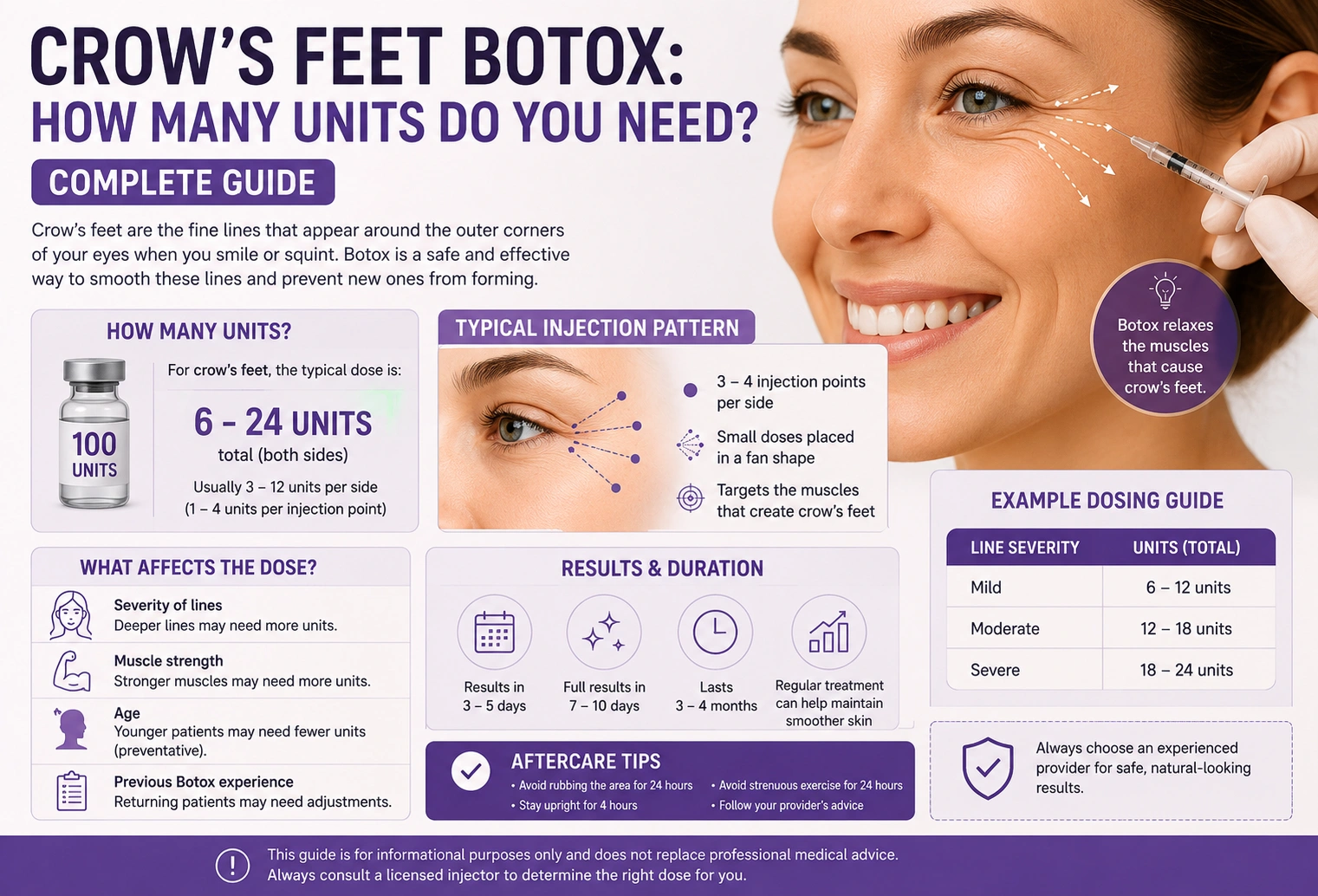
If you’re wondering how many Botox units are used for crow’s feet, the most common treatment range is 12 to 24 units total, depending on your facial anatomy, muscle strength, wrinkle severity, and treatment goals.
A frequently used approach is approximately 6 to 12 units per side, though the exact number should always be determined by a qualified healthcare professional after an in-person assessment.
Botox works by temporarily relaxing the muscles responsible for dynamic wrinkles, helping reduce the appearance of crow’s feet that form when smiling or squinting.
Important: The appropriate Botox dose varies from person to person. Only a licensed medical professional can determine the safest and most effective dosage for your individual needs.
Quick Answer
| Treatment Area | Typical Botox Units* |
|---|---|
| One Side (Crow’s Feet) | 6–12 units |
| Both Sides Combined | 12–24 units |
*These are common clinical ranges. Individual treatment plans may differ based on professional evaluation.
What Are Crow’s Feet?
Crow’s feet are the fine lines and wrinkles that develop at the outer corners of the eyes.
They usually become more noticeable when:
- Smiling
- Laughing
- Squinting
- Expressing emotions
As skin loses collagen and elasticity with age, these dynamic lines can gradually become visible even when the face is at rest.
Typical Botox Units for Crow’s Feet
The amount of Botox used depends on several individual factors, but many providers commonly treat crow’s feet using 6 to 12 units per side.
A treatment session may involve multiple small injection points around each eye to distribute the medication evenly.
Some people with mild lines may need fewer units, while individuals with stronger facial muscles or deeper dynamic wrinkles may require a higher number within the appropriate clinical range.
What Determines the Number of Botox Units?
Several factors influence the dosage recommended by your injector.
Muscle Strength
People with stronger facial muscles often require more units to achieve the desired relaxation.
Wrinkle Severity
Fine expression lines may respond to fewer units, while more pronounced dynamic wrinkles can require additional treatment.
Treatment Goals
Some patients prefer a softer, more natural reduction in wrinkles, while others seek a smoother appearance. Your desired outcome helps guide the treatment plan.
Previous Botox Treatments
If you’ve had Botox before, your provider may adjust future doses based on how you responded to earlier treatments.
Individual Anatomy
Every face is unique. Factors such as facial symmetry, muscle activity, and skin characteristics influence where injections are placed and how many units are recommended.
How the Botox Treatment Works
Botox injections for crow’s feet are typically performed during a short office visit.
The provider will:
- Evaluate your facial expressions
- Ask you to smile or squint to identify active muscles
- Clean the treatment area
- Administer several small injections around the outer corners of the eyes
The procedure usually takes only a few minutes, and most people can return to normal daily activities shortly afterward, following any aftercare instructions provided by their clinician.
When Will You See Results?
Results are not immediate.
Many patients begin noticing improvement within 3 to 5 days, with full effects typically developing over 1 to 2 weeks.
The wrinkle-softening effect generally lasts about 3 to 4 months, although the duration varies from person to person.
Benefits of Botox for Crow’s Feet
Botox is one of the most popular non-surgical cosmetic treatments for reducing the appearance of crow’s feet.
Some potential benefits include:
- Softens dynamic wrinkles around the eyes
- Creates a smoother, more refreshed appearance
- Quick, in-office treatment
- No surgery or lengthy recovery period
- Results that look natural when administered appropriately
- Can help prevent expression lines from becoming more noticeable over time
Individual results vary, and treatment outcomes depend on factors such as anatomy, muscle strength, and the injector’s experience.
How Long Do Results Last?
Botox does not provide permanent results.
For most people, the effects last approximately 3 to 4 months, although some may notice slightly shorter or longer durations.
Several factors can influence how long the treatment lasts, including:
- Individual metabolism
- Muscle activity
- Dose administered
- Injection technique
- Previous Botox treatments
Regular maintenance treatments are often recommended for people who wish to maintain consistent results.
Possible Side Effects
Like any medical procedure, Botox can cause side effects. Most are mild and temporary.
Common side effects may include:
- Mild redness at the injection site
- Temporary swelling
- Minor bruising
- Tenderness
- Headache
Less common but more serious complications can occur, particularly if the medication spreads beyond the intended treatment area. Seek prompt medical attention if you experience symptoms such as difficulty swallowing, speaking, breathing, or vision changes after treatment.
Discuss your medical history, medications, allergies, pregnancy status, and any neuromuscular conditions with your healthcare provider before receiving Botox.
Botox Aftercare Tips
Following your provider’s aftercare instructions can help optimize your results.
Common recommendations may include:
- Avoid rubbing or massaging the treated area for several hours.
- Remain upright for a few hours after treatment, if advised.
- Avoid strenuous exercise on the day of treatment unless your provider says otherwise.
- Delay saunas, hot tubs, or excessive heat exposure if recommended.
- Follow all personalized instructions provided by your clinician.
Cost Considerations
The total cost of Botox for crow’s feet varies depending on several factors, including:
- Number of units used
- Geographic location
- Provider’s experience
- Clinic pricing
- Additional treatment areas
Because pricing is often based on the number of units injected, your provider will usually estimate the cost after assessing your individual needs during a consultation.
Choosing a Qualified Provider
Selecting an experienced healthcare professional is one of the most important parts of achieving safe and natural-looking results.
Look for a provider who:
- Is appropriately licensed and qualified to perform cosmetic injections.
- Has experience treating the eye area.
- Performs a thorough consultation before treatment.
- Explains expected results, risks, and possible side effects.
- Develops a personalized treatment plan rather than using the same dose for every patient.
Frequently Asked Questions
How many Botox units are typically used for crow’s feet?
Many providers commonly use about 12 to 24 units total, or approximately 6 to 12 units per side, depending on the individual’s facial anatomy, muscle activity, and treatment goals.
Is Botox for crow’s feet painful?
Most people describe the injections as causing only mild, brief discomfort. The needles used are very small, and treatment is usually completed within a few minutes.
How soon will I notice results?
Many patients begin seeing improvement within 3 to 5 days, while the full effect typically develops over 1 to 2 weeks.
How often do I need Botox?
Because the effects usually last around 3 to 4 months, many people choose maintenance treatments several times per year. The appropriate schedule should be determined with your healthcare provider.
Can Botox completely remove crow’s feet?
Botox is designed to soften dynamic wrinkles caused by muscle movement. It may not completely eliminate deeper static wrinkles that remain visible when your face is relaxed. Your provider may recommend additional treatments if appropriate.
Conclusion
If you’re searching for “crow’s feet Botox how many units,” a common treatment range is approximately 12 to 24 units total, with 6 to 12 units per side frequently used in clinical practice. However, the exact number varies based on your facial anatomy, muscle strength, wrinkle severity, previous treatments, and cosmetic goals.
The safest approach is to schedule an evaluation with a qualified healthcare professional who can recommend a personalized treatment plan. An individualized assessment helps determine the appropriate dosage, provides realistic expectations, and supports natural-looking results while prioritizing safety.
Discover More Articles
How Many Square Feet Are in 1 Foot? Explained Simply