

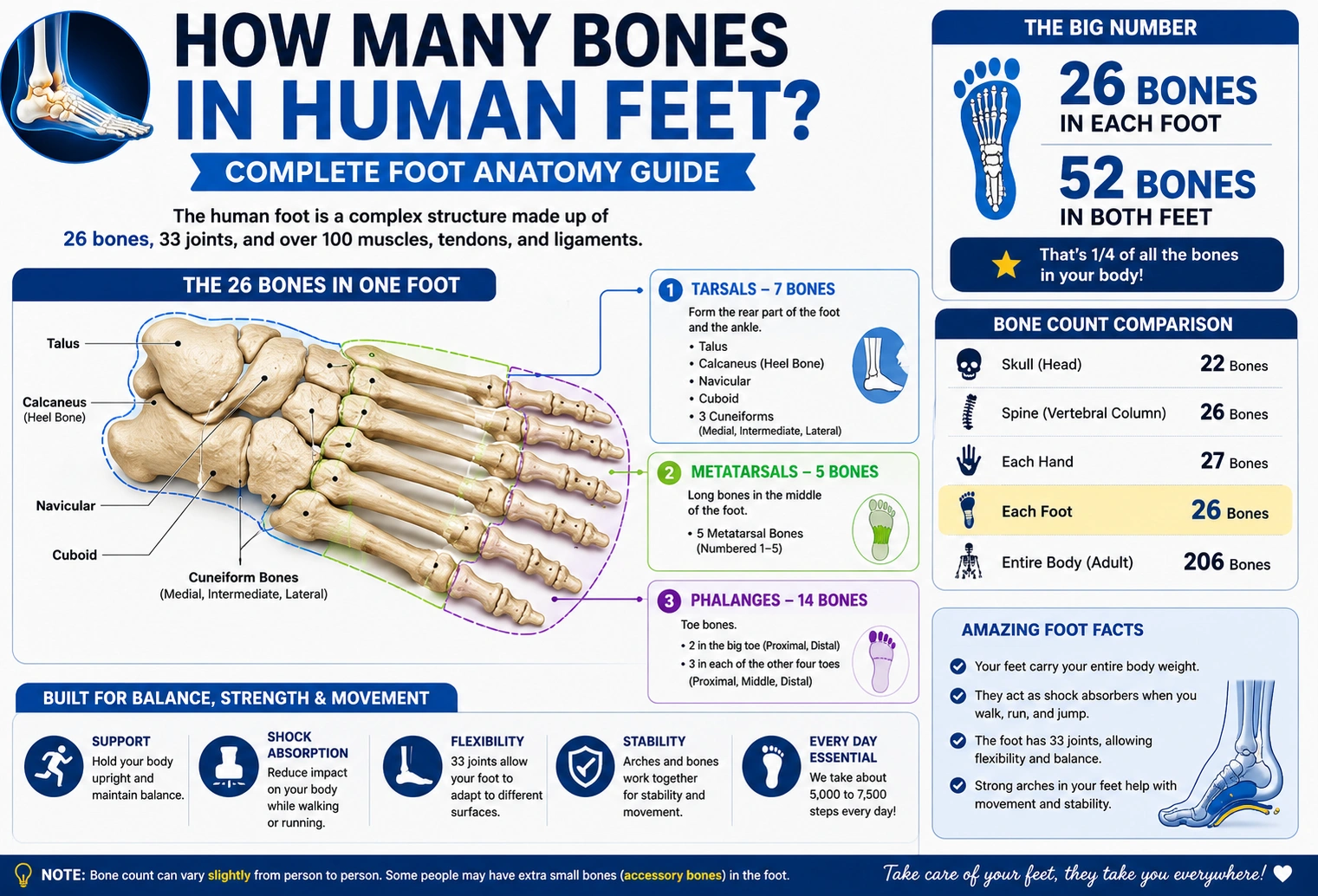
If you’re wondering how many bones in human feet, the answer is:
There are 26 bones in each foot, for a total of 52 bones in both feet.
Since the adult human body contains 206 bones, approximately one-quarter of all the body’s bones are located in the feet.
These bones work together with joints, muscles, tendons, and ligaments to support body weight, maintain balance, absorb shock, and enable walking, running, and jumping.
Quick Answer
| Foot | Number of Bones |
|---|---|
| One Foot | 26 bones |
| Both Feet | 52 bones |
Human feet contain 52 bones, making them one of the most complex structures in the body.
Bones in Each Foot
Each foot contains 26 bones, divided into three main groups.
| Bone Group | Number of Bones |
| Tarsal Bones | 7 |
| Metatarsal Bones | 5 |
| Phalanges (Toe Bones) | 14 |
Together, these bones create a strong yet flexible structure capable of supporting the body’s weight throughout daily movement.
Types of Foot Bones
1. Tarsal Bones (7)
The tarsal bones form the rear and middle portions of the foot.
These include:
- Talus
- Calcaneus (heel bone)
- Navicular
- Cuboid
- Medial cuneiform
- Intermediate cuneiform
- Lateral cuneiform
The calcaneus is the largest bone in the foot and forms the heel.
2. Metatarsal Bones (5)
The five metatarsals connect the tarsal bones to the toes.
They help:
- Support body weight
- Maintain balance
- Transfer force during walking and running
3. Phalanges (14)
Each foot contains 14 toe bones.
- Big toe: 2 bones
- Other four toes: 3 bones each
These bones provide flexibility and help maintain stability while walking.
Why Foot Bones Are Important
The bones of the feet perform several essential functions.
They:
- Support the body’s entire weight
- Absorb impact during movement
- Help maintain balance
- Allow walking, running, and jumping
- Protect nerves and blood vessels
- Work with muscles and ligaments to provide stability
Without the complex arrangement of these bones, normal movement would not be possible.
Interesting Facts About Human Feet
- Both feet together contain 52 bones, nearly 25% of all the bones in the adult human body.
- Each foot also contains dozens of joints, along with numerous muscles, tendons, and ligaments.
- The foot has three arches that help distribute body weight and absorb shock.
- Healthy feet play a crucial role in posture, balance, and mobility.
Common Foot Bone Injuries
Because the feet support your entire body weight and absorb repeated impact, their bones are vulnerable to injury.
Stress Fractures
Stress fractures are tiny cracks in the bones caused by repetitive activities such as running, jumping, or long-distance walking.
Broken Toes
Toe fractures are among the most common foot injuries and often result from dropping heavy objects or stubbing a toe.
Heel Bone Fractures
The calcaneus (heel bone) can fracture during high-impact accidents, such as falls from significant heights or motor vehicle collisions.
Midfoot Injuries
The metatarsals and tarsal bones may be injured during sports, twisting accidents, or heavy impacts, affecting balance and walking.
How Foot Bones Work Together
Although each foot contains 26 individual bones, they function as a coordinated system.
Working together with:
- More than 30 joints
- Numerous muscles
- Tendons
- Ligaments
the bones allow your feet to:
- Support body weight
- Maintain balance
- Adapt to uneven ground
- Absorb shock
- Propel the body forward during walking and running
This combination of strength and flexibility makes the human foot one of the most sophisticated structures in the body.
Tips for Keeping Your Foot Bones Healthy
Wear Proper Footwear
Supportive shoes help distribute pressure evenly and reduce stress on the bones and joints.
Maintain a Healthy Weight
Keeping body weight within a healthy range reduces continuous stress on the feet.
Exercise Regularly
Weight-bearing activities help strengthen bones, while stretching and strengthening exercises improve stability and flexibility.
Eat a Bone-Healthy Diet
A balanced diet containing adequate calcium, vitamin D, and protein supports healthy bones throughout the body.
Protect Your Feet
Use appropriate footwear during sports and physical activities to reduce the risk of fractures and other injuries.
Frequently Asked Questions
How many bones are in each human foot?
Each foot contains 26 bones.
How many bones are in both feet?
Both feet together contain 52 bones, representing about one-quarter of the 206 bones in the adult human body.
What are the three groups of foot bones?
The bones are divided into:
- 7 tarsal bones
- 5 metatarsal bones
- 14 phalanges (toe bones)
Which is the largest bone in the foot?
The calcaneus, or heel bone, is the largest bone in the human foot.
Why do the feet have so many bones?
The large number of bones provides flexibility, balance, shock absorption, and stability, allowing people to walk, run, jump, and adapt to different surfaces efficiently.
Conclusion
If you’re wondering how many bones in human feet, the answer is 26 bones in each foot, or 52 bones in both feet combined. These bones are organized into 7 tarsals, 5 metatarsals, and 14 phalanges, creating a strong yet flexible structure that supports the body’s weight and enables movement.
The human foot is an engineering marvel. With its complex network of bones, joints, muscles, tendons, and ligaments, it provides stability, balance, and mobility for nearly every daily activity. Understanding foot anatomy can help you better appreciate the importance of proper footwear, regular exercise, and good foot care in maintaining lifelong mobility and overall health.
Discover More Articles
How Many Feet Is a Yardstick? Exact Measurement Guide
How Many Square Feet Is 10 by 20? Easy Area Calculation Guide