
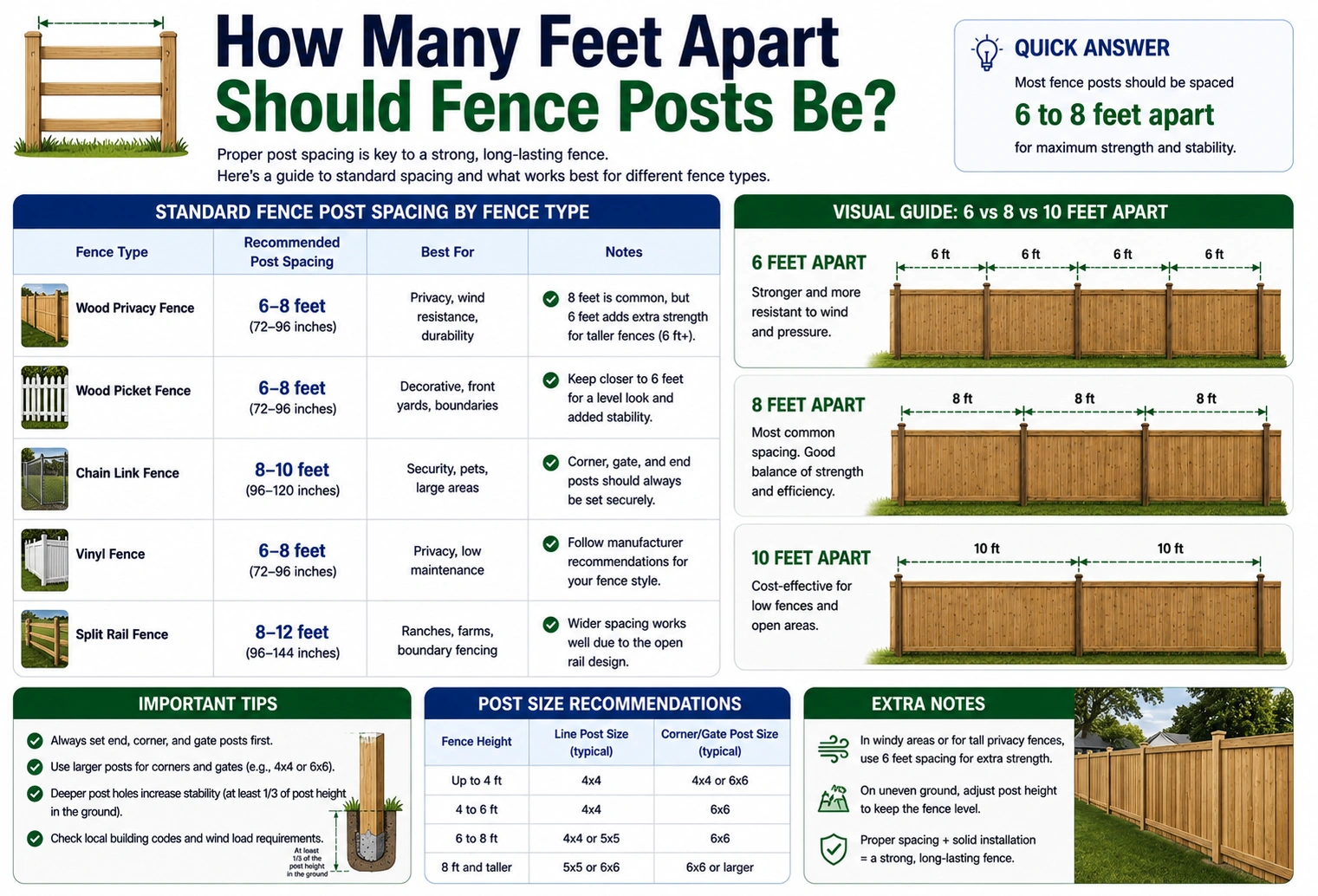
If you’re planning to install a new fence, one of the most important questions is how many feet apart should fence posts be. Proper post spacing provides strength, stability, and long-term durability while preventing sagging or leaning over time.
In most residential fencing projects, fence posts are spaced 6 to 8 feet apart, measured from the center of one post to the center of the next. However, the ideal spacing depends on the fence material, panel size, terrain, local weather conditions, and intended use.
Whether you’re building a wood privacy fence, vinyl fence, chain-link fence, or agricultural fence, this guide explains the recommended spacing, calculation methods, and expert installation tips.
Quick Answer
| Fence Type | Recommended Post Spacing |
|---|---|
| Wood Privacy Fence | 6–8 feet |
| Vinyl Fence | 6–8 feet |
| Chain-Link Fence | 8–10 feet |
| Split Rail Fence | 8–10 feet |
| Woven Wire Fence | 10–12 feet* |
| Electric Fence | 20–50 feet* |
*Depending on wire type, terrain, and manufacturer recommendations.
Answer: For most residential fences, posts should be spaced 6 to 8 feet apart, measured center-to-center.
Why Fence Post Spacing Matters
Fence posts are the structural foundation of any fence. Proper spacing helps distribute weight evenly and ensures the fence remains stable for years.
Correct spacing provides several benefits:
- Prevents fence panels from sagging
- Improves resistance to wind
- Supports gates more effectively
- Reduces stress on rails and fasteners
- Extends the lifespan of the fence
- Creates a cleaner, more uniform appearance
Posts that are spaced too far apart can cause rails or panels to bend, while posts that are too close together may increase material and labor costs without adding significant strength.
Standard Fence Post Spacing
For most residential projects, the standard spacing is:
- 6 feet apart for maximum strength
- 8 feet apart for standard fence panels
Most prefabricated fence panels are designed to fit between posts spaced 8 feet on center, making installation easier and reducing material waste.
When measuring, always measure from the center of one post to the center of the next, not from edge to edge.
Fence Post Spacing by Fence Type
Different fencing materials require different spacing to ensure proper support.
Wood Privacy Fence
Recommended spacing:
6–8 feet
Wood fences are heavier than many other fence types, so closer spacing provides better support, especially in windy areas.
Vinyl Fence
Recommended spacing:
6–8 feet
Vinyl fence panels are manufactured in standard widths. Always follow the manufacturer’s specifications to ensure a proper fit.
Chain-Link Fence
Recommended spacing:
8–10 feet
Chain-link fabric is lightweight and flexible, allowing posts to be spaced farther apart than wood or vinyl.
Terminal posts, such as corner, end, and gate posts, should be larger and installed with deeper footings.
Split Rail Fence
Recommended spacing:
8–10 feet
Split rail fences are decorative and generally carry less weight than privacy fences, allowing for wider spacing.
Woven Wire Fence
Recommended spacing:
10–12 feet
Used for livestock and agricultural applications, woven wire fences often include additional support posts or stays between main posts.
Electric Fence
Recommended spacing:
20–50 feet
Electric fencing systems typically use lightweight posts and tensioned wire, allowing much greater spacing than traditional fences.
How to Measure Fence Post Spacing
Accurate layout is essential for a straight, professional-looking fence.
Step 1: Measure the Fence Line
Determine the total length of the fence.
Step 2: Choose the Spacing
Select the appropriate spacing based on the fence type.
Step 3: Calculate the Number of Posts
For example, a 100-foot fence with posts spaced every 8 feet requires approximately:
100 ÷ 8 = 12.5
You’ll typically need 14 posts, including both end posts.
Step 4: Mark Post Locations
Use stakes and string to mark each post location before digging.
Factors That Affect Fence Post Spacing
Several conditions may require you to adjust standard spacing.
Fence Height
Taller fences catch more wind and often need posts spaced closer together.
Wind Exposure
Areas with frequent high winds benefit from shorter spans between posts.
Terrain
Sloped or uneven ground may require customized post placement.
Soil Conditions
Loose or sandy soils may require deeper footings or reduced spacing.
Gate Installation
Gate posts should be stronger and may require concrete footings regardless of spacing.
Fence Post Spacing Chart
| Fence Type | Standard Spacing | Best For |
|---|---|---|
| Wood Privacy | 6–8 ft | Residential yards |
| Vinyl | 6–8 ft | Decorative and privacy fencing |
| Chain-Link | 8–10 ft | Homes and commercial properties |
| Aluminum | 6–8 ft | Decorative fencing |
| Split Rail | 8–10 ft | Farms and rural properties |
| Woven Wire | 10–12 ft | Livestock fencing |
| Electric | 20–50 ft | Temporary and agricultural fencing |
Example Fence Layout
Suppose you’re building a 120-foot wood privacy fence.
Recommended spacing:
8 feet
Calculation:
120 ÷ 8 = 15 sections
You’ll need approximately:
- 16 fence posts
- 15 fence panels
Always confirm panel widths before purchasing materials.
Common Installation Mistakes
Spacing Posts Too Far Apart
This can lead to sagging rails and unstable fence panels.
Ignoring Manufacturer Guidelines
Prefabricated fence systems often require specific post spacing.
Measuring Incorrectly
Always measure from the center of each post.
Not Accounting for Gates
Gate openings require dedicated gate posts and should not be included in standard panel spacing.
Shallow Post Holes
Proper depth is just as important as spacing. Many residential fence posts are installed at least one-third of their length below ground, subject to local codes and frost depth requirements.
Expert Tips
- Plan your fence layout before digging.
- Measure twice before setting posts.
- Use string lines to keep posts aligned.
- Install corner and gate posts first.
- Check local building codes and utility locations before digging.
- Follow the fence manufacturer’s spacing recommendations whenever available.
- Use concrete footings for added stability where appropriate.
Quick Fence Post Spacing Reference
| Fence Type | Typical Spacing |
|---|---|
| Wood | 6–8 ft |
| Vinyl | 6–8 ft |
| Aluminum | 6–8 ft |
| Chain-Link | 8–10 ft |
| Split Rail | 8–10 ft |
| Woven Wire | 10–12 ft |
| Electric | 20–50 ft |
9. Frequently Asked Questions
1. How many feet apart should fence posts be?
For most residential fences, posts should be spaced 6 to 8 feet apart, measured from the center of one post to the center of the next.
2. Can fence posts be 10 feet apart?
Yes, but 10-foot spacing is generally recommended for chain-link, split rail, or some agricultural fences. Wood privacy fences usually perform better with 6–8-foot spacing.
3. What is the standard spacing for wood fence posts?
Most wood fence posts are installed 6 to 8 feet apart, depending on the fence height, rail design, and local weather conditions.
4. Should fence post spacing be measured from the center or edge?
Fence post spacing is almost always measured from the center of one post to the center of the next, ensuring consistent panel spacing.
5. Does fence height affect post spacing?
Yes. Taller fences experience greater wind loads and often require closer post spacing or stronger posts to maintain stability.
10. Conclusion
If you’re wondering how many feet apart should fence posts be, the general recommendation for most residential fencing projects is 6 to 8 feet on center. However, the ideal spacing depends on the fence material, panel size, terrain, weather conditions, and the manufacturer’s installation guidelines.
Proper fence post spacing improves strength, prevents sagging, extends the life of your fence, and creates a more professional appearance. By measuring carefully, choosing the right spacing for your fence type, and using solid installation practices, you can build a durable fence that performs well for many years.
Discover More Articles
How Many Cubic Feet in a 10×10 Storage Unit?