
If you are wondering how many meters in 50 feet, the conversion is simple once you understand the feet-to-meters formula. This type of conversion is commonly used in construction, travel, sports, engineering, and international measurements.
The quick answer is:
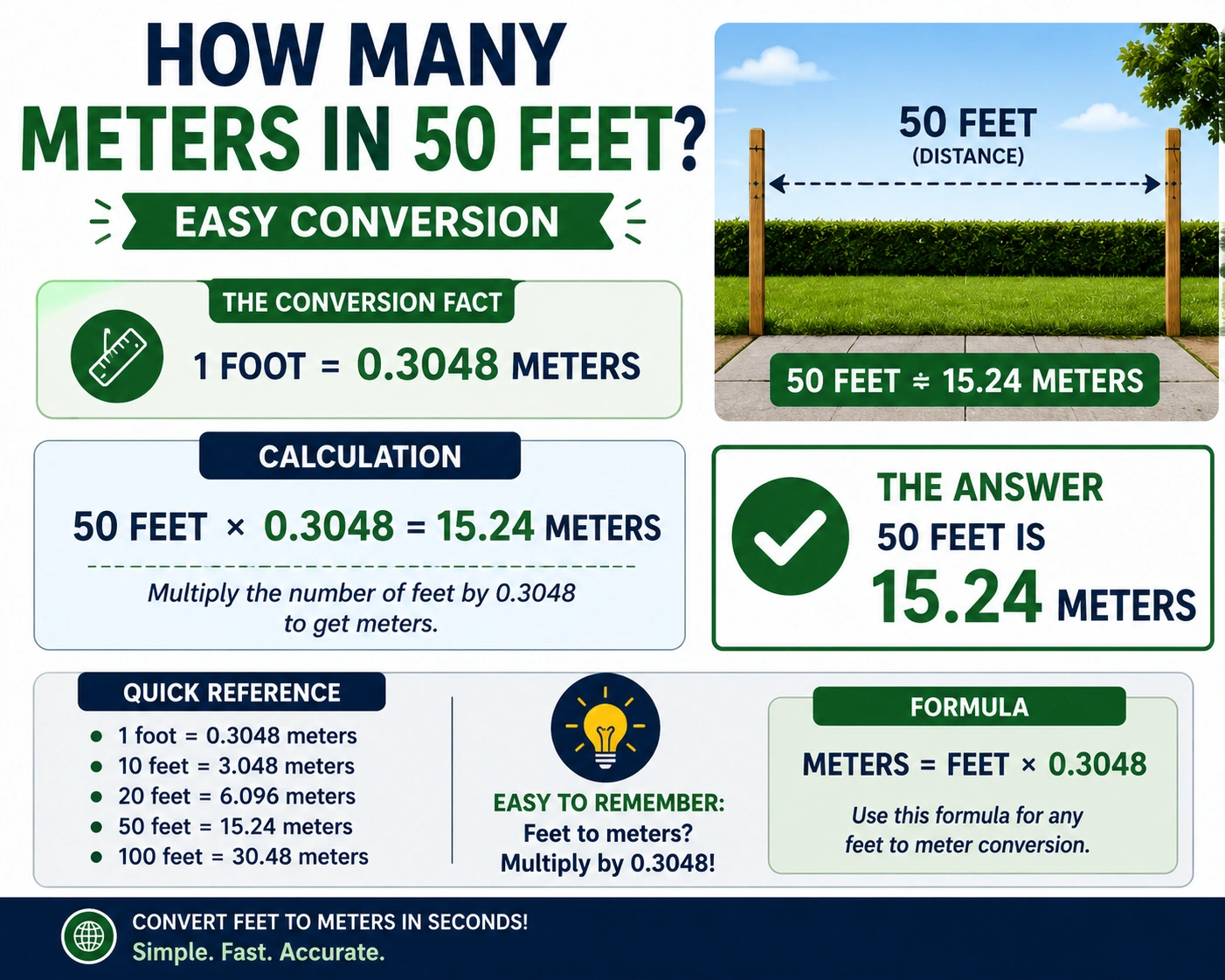
50 feet×0.3048=15.24 meters
So:
- 50 feet equals 15.24 meters
This guide explains the conversion process, formulas, practical examples, and common mistakes to avoid.
Understanding Feet and Meters
Before converting feet into meters, it helps to understand these units of measurement.
What Is a Foot?
A foot is a unit of length in the imperial system.
One foot equals:
1 foot=12 inches
Feet are commonly used in:
- The United States
- Construction projects
- Home measurements
- Sports fields
What Is a Meter?
A meter is a unit of length in the metric system.
It is used worldwide for:
- Science
- Engineering
- International measurements
- Athletics
One meter equals:
1 meter=100 centimeters
How Many Meters in 50 Feet?
To convert 50 feet into meters:
50×0.3048=15.24
Final answer:
50 feet=15.24 meters
This is the internationally accepted conversion.
Feet to Meters Conversion Formula
The conversion formula is simple and widely used.
Standard Formula
Meters=Feet×0.3048
Multiply the number of feet by 0.3048.
Example Calculation
Using 50 feet:
50×0.3048=15.24 meters
Result:
- 15.24 meters
50 Feet Compared to Common Measurements
Understanding 50 feet visually can help in real-world situations.
Human Height Comparison
An average adult is approximately:
5 to 6 feet tall
So 50 feet is much taller than a person.
Building Example
A building measuring:
50 feet=15.24 meters
Could be around four to five stories tall.
Sports Example
Some sports and training areas use both feet and meters for measurements.
Quick Feet to Meters Conversion Chart
Here is a quick reference chart for nearby conversions.
| Feet | Meters |
|---|---|
| 10 feet | 3.05 meters |
| 20 feet | 6.10 meters |
| 30 feet | 9.14 meters |
| 40 feet | 12.19 meters |
| 50 feet | 15.24 meters |
| 60 feet | 18.29 meters |
This chart helps simplify common conversions.
Real-World Examples of 50 Feet
Understanding how long 50 feet is can help with many projects.
Room and Building Dimensions
Large rooms, hallways, or buildings may measure close to 50 feet long.
Trees and Utility Poles
Many mature trees and utility poles are approximately:
50 feet tall
Swimming Pool Measurements
Some pools and recreation areas use dimensions near 50 feet.
Sports Field Uses
Sports facilities often use both imperial and metric systems for field layouts.
Why Feet-to-Meters Conversion Matters
Metric conversions are important because different countries use different measurement systems.
Converting feet into meters helps with:
- International travel
- Construction planning
- Engineering projects
- Scientific calculations
Common Conversion Mistakes
Simple errors can lead to incorrect measurements.
Using the Wrong Formula
Correct formula:
Meters=Feet×0.3048
Do not divide feet by 0.3048 when converting to meters.
Decimal Rounding Confusion
Some people round excessively and lose accuracy.
The exact conversion is:
- 15.24 meters
Mixing Metric and Imperial Units
Avoid combining:
- Feet
- Inches
- Meters
Without proper conversion.
Expert Tips for Accurate Measurements
Professionals recommend careful measurement practices.
Use Reliable Measuring Tools
Laser measures and quality tape measures improve accuracy.
Double-Check Calculations
Always verify conversions before:
- Construction work
- Material purchases
- Engineering projects
Understand Metric Measurements
Meters are often easier for large international projects because they use the decimal system.
Real-World Example
Suppose a swimming lane measures:
- 50 feet long
Using the formula:
50×0.3048=15.24 meters
You now know the lane is:
- 15.24 meters long
This helps when comparing international measurements.
FAQs
1. How many meters is 50 feet exactly?
50 feet equals exactly 15.24 meters.
2. What formula converts feet into meters?
Multiply feet by 0.3048.
3. Is 50 feet longer than 15 meters?
Yes. Fifty feet equals 15.24 meters, which is slightly longer than 15 meters.
4. Why do countries use meters instead of feet?
Most countries use the metric system because it is simpler and internationally standardized.
5. How accurate is the feet-to-meters conversion?
The conversion factor of 0.3048 is exact and internationally accepted.
Conclusion
Understanding how many meters in 50 feet is useful for travel, construction, sports, engineering, and everyday measurements. The exact conversion is:
50 feet=15.24 meters
The standard formula is:
Meters=Feet×0.3048
Once you understand this formula, converting feet into meters becomes quick and simple for any project or measurement need.
Discover More Articles
87 Inches Is How Many Feet? Exact Conversion Guide