

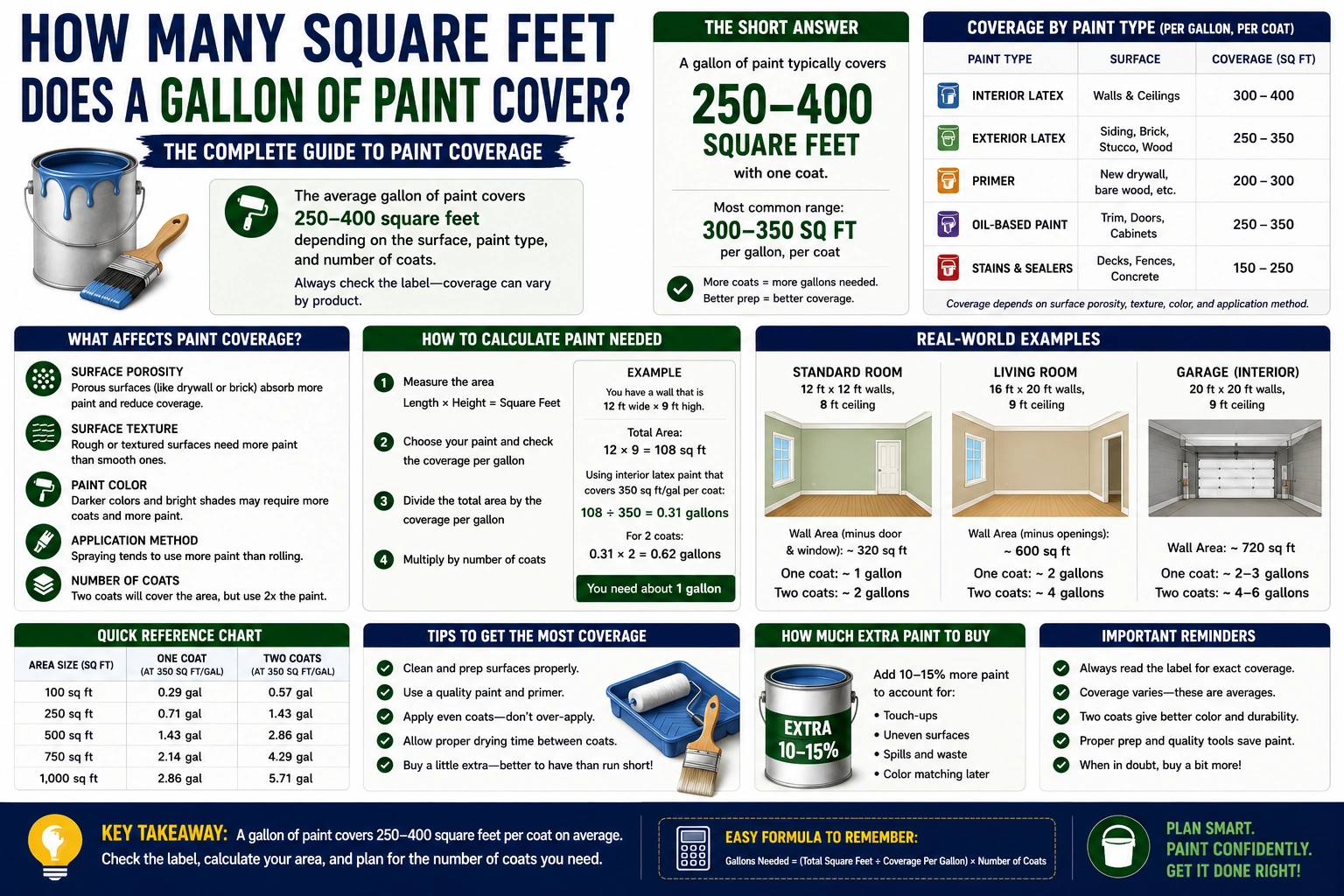
If you are planning a painting project, one of the first questions you will ask is: how many square feet a gallon of paint covers? Knowing the answer helps you estimate costs, avoid waste, and buy the correct amount of paint.
The quick answer is:
1 gallon of paint≈350–400 square feet
In most cases, one gallon of paint covers approximately 350 to 400 square feet with a single coat on a smooth surface.
However, actual coverage depends on:
- Surface texture
- Paint quality
- Number of coats
- Application method
- Whether primer is used
This guide explains paint coverage calculations, real-world examples, charts, and expert tips to help you plan your next painting project accurately.
Understanding Paint Coverage
Before calculating paint needs, it helps to understand what paint coverage means.
What Is Paint Coverage?
Paint coverage refers to the amount of surface area one gallon of paint can cover.
Manufacturers usually list estimated coverage on the paint can.
Coverage is typically measured in:
- Square feet per gallon
For example:
- One gallon may cover 350–400 square feet
This estimate assumes:
- Smooth walls
- Proper application
- One coat
- Minimal paint absorption
Why Paint Coverage Varies
Not all surfaces absorb paint equally.
Rough materials like:
- Brick
- Stucco
- Concrete
Use more paint than smooth drywall.
Similarly, darker colors often require extra coats for full coverage.
How Many Square Feet Does a Gallon of Paint Cover?
A standard gallon of paint generally covers:
350–400 square feet per gallon
This estimate applies to most:
- Interior wall paints
- Latex paints
- Standard residential surfaces
Typical Coverage Examples
| Paint Amount | Approximate Coverage |
|---|---|
| 1 quart | 90–100 sq ft |
| 1 gallon | 350–400 sq ft |
| 2 gallons | 700–800 sq ft |
| 5 gallons | 1,750–2,000 sq ft |
These estimates assume one coat of paint.
Paint Coverage Formula
You can estimate paint needs using a simple formula.
Basic Formula
Gallons Needed=350–400Total Square Feet
This helps estimate how much paint to purchase.
Example Paint Calculation
Suppose your walls total 800 square feet.
Using the formula:
800÷400=2 gallons
You would need approximately:
- 2 gallons for one coat
If applying two coats:
2×2=4 gallons
You may need about 4 gallons total.
Paint Coverage Chart
Here is a helpful paint coverage chart for common room sizes.
| Room Size | Wall Area | Paint Needed (1 Coat) |
|---|---|---|
| Small bedroom | 400 sq ft | 1 gallon |
| Medium room | 800 sq ft | 2 gallons |
| Large room | 1,200 sq ft | 3 gallons |
| Whole apartment | 2,000 sq ft | 5–6 gallons |
These are rough estimates and can vary based on room layout and surface texture.
Factors That Affect Paint Coverage
Several factors influence how far a gallon of paint will go.
Surface Texture
Smooth walls require less paint than rough surfaces.
Rough surfaces include:
- Stucco
- Brick
- Textured drywall
- Concrete block
These materials absorb more paint and reduce coverage.
Paint Type
Different paint finishes cover differently.
Examples include:
| Paint Finish | Typical Coverage |
|---|---|
| Flat paint | High coverage |
| Satin paint | Moderate coverage |
| Gloss paint | Lower coverage |
Higher-quality paints often provide better coverage with fewer coats.
Number of Coats
Most projects require:
- Two coats for best appearance
Color changes may require additional coats.
Examples:
- Dark to light colors
- Bright accent walls
- Stained surfaces
Application Method
Paint coverage changes depending on how paint is applied.
| Method | Coverage Efficiency |
|---|---|
| Roller | Good |
| Brush | Moderate |
| Sprayer | Lower efficiency |
Sprayers often use more paint due to overspray.
Primer Usage
Primer seals surfaces and improves paint adhesion.
Using primer can:
- Reduce paint absorption
- Improve color consistency
- Lower total paint usage
Fresh drywall usually benefits from primer before painting.
How to Calculate Paint Needed for a Room
Estimating paint accurately prevents unnecessary trips to the store.
Measure Wall Dimensions
First, calculate wall area:
Wall Area=Length×Height
For example:
- 12-foot wall
- 8-foot ceiling
Calculation:
12×8=96 square feet
Repeat for all walls and add totals together.
Subtract Doors and Windows
You can reduce total paint needs slightly by subtracting:
- Doors
- Windows
- Large openings
However, many painters skip this step on smaller projects.
Multiply for Additional Coats
If applying two coats:
Total Area×2
Always account for multiple coats when estimating.
Interior vs Exterior Paint Coverage
Exterior paint often covers less area because outdoor surfaces are rougher.
Interior Paint
Typical interior coverage:
350–400 square feet per gallon
Interior walls are usually smoother and easier to paint.
Exterior Paint
Exterior paint coverage may drop to:
250–350 square feet per gallon
Weather exposure and rough siding increase paint usage.
Common Paint Coverage Mistakes
Many DIY painters underestimate how much paint they need.
Ignoring Multiple Coats
One coat is rarely enough for professional-looking results.
Always plan for:
- Two coats minimum
Forgetting Surface Texture
Textured walls use more paint than expected.
This is especially true for:
- Popcorn ceilings
- Stucco exteriors
- Brick walls
Buying Too Little Paint
Running out of paint mid-project can cause:
- Color mismatches
- Uneven finishes
- Delays
It is usually safer to buy slightly extra paint.
Expert Tips for Better Paint Coverage
Professional painters use techniques to maximize coverage.
Use High-Quality Paint
Premium paints often:
- Cover better
- Need fewer coats
- Last longer
Cheap paint may cost more overall because it requires extra coats.
Use the Right Roller
Roller thickness matters.
| Surface Type | Roller Thickness |
|---|---|
| Smooth walls | 3/8 inch |
| Textured walls | 1/2–3/4 inch |
Using the proper roller improves paint distribution.
Paint in Good Lighting
Good lighting helps identify:
- Missed spots
- Thin coverage
- Uneven areas
Natural daylight works best.
Maintain a Wet Edge
Painting continuously helps avoid lap marks and uneven finishes.
Real-World Example
Suppose you are painting a living room with:
- 900 square feet of wall space
Using average paint coverage:
900÷400=2.25 gallons
You would likely buy:
- 3 gallons for one coat
For two coats:
3×2=6 gallons
This ensures enough paint for complete coverage.
FAQs
1. How many square feet does one gallon of paint cover?
Most paint covers approximately 350–400 square feet per gallon.
2. Does textured wall paint use more paint?
Yes, rough and textured surfaces absorb more paint and reduce coverage.
3. How much paint do I need for two coats?
Multiply your total wall area by two before estimating gallons.
4. Is primer necessary before painting?
Primer is recommended for new drywall, stained surfaces, and major color changes.
5. Can one gallon paint an entire room?
Yes, one gallon can often paint a small room with one coat, depending on wall size and surface texture.
Conclusion
Understanding how many square feet a gallon of paint covers helps you plan painting projects more accurately and avoid unnecessary costs. In most cases, one gallon of paint covers approximately 350 to 400 square feet on smooth interior surfaces with one coat.
Remember that actual paint coverage depends on:
- Surface texture
- Paint quality
- Number of coats
- Application method
- Primer usage
Keeping these factors in mind ensures better results and fewer surprises during your project.
Use this simple rule as a quick guide:
1 gallon of paint≈350–400 square feet
With proper planning and accurate measurements, your painting project will be smoother, faster, and more cost-effective.
Discover More Articles
How Many Square Feet Does a Chicken Need?
How Many Square Feet Is 6×8? Easy Area Calculator
How Many Feet Is a Restraining Order? Distance Rules Explained