
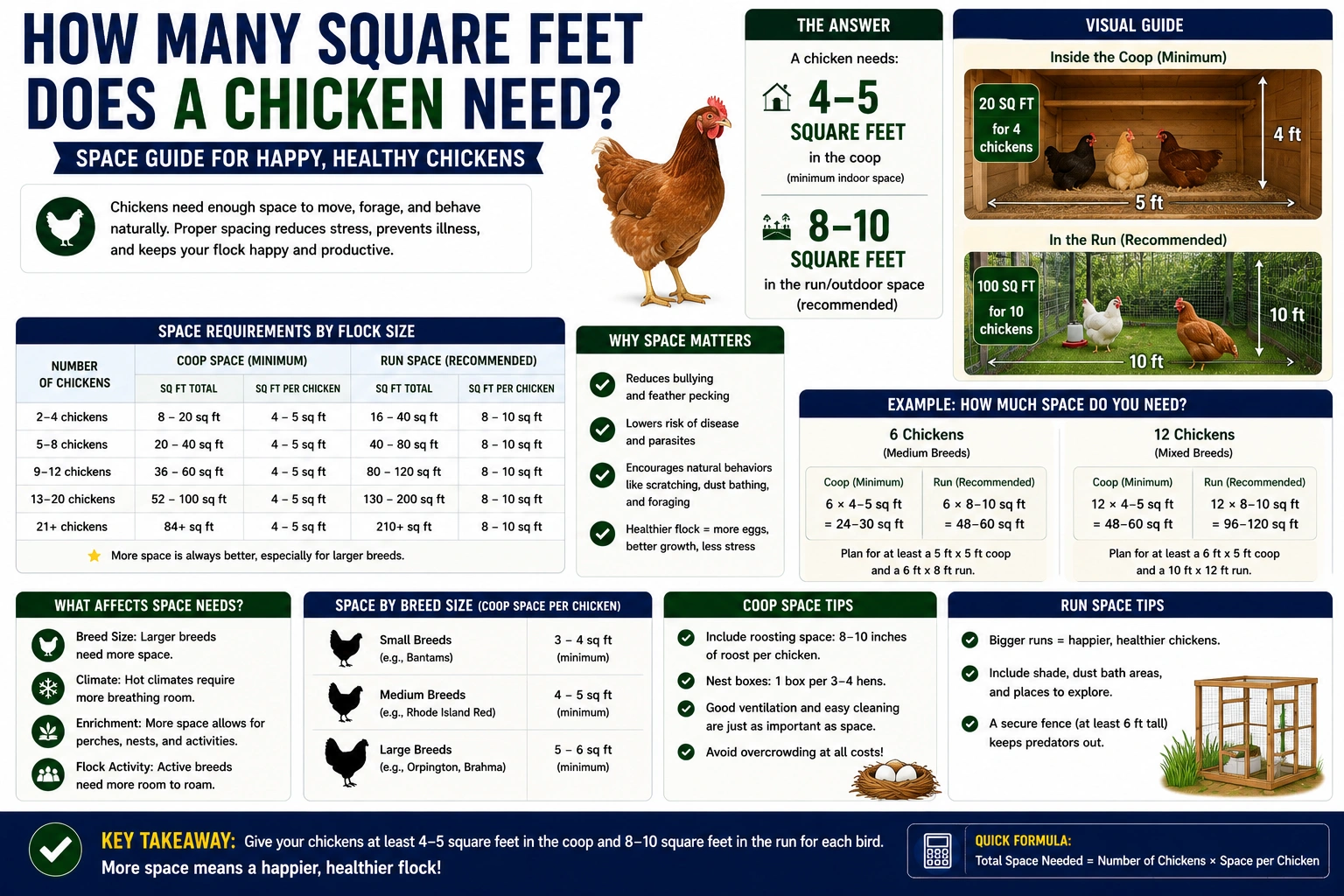
If you are wondering “how many square feet does a chicken need,” the short answer depends on whether you are talking about:
- Indoor coop space
- Outdoor run space
- Free-range access
However, the general recommendation is:
Indoor coop space per chicken=4 square feet
And for outdoor space:
Outdoor run space per chicken=10 square feet
Giving chickens enough room is one of the most important parts of raising healthy and happy birds. Proper space improves:
- Egg production
- Chicken health
- Cleanliness
- Behavior
- Disease prevention
In this complete guide, you will learn:
- How much coop space chickens need
- Outdoor run requirements
- Space recommendations by breed
- Common mistakes to avoid
- Practical coop examples
- Expert tips for healthier chickens
Let’s begin.
Quick Answer for Chicken Space Requirements
Here are the standard guidelines most poultry experts recommend.
| Area | Recommended Space Per Chicken |
|---|---|
| Indoor coop | 4 sq ft |
| Outdoor run | 10 sq ft |
| Free-range area | 50–100+ sq ft |
These numbers can vary depending on:
- Chicken breed
- Climate
- Coop design
- Free-range access
- Flock behavior
Large breeds usually need more room, while bantam chickens can manage with slightly less space.
Why Proper Space for Chickens Matters
Many beginner chicken owners underestimate how important space really is.
Crowded chickens often become:
- Stressed
- Aggressive
- Sick
- Noisy
Proper space creates a healthier environment for both birds and owners.
Chicken Health
Chickens living in cramped spaces are more likely to develop:
- Respiratory problems
- Parasites
- Foot injuries
- Feather damage
More space allows cleaner living conditions and better airflow.
Egg Production
Happy chickens usually lay more eggs.
Overcrowding can reduce egg production because stress affects:
- Hormones
- Eating habits
- Sleeping patterns
Giving hens enough room helps maintain consistent laying.
Stress and Aggression
When chickens lack space, they often:
- Peck each other
- Fight over food
- Bully weaker birds
This behavior is called “pecking order aggression.”
Adequate room reduces conflicts significantly.
Disease Prevention
Overcrowded coops spread disease quickly.
More space helps:
- Reduce bacteria buildup
- Keep bedding drier
- Improve sanitation
- Lower parasite risks
This becomes especially important during wet or cold weather.
How Many Square Feet Does a Chicken Need in a Coop?
Indoor coop space is critical because chickens spend nights and bad-weather days inside.
The general rule is:
4 square feet per chicken inside the coop
Standard Coop Space Recommendations
Here are basic recommendations for average backyard chickens.
| Number of Chickens | Minimum Coop Size |
|---|---|
| 2 chickens | 8 sq ft |
| 4 chickens | 16 sq ft |
| 6 chickens | 24 sq ft |
| 8 chickens | 32 sq ft |
| 10 chickens | 40 sq ft |
These are minimums. More space is usually better.
Space for Large Breeds
Large breeds such as:
- Brahmas
- Jersey Giants
- Orpingtons
Need more room.
Experts recommend:
5–6 square feet per large chicken
Large birds take up more perch and nesting space.
Space for Bantam Chickens
Bantam breeds are much smaller.
They can often live comfortably with:
2–3 square feet per bantam chicken
Still, more space is always healthier.
Winter Considerations
During winter, chickens spend more time inside the coop.
Extra space helps:
- Reduce moisture
- Improve ventilation
- Prevent stress
Cold-weather regions often benefit from larger coops.
How Many Square Feet Does a Chicken Need in a Run?
Outdoor runs are just as important as coop space.
The standard recommendation is:
10 square feet per chicken in an outdoor run
Minimum Outdoor Space
If your chickens stay confined most of the day, larger runs are essential.
Too little outdoor space can cause:
- Mud buildup
- Odor problems
- Aggression
- Boredom
Ideal Run Space
Many experienced chicken keepers recommend:
- 15–20 square feet per chicken
This allows:
- Natural scratching
- Dust bathing
- Better exercise
- Cleaner conditions
Free-Range Alternatives
Free-range chickens need much less coop stress space because they roam freely.
Some owners provide:
- 50 square feet
- 100 square feet
- Or unlimited pasture
Free-ranging improves:
- Diet variety
- Exercise
- Mental stimulation
Chicken Space Requirements by Breed
Different breeds require different amounts of space.
| Chicken Type | Coop Space | Run Space |
|---|---|---|
| Bantam breeds | 2–3 sq ft | 6–8 sq ft |
| Medium breeds | 4 sq ft | 10 sq ft |
| Large breeds | 5–6 sq ft | 12–15 sq ft |
Knowing your breed size helps prevent overcrowding.
Chicken Coop Size Chart
This quick chart helps estimate total space needs.
| Chickens | Coop Size | Run Size |
|---|---|---|
| 3 | 12 sq ft | 30 sq ft |
| 5 | 20 sq ft | 50 sq ft |
| 6 | 24 sq ft | 60 sq ft |
| 8 | 32 sq ft | 80 sq ft |
| 12 | 48 sq ft | 120 sq ft |
These measurements work well for most backyard flocks.
Real-Life Examples of Chicken Coop Layouts
Here are some common setups.
Small Backyard Flock
A family with 4 hens might use:
- 16 sq ft coop
- 40 sq ft run
This works well in suburban yards.
Medium Family Coop
For 8 chickens:
- 32 sq ft coop
- 80–120 sq ft run
This gives birds room to move comfortably.
Large Hobby Farm Setup
For 20 chickens:
- 100+ sq ft coop
- Large rotational pasture
This setup supports healthier long-term flocks.
Signs Your Chickens Need More Space
Chickens often show clear signs of overcrowding.
Pecking and Fighting
Aggressive behavior usually increases in cramped conditions.
Watch for:
- Feather pulling
- Bullying
- Injuries
Feather Loss
Overcrowded chickens may lose feathers due to stress and pecking.
Excessive Noise
Loud or constant noise can signal discomfort or competition.
Dirty Coop Conditions
If bedding becomes dirty very quickly, your coop may be too small.
Common Mistakes When Planning Chicken Space
Many beginners make similar mistakes.
Underestimating Flock Growth
People often buy more chickens later.
Plan extra room from the beginning.
Ignoring Ventilation
Even large coops become unhealthy without airflow.
Good ventilation prevents:
- Moisture buildup
- Ammonia odors
- Respiratory issues
Too Little Outdoor Space
A large coop cannot replace outdoor exercise.
Chickens naturally:
- Scratch
- Explore
- Forage
Outdoor space is essential.
Forgetting Vertical Space
Roost bars and elevated features improve coop efficiency.
Chickens use vertical space naturally.
Expert Tips for Maximizing Chicken Space
These tips improve chicken comfort without needing huge amounts of land.
Add Multiple Roost Bars
Roost bars help chickens sleep comfortably above ground.
Provide:
- 8–12 inches of perch space per bird
Use Portable Chicken Tractors
Portable coops allow chickens to graze fresh ground regularly.
Benefits include:
- Cleaner soil
- Fewer parasites
- Better grass management
Rotate Outdoor Areas
Rotating runs helps:
- Reduce mud
- Improve sanitation
- Prevent overgrazing
Keep Feeders and Waterers Separate
Spacing feeding stations reduces fighting.
Practical Factors That Affect Chicken Space Needs
Several factors influence how much room chickens require.
Climate
Hot climates require:
- Better airflow
- More spacing
Cold climates may tolerate slightly tighter arrangements temporarily.
Breed Personality
Some breeds are calm, while others are highly active.
Active breeds usually need:
- Larger runs
- More enrichment
Time Spent Outside
Free-range chickens can tolerate slightly smaller coops because they spend less time indoors.
FAQs
How many square feet does one chicken need?
Most chickens need:
- 4 sq ft inside the coop
- 10 sq ft in the outdoor run
Can chickens live in a small coop?
Yes, but overcrowding creates stress, disease, and aggression.
More space is healthier.
How much free-range space do chickens need?
Free-range chickens benefit from:
- 50–100+ sq ft per bird
More roaming space is always better.
Do larger chicken breeds need more space?
Yes. Large breeds may require:
- 5–6 sq ft inside the coop
- 12–15 sq ft outdoors
What happens if chickens are overcrowded?
Overcrowding can cause:
- Fighting
- Feather pecking
- Stress
- Disease
- Reduced egg production
Conclusion
So, how many square feet does a chicken need?
The standard recommendation is:
- 4 square feet per chicken inside the coop
- 10 square feet per chicken in the outdoor run
Healthy chickens require adequate indoor and outdoor space
Providing enough room helps chickens stay:
- Healthy
- Calm
- Productive
- Cleaner
- Happier
Whether you are building a small backyard coop or planning a larger flock, giving chickens proper space is one of the best investments you can make for long-term poultry success.
Discover More Articles
How Many Feet Is Two Meters? Complete Guide