

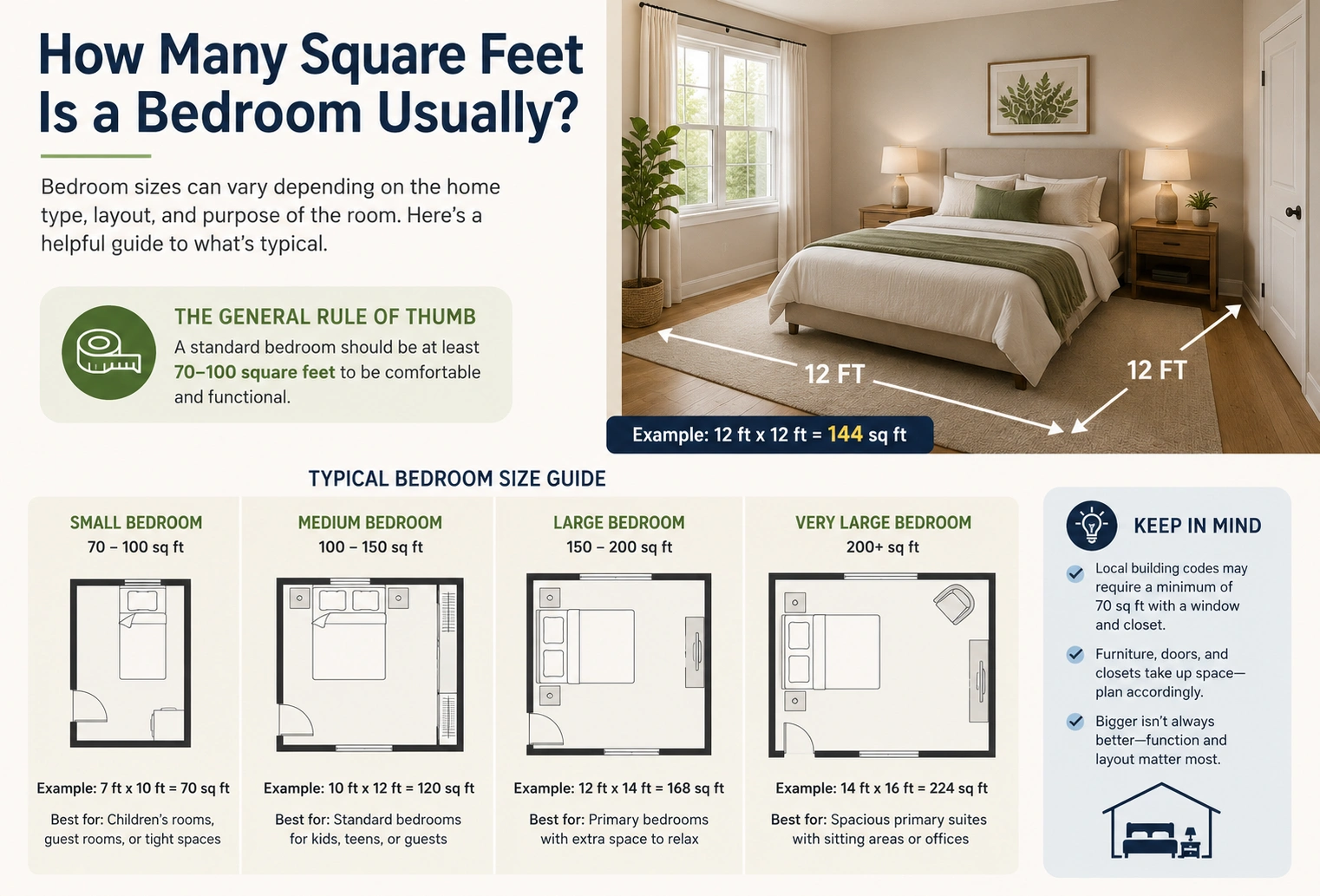
If you’re wondering how many square feet a bedroom usually contains, the answer depends on the type of bedroom and the home’s layout. Most standard bedrooms range from 100 to 200 square feet, while larger master bedrooms can exceed 250 square feet.
A typical secondary bedroom is often around 10 feet by 12 feet.
Calculation:
This means a common bedroom size is approximately 120 square feet.
Quick Answer
Most bedrooms typically measure:
- 100 to 200 square feet
Average standard bedroom:
- Approximately 120 square feet
Typical master bedroom:
- 200 to 300 square feet or more
Understanding Bedroom Sizes
Standard Bedroom Requirements
Building codes vary by location.
Many jurisdictions require a bedroom to have at least 70 square feet of floor area.
Larger bedrooms provide more flexibility for furniture placement and storage.
Average Bedroom Dimensions
Many homes feature bedrooms with dimensions such as:
- 10×10 feet
- 10×12 feet
- 11×12 feet
- 12×12 feet
A 10×12 bedroom provides:
Result:
- 120 square feet
Master Bedroom Sizes
Master bedrooms are generally much larger.
Common dimensions include:
- 12×14 feet
- 14×16 feet
- 15×20 feet
A 14×16 master bedroom provides:
Result:
- 224 square feet
Common Bedroom Sizes and Square Footage
| Bedroom Dimensions | Square Feet |
|---|---|
| 10×10 | 100 sq ft |
| 10×12 | 120 sq ft |
| 11×12 | 132 sq ft |
| 12×12 | 144 sq ft |
| 12×14 | 168 sq ft |
| 14×16 | 224 sq ft |
These dimensions represent many of the most common bedroom layouts found in modern homes.
Bedroom Size Comparison Chart
| Bedroom Type | Typical Size |
|---|---|
| Small Bedroom | 70–100 sq ft |
| Standard Bedroom | 100–150 sq ft |
| Large Bedroom | 150–200 sq ft |
| Master Bedroom | 200–300+ sq ft |
Factors That Affect Bedroom Size
Home Age
Older homes often have smaller bedrooms.
Newer homes frequently include larger primary suites.
Home Location
Urban properties tend to have smaller bedrooms due to space limitations.
Suburban homes often provide larger bedroom layouts.
Intended Use
Guest rooms, children’s rooms, and offices may require less space than primary bedrooms.
Budget and Design
Larger bedrooms increase construction and furnishing costs.
Why Bedroom Square Footage Matters
Furniture Planning
Room size determines whether larger beds, dressers, and desks will fit comfortably.
Home Value
Bedroom dimensions can influence buyer appeal and resale value.
Remodeling Projects
Accurate square footage helps estimate flooring, paint, and renovation costs.
Space Efficiency
Understanding room size helps maximize comfort and functionality.
Practical Examples
Example 1: Standard Bedroom
Dimensions:
- 10×12 feet
Calculation:
Result:
- 120 square feet
Example 2: Larger Bedroom
Dimensions:
- 12×14 feet
Calculation:
Result:
- 168 square feet
Example 3: Master Bedroom
Dimensions:
- 14×16 feet
Calculation:
Result:
- 224 square feet
FAQs
How many square feet is a typical bedroom?
Most standard bedrooms range from 100 to 150 square feet.
What is the average bedroom size?
A typical bedroom is often around 120 square feet.
How big is a master bedroom?
Most master bedrooms range from 200 to 300 square feet or more.
Is a 10×10 room large enough for a bedroom?
Yes. A 10×10 room provides:
Result:
- 100 square feet
This is large enough for many bedroom layouts.
What is considered a small bedroom?
Bedrooms under 100 square feet are generally considered small.
Conclusion
The average bedroom usually ranges from 100 to 200 square feet, with a standard bedroom often measuring about 120 square feet. Master bedrooms are typically larger and may exceed 200 square feet. Understanding bedroom square footage helps with furniture planning, remodeling projects, and home-buying decisions. While bedroom sizes vary by home and location, most modern bedrooms fall within this common range.
Typical bedroom size:
A typical bedroom is usually around 120 square feet, while most bedrooms range from 100 to 200 square feet.
Discover More Articles
How Many Cubic Feet Are in a Cubic Yard of Gravel?
How Many Square Feet Is a Slab of Granite? Countertop Size Guide