

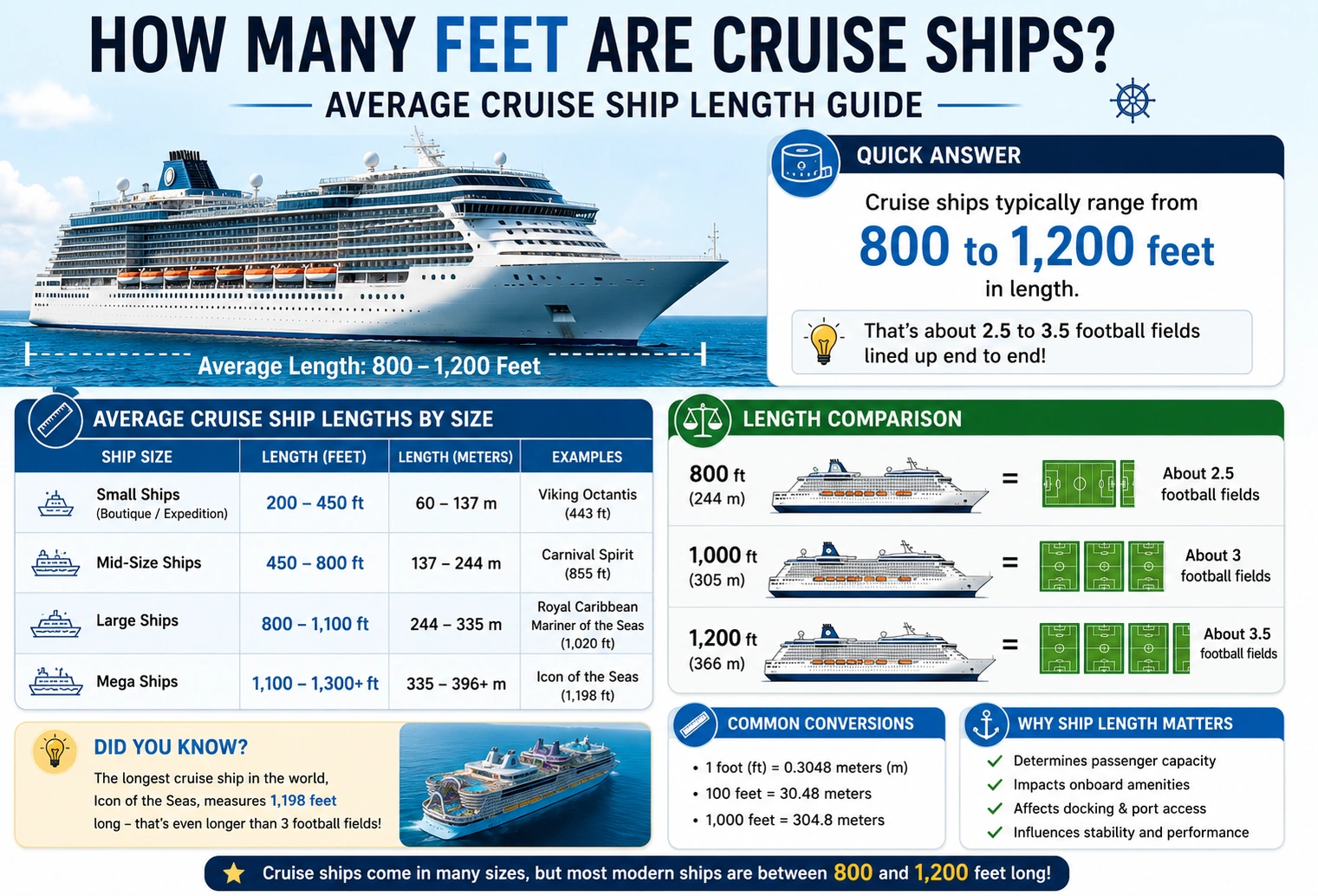
If you’re wondering how many feet are cruise ships, the answer depends on the type of ship.
Modern cruise ships range from about 500 feet to more than 1,200 feet long.
Typical lengths include:
- Small cruise ships: 500–700 feet
- Medium cruise ships: 700–900 feet
- Large cruise ships: 900–1,100 feet
- Mega cruise ships: 1,100–1,200+ feet
The world’s largest cruise ships exceed 1,180 feet, making them longer than many skyscrapers are tall.
Quick Answer
| Cruise Ship Type | Typical Length |
|---|---|
| Small Cruise Ship | 500–700 feet |
| Mid-Size Cruise Ship | 700–900 feet |
| Large Cruise Ship | 900–1,100 feet |
| Mega Cruise Ship | 1,100–1,200+ feet |
Most modern mainstream cruise ships measure between 900 and 1,100 feet long.
Average Cruise Ship Length
The average cruise ship operated by major cruise lines is roughly 950 to 1,100 feet long.
Ships of this size typically feature:
- Multiple passenger decks
- Restaurants
- Swimming pools
- Theaters
- Shopping areas
- Entertainment venues
- Fitness centers
- Thousands of passenger cabins
These vessels are designed to carry thousands of passengers while offering a wide range of onboard amenities.
Cruise Ship Size Categories
Cruise ships are commonly grouped into several size categories.
Small Cruise Ships
Length:
500–700 feet
These ships usually carry fewer passengers and often visit smaller ports that cannot accommodate larger vessels.
Mid-Size Cruise Ships
Length:
700–900 feet
These ships provide more onboard amenities while still being able to access many ports around the world.
Large Cruise Ships
Length:
900–1,100 feet
Large cruise ships often include:
- Water parks
- Multiple dining options
- Shopping promenades
- Live entertainment
- Large swimming pools
They are among the most common ships operated by major cruise lines.
Mega Cruise Ships
Length:
1,100–1,200+ feet
These are the largest passenger ships in the world and often feature:
- Neighborhood-style layouts
- Surf simulators
- Ice skating rinks
- Zip lines
- Aqua theaters
- Dozens of restaurants
How Cruise Ship Length Is Measured
Cruise ship length is generally measured from the bow (front) to the stern (rear).
This overall measurement is known as the vessel’s length overall (LOA).
Length is only one way to describe a ship’s size. Other important measurements include:
- Width (beam)
- Draft
- Height
- Gross tonnage
- Passenger capacity
Together, these dimensions provide a more complete picture of a ship’s overall scale.
Examples of Cruise Ship Lengths
Here are approximate lengths for different categories of cruise vessels.
| Ship Category | Approximate Length |
| Small Expedition Ship | 550 feet |
| Boutique Cruise Ship | 650 feet |
| Mid-Size Cruise Ship | 800 feet |
| Large Cruise Ship | 1,000 feet |
| Mega Cruise Ship | 1,180–1,200+ feet |
These values illustrate the wide range of cruise ship sizes available today.
Cruise Ship Length Comparisons
It can be difficult to picture just how long a cruise ship is. Here are a few comparisons that help put their size into perspective.
| Object | Approximate Length |
|---|---|
| American football field (including end zones) | 360 feet |
| Boeing 747-8 airplane | 250 feet |
| Small cruise ship | 500–700 feet |
| Large cruise ship | 900–1,100 feet |
| Mega cruise ship | 1,100–1,200+ feet |
A 1,200-foot cruise ship is more than three football fields long.
Interesting Facts About Cruise Ship Size
Modern cruise ships are among the largest passenger vessels ever built.
Some interesting facts include:
- Many carry 4,000–7,000 passengers and crew combined.
- Some have 15 to 20 passenger decks.
- The largest ships feature dozens of restaurants, theaters, pools, and entertainment venues.
- Cruise ships continue to grow as shipbuilders develop larger and more efficient designs.
Although length is impressive, overall size also depends on width, height, and internal volume.
Does a Longer Cruise Ship Mean More Passengers?
Not always.
While longer ships often have greater passenger capacity, other factors also matter, including:
- Ship width (beam)
- Number of decks
- Cabin layout
- Public spaces
- Overall design
A well-designed ship may accommodate more passengers than another vessel of similar length.
Why Cruise Ship Length Matters
The length of a cruise ship affects many aspects of its operation, including:
- Passenger capacity
- Onboard amenities
- Port accessibility
- Docking requirements
- Maneuverability
- Fuel efficiency
- Stability in rough seas
Smaller ships can visit ports that are inaccessible to many of the world’s largest cruise vessels.
Common Misconceptions
All Cruise Ships Are the Same Size
Cruise ships vary greatly in length—from about 500 feet for smaller expedition vessels to more than 1,200 feet for the largest modern cruise ships.
Longer Always Means Better
A longer ship often offers more amenities, but smaller ships can provide unique itineraries, easier boarding, and access to destinations that larger ships cannot reach.
Length Is the Only Size Measurement
Ship length is important, but beam (width), draft, gross tonnage, and passenger capacity also play a major role in describing the overall size of a cruise ship.
Frequently Asked Questions
How many feet are cruise ships?
Cruise ships generally range from 500 feet to more than 1,200 feet long, depending on the vessel type and cruise line.
How long is an average cruise ship?
Most modern mainstream cruise ships measure approximately 950 to 1,100 feet in length.
How long are the largest cruise ships?
The world’s largest cruise ships exceed 1,180 feet and can approach or surpass 1,200 feet in overall length.
How is a cruise ship’s length measured?
Cruise ships are typically measured using length overall (LOA), which is the distance from the front of the bow to the back of the stern.
Why do cruise ship sizes vary?
Ship size depends on factors such as intended routes, passenger capacity, onboard amenities, port restrictions, and the cruise line’s design goals.
Conclusion
If you’re wondering how many feet are cruise ships, the answer varies widely based on the type of vessel. Smaller cruise ships are typically 500–700 feet long, while large mainstream ships usually measure 900–1,100 feet. The world’s largest cruise ships exceed 1,180 feet, making them among the longest passenger ships ever constructed.
Understanding cruise ship length can help you compare different vessels, appreciate their engineering, and choose the type of cruise experience that best fits your travel style. Whether you’re planning your first voyage or simply curious about maritime travel, knowing the typical dimensions of cruise ships provides valuable perspective on these remarkable floating cities.
Discover More Articles
How Many Feet Is a Chevy Silverado? Length Guide