
If you’re planning a new lawn or replacing damaged grass, you may be wondering how many square feet of sod in a pallet. Knowing the answer helps you estimate costs, avoid buying too much or too little sod, and complete your landscaping project efficiently.
The short answer is:
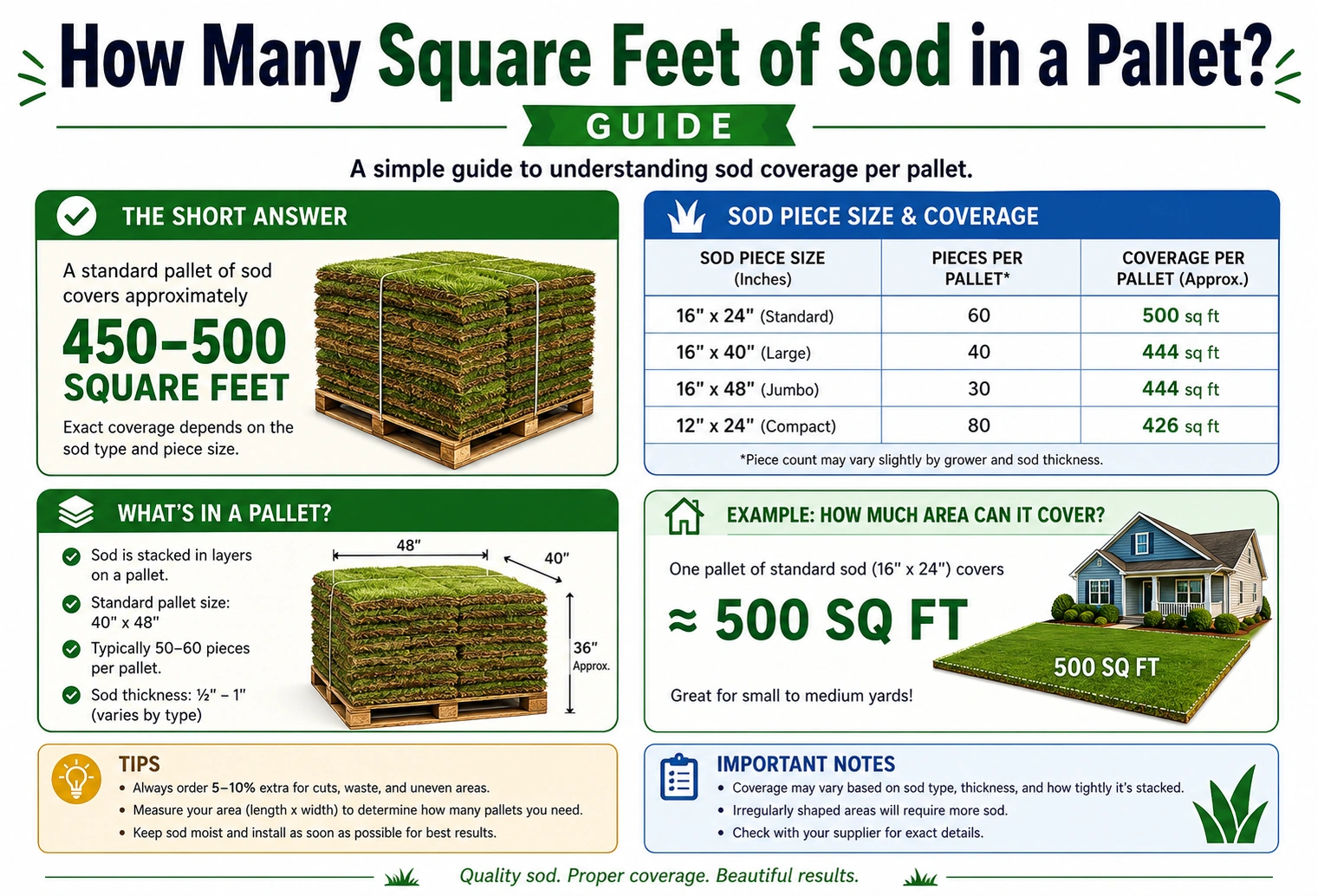
A standard pallet of sod typically covers between 400 and 500 square feet.
However, the exact coverage depends on:
- The sod supplier
- The type of grass
- The size of each sod piece
- Regional growing practices
Most homeowners can expect a 450-square-foot pallet to be the industry standard, although some suppliers package pallets with 400, 450, or 500 square feet.
This guide explains sod pallet coverage, how to calculate your lawn size, and how many pallets you’ll need for your project.
Quick Answer
Here’s a quick overview of common sod pallet sizes.
| Sod Pallet | Approximate Coverage |
|---|---|
| Small pallet | 400 sq ft |
| Standard pallet | 450 sq ft |
| Large pallet | 500 sq ft |
Always verify the exact coverage with your local sod supplier before purchasing.
What Is a Sod Pallet?
A sod pallet is a stack of freshly harvested grass pieces placed on a wooden pallet for transportation and delivery.
Each pallet contains multiple sections of sod that are ready to install immediately.
Depending on the supplier, a pallet may include:
- Sod rolls
- Sod slabs
- Sod squares
The total coverage remains close to 400–500 square feet.
How Many Square Feet Does a Pallet of Sod Cover?
Most sod farms package pallets to cover approximately:
- 400 square feet
- 450 square feet
- 500 square feet
The most common coverage is:
450 square feet per pallet
Because suppliers use different harvesting equipment, the number of pieces per pallet varies.
Typical Sod Piece Sizes
Most sod is sold in one of these sizes.
| Sod Piece Size | Coverage Per Piece |
|---|---|
| 16″ × 24″ | 2.67 sq ft |
| 18″ × 24″ | 3 sq ft |
| 24″ × 81″ (roll) | 13.5 sq ft |
A pallet simply contains enough pieces to reach its advertised total square footage.
Sod Pallet Coverage Chart
Use this chart for estimating your project.
| Lawn Size | Pallets Needed (450 sq ft each) |
|---|---|
| 400 sq ft | 1 pallet |
| 450 sq ft | 1 pallet |
| 500 sq ft | 2 pallets |
| 900 sq ft | 2 pallets |
| 1,000 sq ft | 3 pallets |
| 1,500 sq ft | 4 pallets |
| 2,000 sq ft | 5 pallets |
| 2,500 sq ft | 6 pallets |
Always round up to ensure complete coverage.
How to Calculate How Much Sod You Need
Measuring your lawn accurately is the first step.
Step 1: Measure Length
Measure the longest side of your yard.
Example:
40 feet
Step 2: Measure Width
Example:
25 feet
Step 3: Calculate Square Footage
Length × Width
40 × 25 = 1,000 square feet
Step 4: Divide by Pallet Coverage
If one pallet covers 450 square feet:
1,000 ÷ 450 = 2.22 pallets
Round up to 3 pallets.
Examples of Sod Calculations
Example 1
Lawn:
450 sq ft
Needed:
1 pallet
Example 2
Backyard:
900 sq ft
Needed:
2 pallets
Example 3
Large lawn:
1,800 sq ft
1,800 ÷ 450 = 4
Needed:
4 pallets
Example 4
Front yard:
650 sq ft
650 ÷ 450 = 1.44
Round up:
2 pallets
Factors That Affect Sod Coverage
Several factors influence the amount of sod you’ll actually need.
Waste During Installation
Small gaps and trimming around curves create waste.
Add 5–10% extra for irregular yards.
Lawn Shape
Rectangular lawns are easier to cover than curved or oddly shaped landscapes.
Obstacles
Subtract areas occupied by:
- Driveways
- Patios
- Sidewalks
- Decks
- Garden beds
- Swimming pools
This prevents buying unnecessary sod.
Sod Shrinkage
Fresh sod may shrink slightly as it settles, making proper installation important.
Benefits of Buying Sod by the Pallet
Purchasing by the pallet offers several advantages.
Better Pricing
Bulk purchases often reduce the cost per square foot.
Uniform Appearance
Grass from the same pallet generally has consistent color and texture.
Faster Installation
Large pallets reduce trips to the garden center and make installation more efficient.
Fresher Grass
Sod delivered directly from the farm is usually healthier and establishes more quickly.
Common Sod Types
Your supplier may offer different varieties.
- Kentucky Bluegrass
- Tall Fescue
- Bermuda Grass
- Zoysia Grass
- St. Augustine Grass
- Centipede Grass
Coverage per pallet is generally similar regardless of grass type, though pallet weight may vary.
Common Mistakes to Avoid
Guessing Lawn Size
Always measure your lawn instead of estimating.
Forgetting Waste
Order an extra 5–10% to cover trimming and mistakes.
Buying Too Early
Install sod within 24–48 hours of delivery for the best results.
Ignoring Watering Requirements
Fresh sod requires frequent watering during the first few weeks.
Not Preparing the Soil
Remove weeds, loosen compacted soil, and level the ground before laying sod.
Expert Tips for Buying Sod
- Measure your lawn twice before ordering.
- Ask your supplier for the exact square footage per pallet.
- Purchase all sod from the same batch for consistent color.
- Schedule delivery on the day of installation.
- Water the sod immediately after laying it.
- Avoid walking on newly installed sod until the roots establish.
9. Frequently Asked Questions
1. How many square feet of sod are in a pallet?
Most pallets cover 400 to 500 square feet, with 450 square feet being the most common standard.
2. How many pieces of sod are on a pallet?
The number varies by supplier and sod size, but most pallets contain enough pieces to cover 400–500 square feet.
3. How many pallets do I need for 1,000 square feet?
If each pallet covers 450 square feet, you’ll need 3 pallets to ensure complete coverage.
4. Should I buy extra sod?
Yes. Ordering 5–10% extra is recommended to account for trimming, irregular edges, and installation waste.
5. Can one person install a pallet of sod?
Yes, but a full pallet is heavy and installation is physically demanding. Large projects are easier and faster with two or more people.
10. Conclusion
Knowing how many square feet of sod in a pallet makes planning a lawn installation much easier. While coverage varies slightly by supplier, most standard sod pallets cover between 400 and 500 square feet, with 450 square feet being the most common.
Before ordering, measure your lawn carefully, subtract areas that won’t receive grass, and add an extra 5–10% for trimming and waste. With accurate measurements and the coverage charts in this guide, you can purchase the right number of pallets, reduce unnecessary costs, and enjoy a healthy, beautiful lawn with minimal hassle.
Discover More Articles
How Many Feet in a Mile Swimming? Pool Distance Guide