

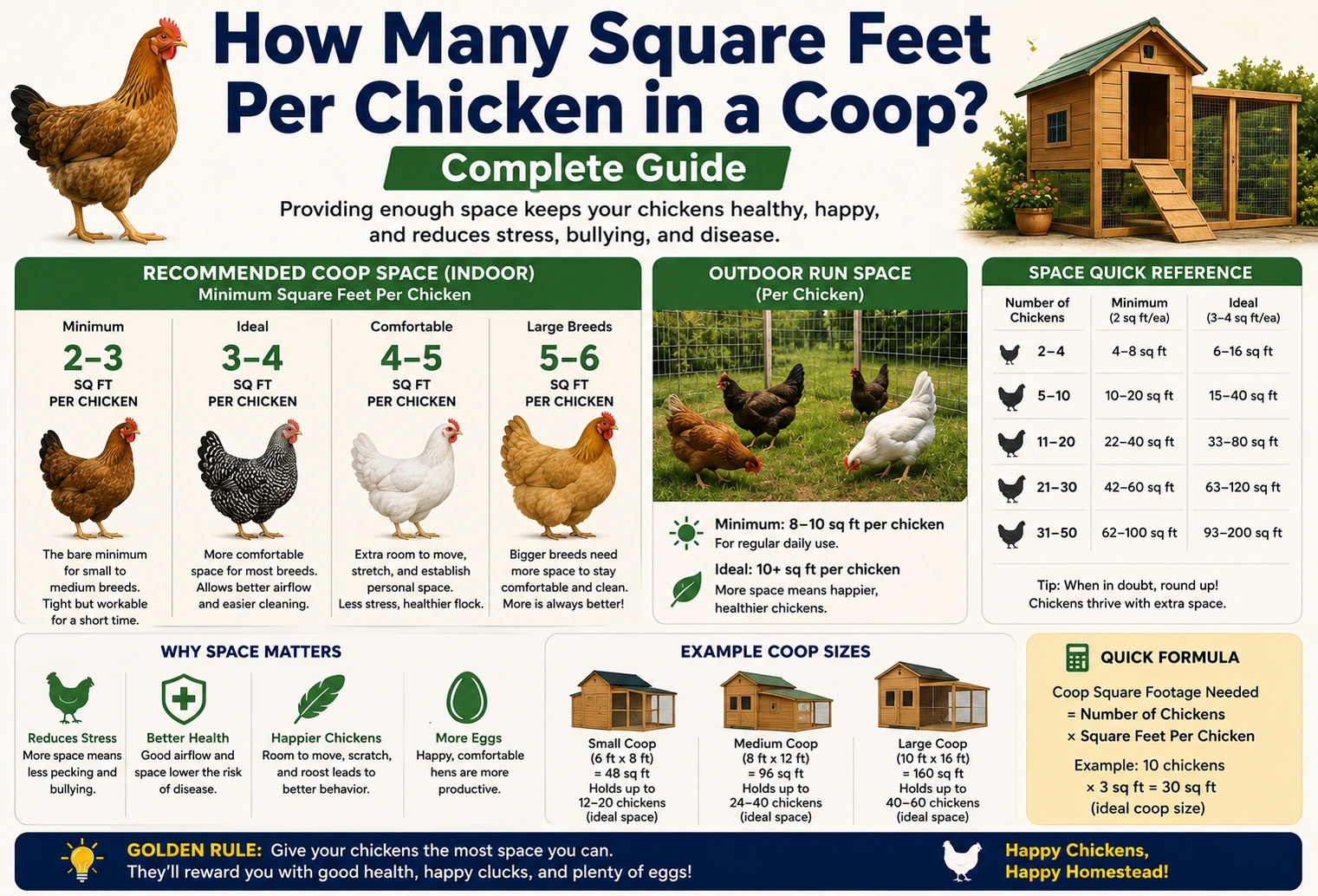
If you’re planning to raise backyard chickens, one of the most important questions you’ll ask is how many square feet per chicken in a coop. Giving chickens enough space isn’t just about comfort—it directly affects their health, egg production, behavior, and overall well-being.
A coop that’s too small can lead to stress, feather pecking, disease, and reduced egg laying. On the other hand, providing enough room helps keep your flock healthy and makes cleaning and maintenance much easier.
The general recommendation is:
- Inside the coop: 4 square feet per standard-sized chicken
- Outdoor run: 8–10 square feet per chicken
These are widely accepted guidelines for backyard flocks. If your chickens spend most of their day confined, giving them even more space is beneficial.
In this guide, you’ll learn how much room different breeds need, how to size a coop correctly, and common mistakes to avoid.
Quick Answer
Here are the recommended space requirements:
| Area | Space Per Standard Chicken |
|---|---|
| Inside Coop | 4 sq ft |
| Outdoor Run | 8–10 sq ft |
| Free-Range Flock | Less run space may be acceptable if birds roam daily |
For example:
- 4 chickens: 16 sq ft coop + 32–40 sq ft run
- 6 chickens: 24 sq ft coop + 48–60 sq ft run
- 10 chickens: 40 sq ft coop + 80–100 sq ft run
Why Coop Space Matters
Providing adequate space is essential for a healthy flock.
Benefits include:
- Reduced stress
- Fewer aggressive behaviors
- Cleaner living conditions
- Better airflow
- Lower risk of disease
- Higher egg production
- Easier maintenance
Crowded coops can quickly become dirty, humid, and uncomfortable, especially during hot or wet weather.
Recommended Square Feet Per Chicken
The amount of space depends on the size and breed of your chickens.
Standard Breeds
Most laying breeds, such as Rhode Island Reds, Plymouth Rocks, and Australorps, require:
- 4 square feet inside the coop
- 8–10 square feet in the run
This provides enough room to sleep, perch, and move comfortably.
Bantam Chickens
Bantams are much smaller than standard breeds.
Recommended space:
- 2–3 square feet inside the coop
- 4–6 square feet in the run
Because of their smaller size, they can live comfortably in less space.
Large Breeds
Large breeds such as Brahmas, Jersey Giants, and Cochins benefit from extra room.
Recommended space:
- 5–6 square feet inside the coop
- 10–15 square feet in the run
Extra space helps prevent injuries and crowding.
Outdoor Run Space Requirements
While the coop is mainly for sleeping and laying eggs, chickens also need room to exercise.
A good rule is:
- Minimum: 8 square feet per chicken
- Preferred: 10 square feet or more
If your chickens are allowed to free-range for several hours each day, the run can sometimes be smaller, although more space is always better.
Outdoor space allows chickens to:
- Scratch the ground
- Dust bathe
- Peck naturally
- Exercise
- Explore
These natural behaviors improve both physical and mental health.
Chicken Coop Size Chart
Use this chart to estimate the size of your coop and run.
| Number of Chickens | Coop Size | Run Size |
| 2 | 8 sq ft | 16–20 sq ft |
| 4 | 16 sq ft | 32–40 sq ft |
| 6 | 24 sq ft | 48–60 sq ft |
| 8 | 32 sq ft | 64–80 sq ft |
| 10 | 40 sq ft | 80–100 sq ft |
| 12 | 48 sq ft | 96–120 sq ft |
| 15 | 60 sq ft | 120–150 sq ft |
This table assumes standard-sized chickens.
How to Calculate the Right Coop Size
Calculating your coop size is simple.
Step 1: Count Your Chickens
Determine how many birds you’ll keep.
Step 2: Multiply by 4
Multiply the number of chickens by 4 square feet.
Example:
8 chickens × 4 = 32 square feet
Step 3: Plan the Outdoor Run
Multiply the flock size by 8–10 square feet.
Example:
8 chickens × 10 = 80 square feet
Remember to plan for future flock expansion if you expect to add more birds.
Other Factors That Affect Space Requirements
The general recommendations work well for most backyard flocks, but several factors can increase your space needs.
Climate
Cold climates may require chickens to spend more time indoors during winter.
Breed Temperament
Active breeds benefit from larger runs, while calmer breeds tolerate smaller spaces better.
Number of Roosts
Provide about 8–12 inches of roosting space per chicken to prevent crowding at night.
Nesting Boxes
A common recommendation is one nesting box for every 3–4 hens.
Ventilation
Good airflow is essential regardless of coop size. Proper ventilation helps reduce moisture, odors, and respiratory problems.
Signs Your Coop Is Too Small
Watch for these common signs of overcrowding:
- Feather pecking
- Aggressive behavior
- Dirty feathers
- Frequent fighting
- Broken eggs
- Reduced egg production
- Strong ammonia odor
- Wet bedding
- Chickens refusing to roost
If you notice these problems, expanding the coop or run can often improve the situation.
Common Mistakes to Avoid
Building Too Small
Many beginners underestimate how quickly a flock can grow. Consider future expansion when designing your coop.
Ignoring Outdoor Space
A large coop alone isn’t enough. Chickens also need plenty of room outside.
Forgetting Ventilation
Even a spacious coop can become unhealthy without proper airflow.
Overlooking Cleaning Access
Leave enough room for doors and walkways so cleaning is easy.
Expert Tips
- Build slightly larger than your current needs.
- Add windows and roof vents for year-round ventilation.
- Rotate the outdoor run when possible to reduce mud and parasites.
- Provide multiple feeding and watering stations for larger flocks.
- Keep bedding dry by cleaning regularly and replacing wet litter.
9. FAQs
1. How many square feet does each chicken need in a coop?
Most standard chickens need at least 4 square feet of indoor coop space per bird.
2. How much outdoor space does each chicken need?
A good guideline is 8–10 square feet per chicken in an outdoor run.
3. Can chickens live in a smaller coop if they free-range?
Yes. Chickens that free-range for much of the day can sometimes manage with slightly less run space, but they should still have at least 4 square feet per bird inside the coop.
4. How many chickens can fit in a 40-square-foot coop?
Using the standard recommendation of 4 square feet per chicken, a 40-square-foot coop can comfortably house 10 standard-sized chickens.
5. What happens if a chicken coop is overcrowded?
Overcrowding can lead to stress, feather pecking, fighting, poor egg production, disease, dirty conditions, and higher maintenance requirements.
10. Conclusion
If you’re wondering how many square feet per chicken in a coop, the widely accepted recommendation is 4 square feet of indoor coop space per standard-sized chicken and 8–10 square feet per bird in the outdoor run. Larger breeds benefit from even more space, while bantams can comfortably live in slightly smaller coops.
Providing adequate room is one of the best investments you can make for your flock. Proper space encourages natural behaviors, improves egg production, reduces stress, and makes cleaning easier. Whether you’re raising four hens or a dozen chickens, designing a coop with enough indoor and outdoor space will help your birds stay healthy, productive, and comfortable for years to come.
Discover More Articles
How Many Square Feet Is a 1/2 Acre? Exact Conversion Guide