
If you are shopping for an air conditioner, one of the most important questions is: how many square feet will 18000 BTU cool? Choosing the right AC size affects comfort, energy bills, and overall performance.
The short answer is:
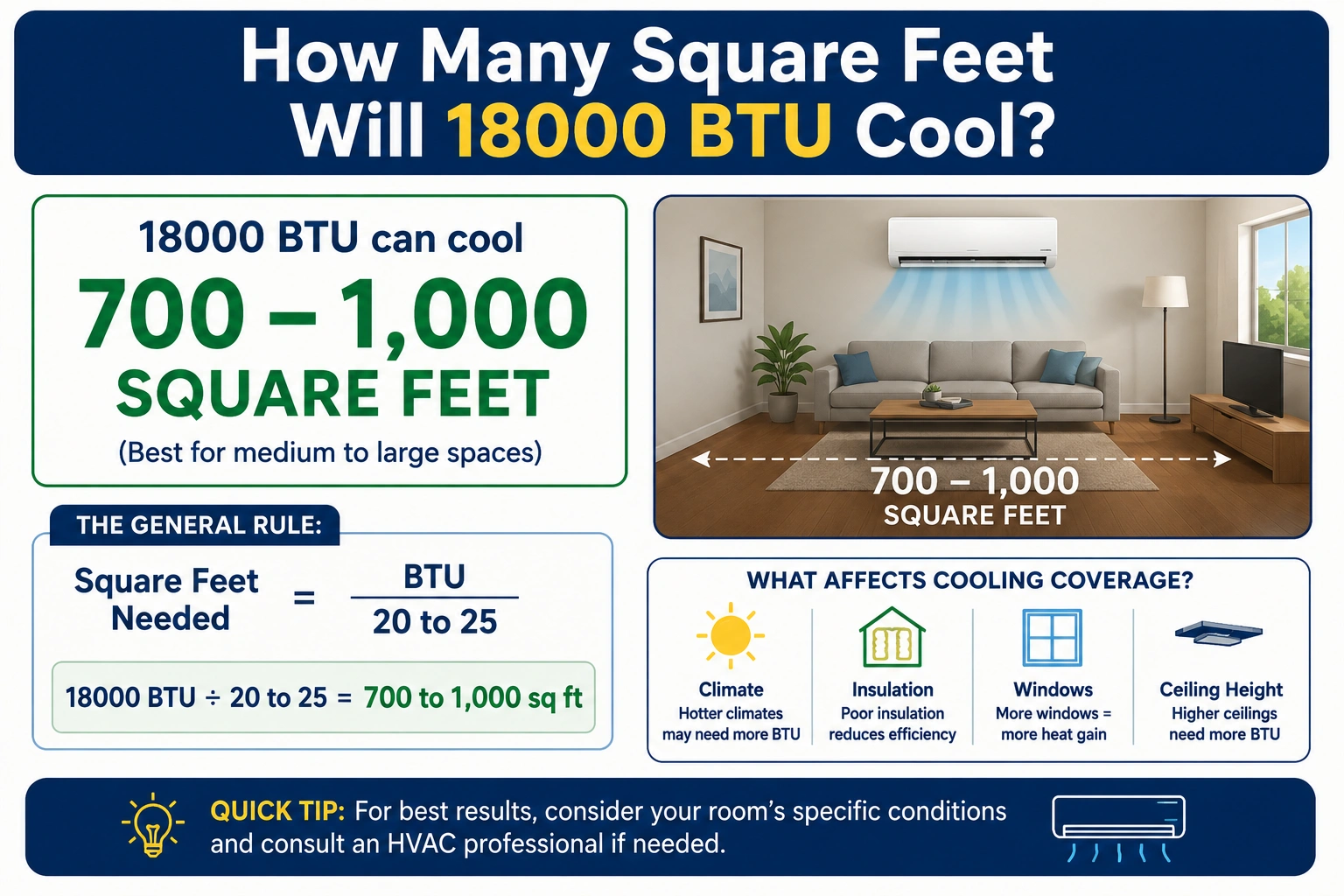
18000 BTU≈700 to 1000 square feet
An 18,000 BTU air conditioner can typically cool 700 to 1,000 square feet, depending on insulation, ceiling height, sunlight, and climate conditions.
This size is commonly used for:
- Large bedrooms
- Studio apartments
- Small living rooms
- Offices
- Garages
- Open-concept spaces
In this complete guide, you will learn how BTU ratings work, what room size fits an 18,000 BTU unit best, and how to choose the correct air conditioner for your space.
What Does BTU Mean?
BTU stands for British Thermal Unit. It measures how much heat an air conditioner can remove from a room in one hour.
In simple terms:
- Higher BTU = more cooling power
- Lower BTU = less cooling power
Air conditioners are rated by BTU capacity because different room sizes need different amounts of cooling.
For example:
| BTU Rating | Recommended Room Size |
|---|---|
| 5,000 BTU | 100–250 sq ft |
| 8,000 BTU | 250–350 sq ft |
| 12,000 BTU | 400–550 sq ft |
| 18,000 BTU | 700–1,000 sq ft |
| 24,000 BTU | 1,200–1,500 sq ft |
Choosing the correct BTU rating helps your AC cool efficiently without wasting electricity.
How Many Square Feet Will 18000 BTU Cool?
The average 18,000 BTU air conditioner cools approximately:
700–1000 square feet
However, this number changes based on several conditions.
Ideal Room Types for 18,000 BTU
An 18,000 BTU unit works well for:
- Large bedrooms
- Medium apartments
- Living rooms
- Finished basements
- Small commercial offices
- Large garages
Typical Room Dimensions
Here are examples of spaces an 18,000 BTU AC may cool effectively:
| Room Dimensions | Square Feet |
|---|---|
| 25 × 30 ft | 750 sq ft |
| 20 × 40 ft | 800 sq ft |
| 30 × 30 ft | 900 sq ft |
| 25 × 40 ft | 1,000 sq ft |
If the room has excellent insulation and limited sunlight, cooling performance may improve.
BTU to Square Feet Formula
A common HVAC rule estimates cooling needs using square footage.
Basic Cooling Formula
Square Feet×20≈Required BTUs
This formula assumes average insulation and normal ceiling heights.
Example Calculation
Suppose your room measures 900 square feet:
900×20=18000 BTU
This means an 18,000 BTU air conditioner is generally suitable for a 900-square-foot room.
18000 BTU Cooling Chart
Here is a more detailed cooling guide for different room conditions.
| Room Condition | Recommended Coverage |
|---|---|
| Excellent insulation | 1,000 sq ft |
| Average insulation | 850–950 sq ft |
| Poor insulation | 700–800 sq ft |
| High ceilings | Reduce coverage by 10–20% |
| Very sunny rooms | Reduce coverage by 10% |
This chart shows why room conditions matter just as much as room size.
Factors That Affect Cooling Performance
Several important factors determine how effectively an 18,000 BTU unit cools a space.
Ceiling Height
Most BTU recommendations assume:
- 8-foot ceilings
If your ceilings are taller, the room contains more air volume.
For example:
- Vaulted ceilings
- Open loft spaces
- Commercial rooms
These may require a larger unit.
Sunlight Exposure
Rooms with heavy sunlight heat up faster.
Examples include:
- South-facing windows
- Large glass doors
- Sunrooms
Sunny rooms often need additional cooling power.
Insulation Quality
Good insulation keeps cool air inside.
Poor insulation allows:
- Hot air leaks
- Faster heat gain
- Higher energy bills
Older homes usually need more BTUs than newer energy-efficient homes.
Number of Occupants
People generate body heat.
If many people regularly occupy the room, cooling demand increases.
For example:
- Family rooms
- Meeting spaces
- Classrooms
These may require larger AC units.
Appliances and Electronics
Heat-producing appliances increase room temperature.
Examples include:
- Computers
- TVs
- Refrigerators
- Ovens
- Gaming systems
Rooms with many electronics may need additional cooling capacity.
Is an 18000 BTU AC Right for Your Space?
An 18,000 BTU air conditioner works well in many situations.
Small Homes
It can effectively cool:
- Small single-story homes
- Compact cottages
- Tiny homes
Especially in moderate climates.
Apartments
An 18,000 BTU unit is popular for:
- Large apartments
- Studio layouts
- Open-concept living spaces
Mini split systems are especially common in apartments.
Garages
Garages often need extra cooling because they:
- Lack insulation
- Absorb heat through concrete
- Have large doors
An 18,000 BTU unit may cool a medium garage effectively.
Offices
Small offices and workspaces benefit from this AC size because it handles:
- Computer heat
- Multiple occupants
- Long operating hours
Common Types of 18000 BTU Air Conditioners
Different AC styles offer different installation options.
Window Units
Window ACs are:
- Affordable
- Easy to install
- Common in apartments
However, they can be noisy.
Portable ACs
Portable units offer flexibility but may:
- Use more electricity
- Cool less efficiently
They are best for temporary cooling.
Mini Split Systems
Mini splits are among the most efficient options.
Benefits include:
- Quiet operation
- Better energy efficiency
- Zoned cooling
- No ductwork needed
Many homeowners choose 18,000 BTU mini splits for medium-size spaces.
Common AC Sizing Mistakes
Choosing the wrong size AC causes problems.
Oversizing
An oversized AC may:
- Cycle on and off too quickly
- Waste energy
- Leave humidity in the air
This can make rooms feel damp and uncomfortable.
Undersizing
An undersized unit struggles to cool properly.
Problems include:
- Constant operation
- High electricity bills
- Uneven cooling
- Faster wear and tear
Ignoring Climate
Hot climates require more cooling power.
Homes in:
- Arizona
- Texas
- Florida
Often need larger units than homes in cooler regions.
Energy Efficiency Tips
Even the right-sized AC performs better with good habits.
Replace Filters Regularly
Dirty filters reduce airflow and efficiency.
Most filters should be changed every:
- 1–3 months
Seal Air Leaks
Prevent cool air from escaping around:
- Doors
- Windows
- Ducts
Weatherstripping helps improve efficiency.
Use Smart Thermostat Settings
Recommended summer settings:
78∘F
This balances comfort and energy savings.
Keep Curtains Closed
Blocking sunlight lowers indoor temperatures and reduces AC workload.
Real-World Example
Suppose you have:
- An 850-square-foot apartment
- Average insulation
- Standard 8-foot ceilings
The cooling estimate becomes:
850×20=17000 BTU
An 18,000 BTU air conditioner would be an excellent choice.
However, if the apartment gets intense afternoon sun, you may need slightly more cooling capacity.
FAQs
1. How much space can an 18000 BTU air conditioner cool?
An 18,000 BTU AC typically cools between 700 and 1,000 square feet.
2. Is 18000 BTU enough for a living room?
Yes, in most cases it works well for medium to large living rooms, especially with average insulation.
3. Can an 18000 BTU unit cool multiple rooms?
It depends on the layout. Open floor plans cool better than closed-off rooms.
4. Is a mini split better than a window AC?
Mini splits are usually quieter and more energy efficient, but they cost more upfront.
5. What happens if my AC is too powerful?
An oversized unit may short cycle, waste energy, and fail to remove humidity properly.
Conclusion
Understanding how many square feet will 18000 BTU cool helps you choose the right air conditioner for comfort and efficiency. In most situations, an 18,000 BTU AC can cool approximately 700 to 1,000 square feet, depending on insulation, sunlight, climate, and ceiling height.
Before buying an AC unit, always consider:
- Room size
- Insulation quality
- Sun exposure
- Occupancy
- Climate conditions
Using the proper BTU size improves cooling performance, lowers energy costs, and extends the lifespan of your system.
Keep this quick rule in mind:
18000 BTU≈700–1000 square feet
It is one of the most useful HVAC sizing guidelines for homeowners and renters alike.
Discover More Articles
How Many Feet Is Two Meters? Complete Guide