

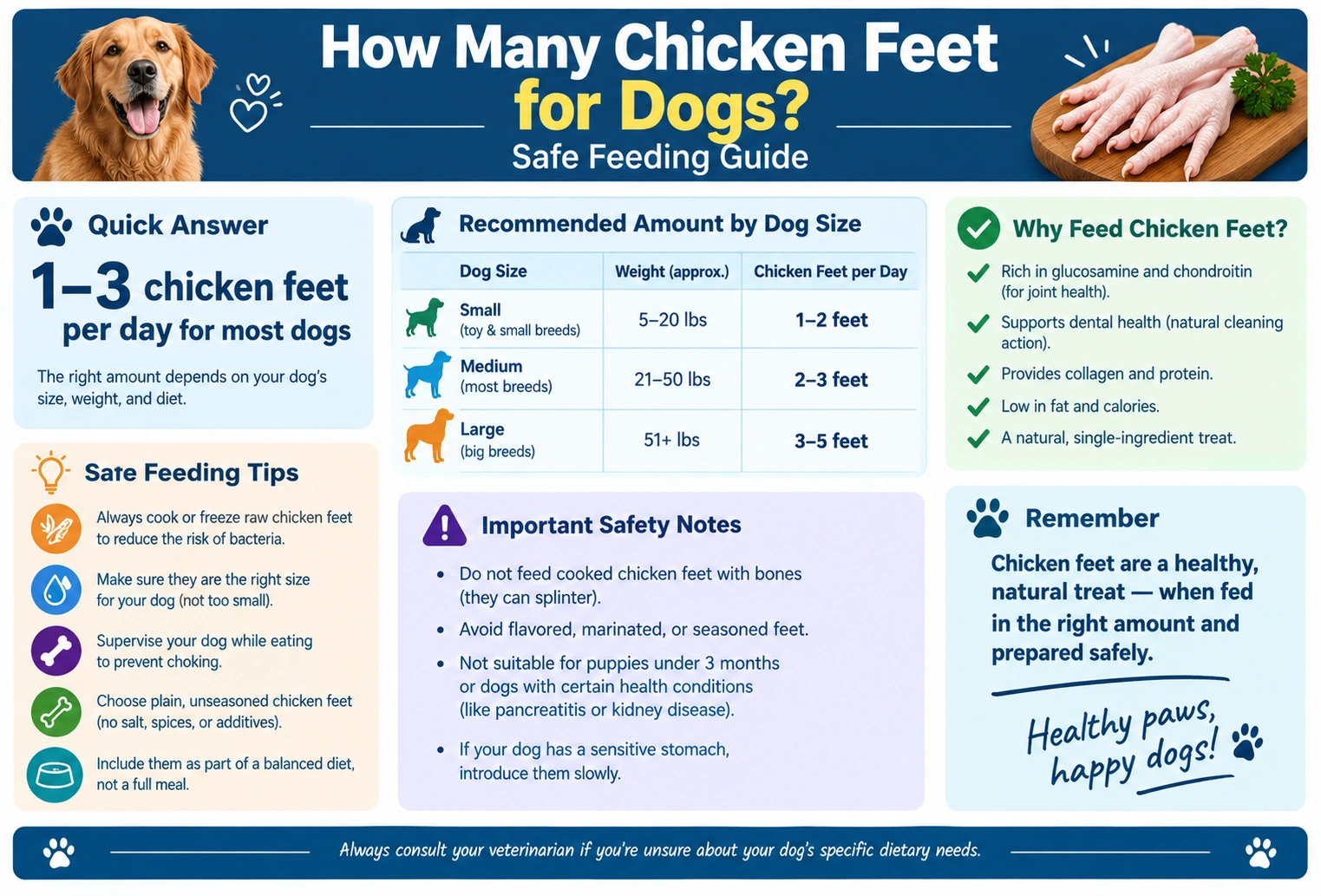
Most healthy adult dogs can have 1 chicken foot occasionally, while larger dogs may be able to eat 2 chicken feet in a serving. Smaller dogs generally need less.
| Dog Size | Typical Serving | Frequency |
|---|---|---|
| Small dogs | ½–1 chicken foot | 1–2 times per week |
| Medium dogs | 1 chicken foot | 2–3 times per week |
| Large dogs | 1–2 chicken feet | 2–3 times per week |
| Extra-large dogs | 2 chicken feet | Up to a few times per week |
Chicken feet should be treated as a treat or chew, not a complete meal. Introduce them gradually and supervise your dog while eating.
Introduction
If you’re wondering how many chicken feet for dogs is appropriate, the answer depends mainly on your dog’s size, diet, chewing ability, and overall health.
Chicken feet can provide protein, collagen, and connective tissue, but they also contain bones and should be fed carefully. The preparation method matters just as much as the amount.
Are Chicken Feet Safe for Dogs?
Chicken feet can be safe for many dogs when they are properly prepared and fed in reasonable amounts.
Chicken feet contain bones, cartilage, skin, tendons, and connective tissue. When they are raw or properly dehydrated, the bones are generally less brittle than cooked chicken bones.
However, that does not mean every dog should automatically eat them.
| Chicken Foot Type | Generally Recommended? | Main Concern |
|---|---|---|
| Raw chicken foot | Can be appropriate for some dogs | Bacteria and choking risk |
| Properly dehydrated chicken foot | Often used as a dog chew | Must be prepared safely |
| Freeze-dried chicken foot | Can be convenient | Quality and preparation matter |
| Cooked chicken foot | Avoid | Cooked bones can splinter |
| Fried/seasoned chicken foot | Avoid | Fat, salt, spices, and unsafe ingredients |
Never give dogs cooked chicken bones, including cooked chicken feet. Cooking can make bones brittle and more likely to break into sharp pieces.
How Many Chicken Feet Can a Dog Have?
There is no single number that works for every dog. A useful starting point is to consider body size and how the dog handles chew treats.
Small Dogs
For a small dog, ½ to 1 chicken foot may be enough for a serving.
Because small dogs have smaller mouths and digestive systems, start with a small amount. If your dog has never eaten chicken feet before, beginning with half of one can help you see how they tolerate it.
Medium Dogs
A medium-sized dog can generally start with 1 chicken foot.
If your dog handles it well, chicken feet can be offered as an occasional chew rather than as a daily food.
Large Dogs
Large dogs may be able to eat 1–2 chicken feet in a serving.
Even large dogs should not receive unlimited chicken feet simply because they are bigger. Treats should remain a relatively small part of the overall diet.
Extra-Large Dogs
Very large dogs may tolerate 2 chicken feet at a time, depending on their normal diet and chewing habits.
The best approach is to start conservatively and adjust based on your dog’s individual response.
Chicken Feet Serving Guide by Dog Weight
A weight-based approach can make portion planning easier, but it should still be treated as a general guideline rather than a veterinary prescription.
| Dog Weight | Starting Amount | Suggested Maximum per Serving |
|---|---|---|
| Under 15 lb | ½ foot | 1 foot |
| 15–30 lb | ½–1 foot | 1 foot |
| 30–60 lb | 1 foot | 1–2 feet |
| 60–90 lb | 1–2 feet | 2 feet |
| Over 90 lb | 1–2 feet | 2 feet |
These amounts are intended for occasional treats, not as a replacement for a balanced dog food.
How Often Can Dogs Eat Chicken Feet?
For many dogs, chicken feet are better offered a few times per week rather than every day.
The correct frequency depends on what else your dog eats. If your dog’s diet already contains plenty of bone, fat, or calcium, adding chicken feet frequently may provide more of these nutrients than needed.
| Feeding Pattern | Recommendation |
|---|---|
| First time | Start with a small portion |
| 1 time per week | Reasonable occasional treat |
| 2–3 times per week | Suitable for some dogs |
| Every day | Usually unnecessary |
| Multiple feet every day | Not recommended without professional dietary guidance |
Remember that treats should complement a complete and balanced diet rather than replace it.
Benefits of Chicken Feet for Dogs
Chicken feet are popular as natural dog chews because they contain several components that dogs can eat and enjoy.
1. Collagen
Chicken feet contain connective tissue and collagen. Collagen is an important structural protein found throughout the body.
This is one reason chicken feet are often marketed as a natural chew for supporting healthy joints and connective tissues.
However, chicken feet should not be viewed as a treatment for arthritis or other joint diseases.
2. Protein
Chicken feet contain animal protein, although they are not as nutritionally complete as a balanced dog food.
3. Natural Chewing Activity
Chewing can provide enrichment and give dogs an activity to focus on.
A chicken foot can therefore function as an occasional natural chew.
4. Convenient Treat
Dehydrated or freeze-dried chicken feet can be stored and served conveniently when purchased from a reputable pet-food source.
Can Puppies Eat Chicken Feet?
Puppies require more caution.
Young puppies have developing teeth and digestive systems, and their nutritional requirements are different from adult dogs.
| Puppy Situation | Recommendation |
|---|---|
| Very young puppy | Avoid unless veterinarian approves |
| Puppy with developing teeth | Use extra caution |
| Older puppy eating solid food | Ask your veterinarian first |
| Puppy with digestive problems | Avoid until professionally evaluated |
If you want to introduce chicken feet to a puppy, discuss the appropriate type and amount with your veterinarian first.
Can Small Dogs Eat Chicken Feet?
Small dogs can eat chicken feet in some circumstances, but portion size is especially important.
A whole chicken foot may be relatively large compared with a small dog’s mouth. Start with a smaller amount and watch how your dog chews.
If your dog attempts to swallow the foot whole instead of chewing it, discontinue the treat.
Raw vs. Dehydrated Chicken Feet for Dogs
One of the most important decisions is whether to feed raw or dehydrated chicken feet.
| Type | Potential Advantage | Important Concern |
|---|---|---|
| Raw | Soft, natural texture | Bacterial contamination |
| Dehydrated | Convenient and shelf-stable | Must be properly processed |
| Freeze-dried | Convenient and lightweight | Product quality varies |
| Cooked | Easy to prepare | Bones may splinter |
If buying commercial chicken feet, choose products specifically made for dogs and follow the manufacturer’s feeding instructions.
Why Cooked Chicken Feet Are Dangerous
You should not feed cooked chicken feet to dogs.
Heating bones can change their structure and make them brittle. Brittle bones may break into sharp fragments.
These fragments can potentially cause injuries in the mouth, throat, stomach, or intestines.
That means chicken feet prepared for human consumption—such as boiled, roasted, fried, or seasoned chicken feet—should not simply be given to a dog.
How to Give Chicken Feet to Your Dog Safely
Follow these basic precautions when offering chicken feet.
Step 1: Choose an Appropriate Product
Use raw, freeze-dried, or properly dehydrated chicken feet intended for dogs.
Avoid products containing salt, sauces, onion, garlic, or other seasonings.
Step 2: Start Small
If your dog has never eaten chicken feet, don’t begin with several at once.
Start with a small amount and monitor your dog afterward.
Step 3: Supervise Your Dog
Stay nearby while your dog eats the chew.
Do not leave a dog unattended with a bone-containing treat.
Step 4: Watch for Swallowing Problems
Some dogs chew carefully. Others try to gulp treats.
If your dog repeatedly attempts to swallow chicken feet whole, they may not be an appropriate chew for that dog.
Step 5: Monitor Digestion
Watch your dog for vomiting, diarrhea, constipation, abdominal discomfort, or other unusual symptoms after introducing the treat.
If significant symptoms occur, stop feeding chicken feet and contact your veterinarian.
How Many Chicken Feet for Dogs With Sensitive Stomachs?
Dogs with sensitive digestion may need a much smaller amount—or may need to avoid chicken feet altogether.
A sudden introduction of a new treat can cause digestive upset.
| Dog Condition | Approach |
|---|---|
| Healthy adult dog | Introduce gradually |
| Sensitive stomach | Start very small or avoid |
| History of digestive problems | Ask veterinarian first |
| Food allergy concerns | Avoid the suspected ingredient |
| Previous reaction to chicken | Do not introduce without veterinary guidance |
Can Chicken Feet Cause Constipation?
They can potentially contribute to digestive problems when a dog eats too much bone or consumes an inappropriate amount.
This is another reason portion control matters.
If your dog develops constipation or repeatedly struggles to pass stool after eating chicken feet, stop offering them and speak with a veterinarian.
Can Dogs Eat Chicken Feet Every Day?
Feeding chicken feet every day is generally unnecessary.
A complete and balanced dog diet should provide the nutrients your dog needs. Chicken feet are better considered an occasional treat or chew.
Daily feeding can also make it easier to accidentally provide excessive calories or minerals, particularly if your dog receives other treats and chew products.
Chicken Feet vs. Other Dog Treats
Chicken feet are only one type of natural chew. Different treats have different advantages and risks.
| Treat | Main Feature | Bone Present? | Key Consideration |
|---|---|---|---|
| Chicken feet | Collagen-rich chew | Yes | Supervision needed |
| Chicken breast | Lean protein | No | Must be plain and cooked safely |
| Commercial dental chew | Dental-focused design | Usually no | Follow package directions |
| Carrot | Low-calorie snack | No | Cut to appropriate size |
| Training treats | Small rewards | No | Watch total calories |
There is no need to use chicken feet simply because they are considered natural. The best treat is one that fits your dog’s size, health, diet, and chewing behavior.
Signs Your Dog Should Not Have Chicken Feet
Chicken feet may not be appropriate for every dog.
Avoid them or seek veterinary advice if your dog:
- Has difficulty chewing
- Guzzles treats without chewing
- Has a history of intestinal obstruction
- Has significant digestive problems
- Has a known chicken allergy
- Is very young
- Has dental problems that make hard chewing difficult
- Has a medical condition requiring a restricted diet
Your veterinarian can help determine whether a bone-containing chew is appropriate.
Common Mistakes When Feeding Chicken Feet
Giving Too Many
More is not necessarily better. Chicken feet should remain an occasional treat.
Feeding Cooked Feet
This is one of the biggest mistakes. Cooked chicken bones should not be given to dogs.
Ignoring Dog Size
A chicken foot that works as an occasional chew for a large dog may be too much for a very small dog.
Not Supervising
Even appropriate treats can create choking or swallowing risks.
Replacing Balanced Food
Chicken feet do not provide everything a dog needs nutritionally. They should not replace a complete diet.
Frequently Asked Questions
How many chicken feet can a dog eat at once?
A small dog may start with ½–1 foot, while a medium or large dog may tolerate 1–2 feet. Start with less if your dog has never had them before.
How many chicken feet can dogs have per week?
Many healthy dogs can have chicken feet 1–3 times per week, depending on their size, diet, and individual tolerance.
Can dogs eat raw chicken feet?
Some dogs can eat raw chicken feet, but raw poultry can carry harmful bacteria. Proper handling, hygiene, and veterinary guidance are important.
Can dogs eat cooked chicken feet?
No. Cooked chicken feet should be avoided because the bones can become brittle and splinter.
Are chicken feet good for dogs’ joints?
Chicken feet contain collagen and connective tissue, but they should not be considered a treatment for joint disease. Dogs with joint problems should receive veterinary advice about appropriate nutrition and treatment.
Conclusion
So, how many chicken feet for dogs is appropriate? For most healthy adult dogs, ½–1 foot for small dogs and 1–2 feet for larger dogs is a reasonable starting range for an occasional treat.
The most important rules are to introduce chicken feet gradually, choose an appropriate preparation, supervise your dog, and never feed cooked chicken bones. If your dog has health, digestive, dental, or allergy concerns, check with your veterinarian before adding chicken feet to the diet.
Discover More Articles
How Many Feet Is the Pitcher’s Mound to Home Plate?