
ne examples from agricultural extension and livestock-housing references; they are not a single standardized schedule. Actual requirements depend on body weight, flooring, group size, management, and applicable regulations. Breeding animals also need space appropriate to their reproductive stage and housing arrangement.
Space Requirements by Pig Size and Age
Pig space requirements increase as animals grow. When planning a pen, use the expected adult or market weight rather than calculating space only from the pigs’ current size.
Piglets and Nursery Pigs
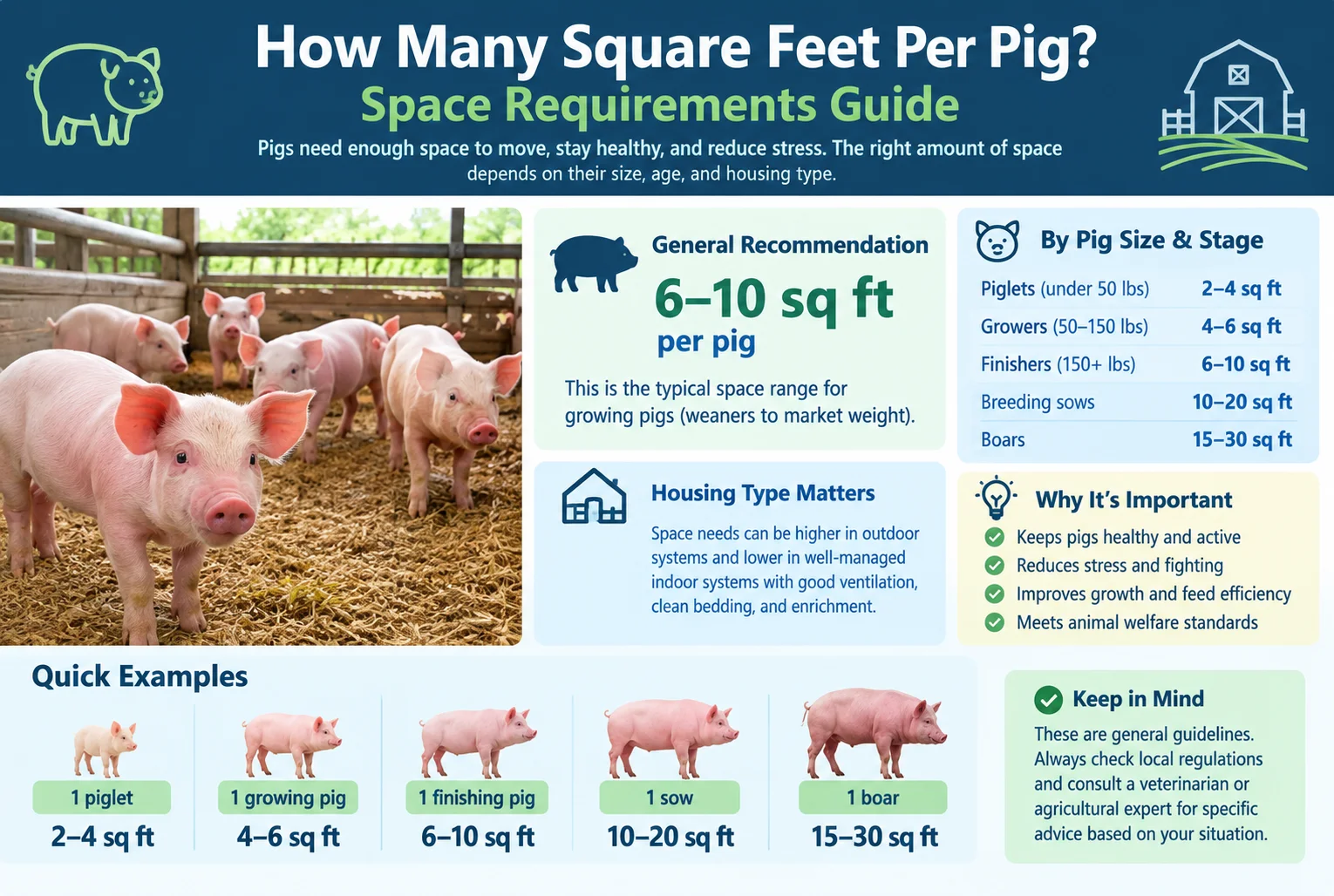
Young pigs need enough room to rest, reach feed and water, and move without being crowded by other animals. Some traditional housing references use approximately 3–4 square feet per nursery pig weighing around 30–75 pounds. Smaller piglets may have different requirements.
The pen should also provide suitable bedding or flooring, appropriate temperatures, and protection from drafts. Young pigs are particularly vulnerable to cold stress and poor hygiene, so space alone does not determine whether housing is suitable.
Growing Pigs
Growing pigs need more room as their bodies increase in size. Agricultural extension guidance commonly uses approximately 4–6 square feet per pig during early growth, with additional space as animals approach finishing weight.
Avoid treating the lower end of a range as an automatic target. The flooring system, ventilation, feeder access, and ability of pigs to move away from aggressive pen mates can affect the space needed.
Finishing Pigs
Finishing pigs are raised toward their intended market weight. For larger animals, a preliminary estimate of around 8–10 square feet per pig is often useful when planning indoor pens, although recommendations vary by floor design and final body weight.
For example, ten finishing pigs at 9 square feet each would require:
10 × 9 = 90 square feet of usable pen floor space.
This calculation estimates the combined area only. The actual pen must also allow adequate access to feeders and drinkers, suitable resting areas, and safe movement.
Indoor Versus Outdoor Space
Indoor floor space and outdoor space should not be treated as interchangeable. A pig may have a suitable covered resting area but still need additional outdoor room for movement, rooting, and other normal behaviors.
The following examples illustrate one established outdoor-access planning reference from Pork Information Gateway. They are reference figures, not universal requirements for every farm.
| Pig Type | Indoor Space in Shed | Outdoor Lot Space |
|---|---|---|
| Nursery pig, approximately 30–75 lb | 3–4 sq ft | 6–8 sq ft |
| Growing pig, approximately 75–150 lb | 5–6 sq ft | 12–15 sq ft |
| Finishing pig, approximately 150–300 lb | 6–8 sq ft | 12–20 sq ft |
| Gestating sow | About 8 sq ft in the referenced system | About 14 sq ft |
| Adult boar | About 40 sq ft | About 40 sq ft |
The figures above describe a particular reference system and should not be used as proof that these amounts satisfy current local welfare laws. Other systems, including pasture-based and group-housed operations, may need substantially different arrangements.
Pasture Space
Pasture requirements depend on more than the number of pigs. Soil type, rainfall, vegetation, drainage, season, and the ability to rotate animals between paddocks all affect how much land is practical.
A pasture area must also support the land itself. Too many pigs in a small area can quickly damage vegetation and create muddy conditions, even if the shelter has enough indoor floor space.
For pasture-based systems, consult local agricultural extension services or a livestock specialist to establish a suitable stocking rate for the land and climate.
How to Calculate Pig Pen Size
You can estimate the total floor area for a group of pigs by multiplying the number of animals by the planned square footage per pig.
Formula:
Total pen area = Number of pigs × Space per pig
For example, if you are planning for 12 growing pigs at 6 square feet each:
12 × 6 = 72 square feet
That is the calculated floor area before considering whether the chosen allowance is adequate for the animals’ final weight and housing conditions.
Pig Pen Size Examples
| Number of Pigs | At 6 Sq Ft per Pig | At 8 Sq Ft per Pig | At 10 Sq Ft per Pig |
|---|---|---|---|
| 2 | 12 sq ft | 16 sq ft | 20 sq ft |
| 5 | 30 sq ft | 40 sq ft | 50 sq ft |
| 10 | 60 sq ft | 80 sq ft | 100 sq ft |
| 15 | 90 sq ft | 120 sq ft | 150 sq ft |
| 20 | 120 sq ft | 160 sq ft | 200 sq ft |
| 25 | 150 sq ft | 200 sq ft | 250 sq ft |
| 50 | 300 sq ft | 400 sq ft | 500 sq ft |
This table is a calculation aid, not a recommendation that every pig can be housed comfortably at each listed density. Select an appropriate allowance for the animals’ size, flooring, management, and local rules before using the results to build a pen.
Example: Planning a 100-Square-Foot Pen
Suppose you have a pen measuring 10 feet by 10 feet.
10 × 10 = 100 square feet.
If you plan around 8 square feet per finishing pig, the arithmetic gives:
100 ÷ 8 = 12.5 pigs.
You cannot house half a pig, so the mathematical result is 12 pigs. However, that number is not automatically a safe or suitable stocking rate. You must verify that the actual space allowance, layout, feeder access, and applicable welfare requirements support the planned group.
How Much Space Do Breeding Pigs Need?
Breeding pigs have different needs from growing and finishing animals. Pregnant sows, boars, and sows with litters should be planned for separately.
Gestating Sows
A gestating sow needs sufficient room to stand, lie down, move comfortably, and interact safely with other pigs when group housed.
University of Minnesota Extension notes that space needs depend on sow size, feeding system, group size, and season. Its guidance describes approximately 18–19 square feet per sow as a minimum starting point when converting from individual stalls to group housing, while greater allowances can improve outcomes in some circumstances. Its cited research also compares group-housing allowances of 15, 24, and 35 square feet per sow.
Do not use one figure for every breeding facility. The layout and feeding system matter, and applicable regulations may prescribe specific minimums.
Sows With Piglets
A sow and her litter need more room than a single pig because the housing must accommodate the mother, nursing piglets, a safe resting area, and suitable access to feed and water.
One outdoor-production reference lists approximately 24 square feet indoors and 15–20 square feet outdoors for a sow and litter in its particular system. Other designs require different arrangements, so use these figures only as an initial comparison.
Adult Boars
Adult boars are large, powerful animals and may require individual pens or specially designed housing. A reference for outdoor-access systems lists around 40 square feet indoors and 40 square feet outdoors, while other housing guidance lists larger pen areas depending on the setup.
The pen must provide secure fencing, safe handling access, adequate footing, and enough room for normal movement.
Factors That Affect Space Requirements
Pig Weight and Growth Stage
The most important starting point is the size the pigs will reach. A pen suitable for small nursery pigs may become overcrowded as the animals approach market weight.
Flooring and Bedding
Slatted floors, solid floors, and bedding-based systems have different design considerations. Flooring should provide appropriate footing and avoid injury. Bedding also needs to remain suitable for resting and hygiene.
Group Size and Social Behavior
Pigs are social animals, but overcrowding can increase competition, aggression, and injury. Housing should allow pigs to rest simultaneously, access resources, and move away from aggressive animals.
Climate and Ventilation
Heat, humidity, and poor airflow can make a crowded pen more difficult to manage. Pigs need appropriate temperature control, ventilation, drainage, and protection from severe weather. Outdoor pigs also need access to suitable shade or shelter.
Local Welfare Rules
Legal minimum space allowances vary by jurisdiction, animal weight, and production system. For example, UK guidance specifies minimum unobstructed floor areas for pigs based on average body weight and notes that greater space may be necessary depending on housing design and management.
Before building a facility or increasing the number of animals, check the rules that apply to your location.
Common Pig Housing Mistakes
- Using the same allowance for every pig: Piglets, finishing pigs, sows, and boars have different needs.
- Counting only indoor floor space: Outdoor lots or pasture may require separate space calculations.
- Ignoring feeder and drinker access: Adequate total area does not guarantee that every pig can reach resources.
- Planning for current weight only: Animals need suitable space as they grow.
- Overlooking drainage and manure management: Wet, dirty conditions can compromise health and comfort.
- Treating a planning estimate as a legal minimum: Always verify current local requirements before finalizing a stocking plan.
FAQs
1. How many square feet does one pig need?
For a growing or finishing pig, approximately 6–10 square feet of indoor floor space can be a preliminary planning range. Actual requirements depend on weight, flooring, management, and local regulations.
2. How many square feet do 10 pigs need?
At 8 square feet per pig, ten pigs require 80 square feet by calculation. The final pen size must be appropriate for their expected weight, housing system, and welfare needs.
3. How many pigs can fit in a 100-square-foot pen?
At an assumed allowance of 8 square feet per pig, the calculation gives 12 whole pigs. This is only a mathematical estimate, not confirmation that 12 pigs can be housed appropriately in that pen.
4. Do pigs need more space outdoors?
Outdoor areas may need considerably more room than indoor pens, particularly in pasture-based systems. The amount depends on rooting opportunities, soil conditions, weather, vegetation, drainage, and how often the area can be rotated.
5. How much space does a pregnant sow need?
Group-housed gestating sows may be planned around 18–35 square feet or more per animal, depending on the system. Confirm the appropriate allowance for the sow’s size, feeding arrangement, group size, and local rules.
6. Is 6 square feet enough for a finishing pig?
It may be used in some traditional or particular housing systems, but it should not be assumed sufficient for every finishing pig. Heavier animals, different flooring, and local welfare standards may require more space.
7. How do I calculate square feet per pig?
Measure the usable pen length and width in feet, multiply them to find the total floor area, and divide by the number of pigs.
For example, a 12-by-10-foot pen contains 120 square feet. Dividing by 15 pigs gives 8 square feet per pig.
8. Does a larger pen improve pig welfare?
Adequate space can support movement, resting, social behavior, and the ability to avoid aggressive animals. Good welfare also depends on flooring, ventilation, temperature, hygiene, feeding, water access, and health management.
Conclusion
The number of square feet needed per pig depends on its size, age, housing system, and access to outdoor space. Growing and finishing pigs may use approximately 6–10 square feet of indoor floor space as a preliminary planning range, while breeding animals and pasture-based systems require separate consideration. Calculate the total area carefully, prioritize animal welfare, and verify local requirements before deciding how many pigs a pen can accommodate.
Discover More Articles
How Many Feet Is 30 Square Feet?
How Many Square Feet Does a Bag of Mortar Cover?
How Many Square Feet for a 200-Person Wedding? Complete Venue Size Guide